



Not only was England the centre of the acid-house scene; it was also a font of new electronic-dance-music styles, particularly after British producers fused house and techno with hip-hop and Jamaican dancehall and dub reggae. Among the styles that emerged were drum and bass (initially called jungle), which sped hip-hop breakbeats to house tempo and anchored them with dub-reggae-style bass patterns (notable exponents include Roni Size, Goldie, Bad Company, and dBridge & Instra:mental); downtempo (initially called trip-hop), a more DJ-centric and instrumental-based variation on hip-hop, also with a pronounced dub tinge (Massive Attack, Tricky, DJ Shadow, and Bonobo); and big beat, which favoured rock-flavoured guitar and keyboard riffs over simple propulsive breaks (Fatboy Slim and the Chemical Brothers).
Germany, in particular Berlin, was also an important locale in the development of electronic dance music. That city quickly took to house and techno music—styles heavily marked by the German synth-pop quartet Kraftwerk—in the wake of the Berlin Wall’s 1989 demolition. The newly reunified city, full of abandoned spaces, became a natural home for the kinds of renegade parties going on in England; one important club, Tresor, was situated underground in a former bank vault. By the early 2000s, with dance scenes around the world contracting in size (particularly in the United States, where raves were under severe fire from law enforcement), Berlin became a locus for techno producers, DJs, and fans from all over the world, who were attracted by cheap rents and easy-to-obtain artist visas.
The stylistic contributions made to electronic dance music in Germany and elsewhere in Europe are varied. For instance, the club scene in Rotterdam, Netherlands, birthed hardcore (or gabber), a very fast and hard form of techno that is frequently noisy and garnished with screaming heavy-metal samples (a later variant was dubbed “hardstyle”). Meanwhile, Germany, especially Frankfurt, was the origin of trance. Trance began as hard, minimalist, and hypnotic—as on “The Age of Love (Watch Out for Stella Club Mix)” (1992), a remix by the German duo Jam & Spoon of a track by Italian producers Age of Love—but by the mid-1990s it had become the most lushly melodic electronic dance style, producing global hits such as “Children” (1995), by Italian DJ and musician Robert Miles. Although minimal techno (also called minimal, or mnml) had emerged in the 1990s in Detroit, by the middle of the next decade a distinctly Berlin-bred style had developed. Thereafter, Berlin accommodated a panoply of artful house, techno, and other styles that provided the soundtrack to a party-focused lifestyle enjoyed in large part by expatriates and global tourists.
Early 2000s
Berlin at the beginning of the early 21st century was a bulwark in a time of recession throughout the dance-music world. Globally, the size of audiences at clubs and large parties had tapered off, and the music itself went through a reductionist phase. The musical shift was partly a response to the bloat of the late 1990s—when house music and trance were particularly big-sounding—and partly a result of burnout on lengthy tracks that eschewed traditional songwriting structures (and sometimes melodies). The back-to-the-roots impulse of the early 2000s was reflected by the increased popularity of both electro (a 1980s style revived by such acts as Fischerspooner, Ectomorph, and I-f) and mashups, which paired the vocals of one recording with the instrumental components of another.
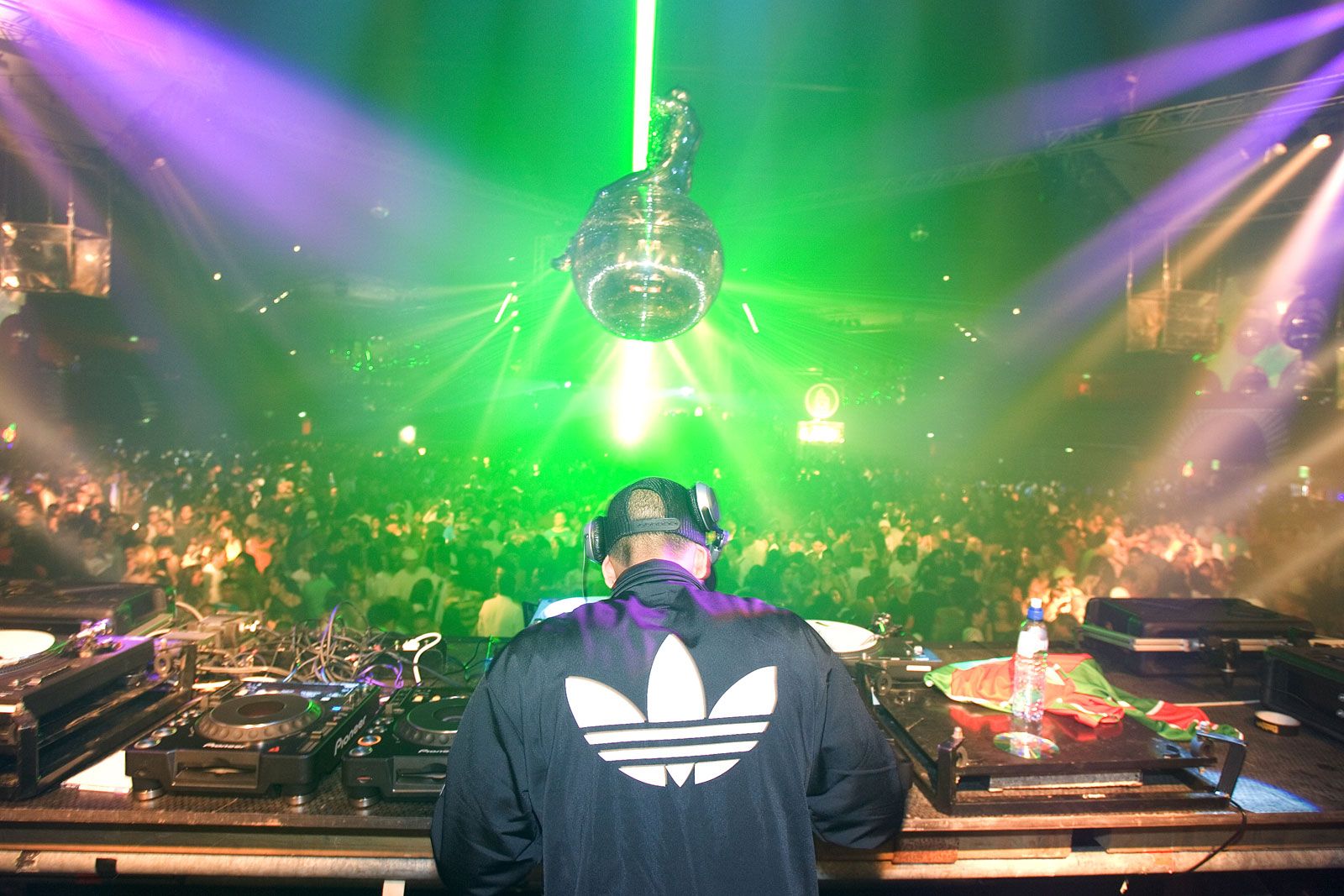
Technology played a significant role in the changing musical landscape. Before the 21st century, club and rave DJing was primarily done with turntables; most of the music was on vinyl records, and it was difficult to DJ effectively with any other recording format. After 2000, however, a number of new devices upended tradition. The CD-J 1000, issued by Pioneer in 2001, was a compact-disc player that mimicked a vinyl turntable more closely and successfully than previous models had. FinalScratch, unveiled that year and on the market in early 2002, made it possible to play digital files on a traditional turntable through the use of a specially encoded record. In addition, 2001 saw the debut of Ableton Live, a computer software program that enabled users to compose, cue, and blend digital tracks by way of a waveform display—thus eliminating the motor skills previously necessary to perform an effective DJ set.
“EDM”
During the second half of the 2000s, electronic dance music began to surge in popularity again—particularly in the United States, where it had earlier established only a small beachhead, despite its roots in the American Midwest. Several factors played a role. One was the growth of the Internet, which made it easier to discover and access music outside the mainstream. Another was the increasingly common use of dance-music production techniques in pop and hip-hop (e.g., the work of French house producer David Guetta on the Black Eyed Peas’ hugely successful 2009 hit “I Gotta Feeling”). A third factor was the 2006–07 worldwide tour by Daft Punk, launched at the Coachella festival in southern California, which helped translate the rave experience to a rock audience—especially as footage of the show’s audiovisual overload became widely shared and viewed on YouTube. By the end of the decade, DJs were regularly filling stadiums in Los Angeles, which had become the largest electronic dance scene in the United States, and such large-scale events soon began to proliferate all over the country.
The biggest party was Electric Daisy Carnival (EDC), which began in Los Angeles in 1997 and later expanded to other cities. At the Los Angeles Memorial Coliseum in 2010, the event drew nearly 200,000 attendees over two days. Online discussions of EDC that year helped to promote the term electronic dance music—along with the abbreviation EDM—beyond academic and specialist circles and into wider use. EDM therefore became the umbrella term for the new wave of stadium dance music, ranging from bass-heavy dubstep (as popularized in the early 2010s by Skrillex), big sweeping progressive house (Swedish House Mafia), the hard blare of electro house (Steve Aoki), and the clean tough beats and riffs of Dutch house (Afrojack).