
Britannica
Sources used in this answer
How did drum machines change early electronic dance music?
Created from Britannica articles
using AI.
AI can make mistakes, so verify using Britannica articles.
electronic dance music
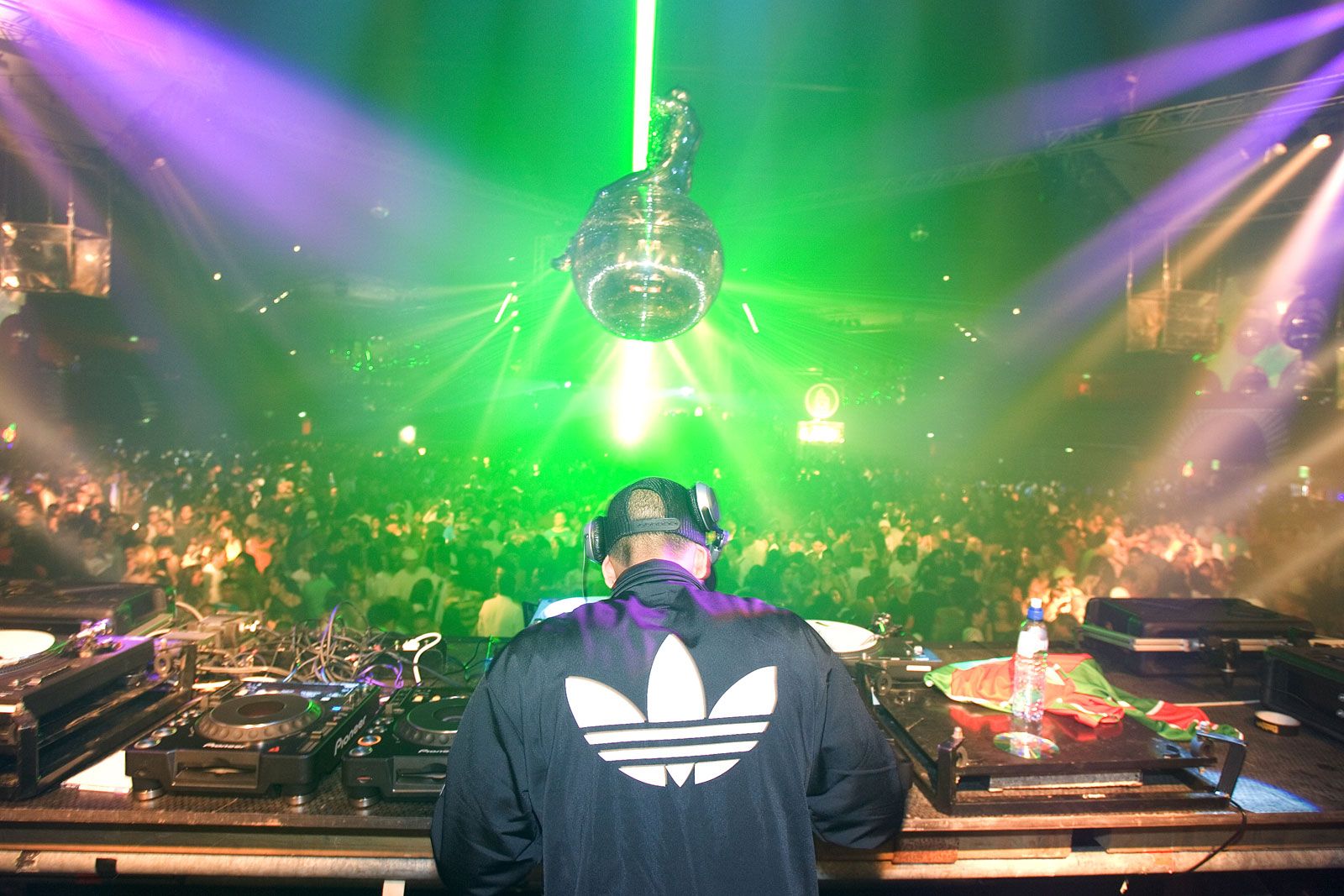
A DJ performing before a crowd.
Drum machines were transformative in the development of early electronic dance music, serving as the foundational technology for establishing the genre's characteristic brisk, machine-like rhythms.1
In the early 1980s, these instruments—most notably the Roland 808 drum machine—became essential tools for producers and DJs. Their impact included:2
- Codifying Genres: In Chicago, DJs like Frankie Knuckles and Ron Hardy integrated drum machines into their sets, which helped codify the basic formula of house music.3
- Defining Sound: In Detroit, pioneers such as Juan Atkins, Kevin Saunderson, and Derrick May utilized drum machines alongside synthesizers to craft innovative, all-instrumental tracks with complex beats, defining the sound of techno.13
- Functional Utility: By providing a consistent, inorganic rhythmic pulse, drum machines allowed producers to create music specifically designed for the social function of dancing all night.2
These tools enabled artists to move beyond manual tape edits, allowing for the creation of the abstract, rhythmic textures that define the genre today.13