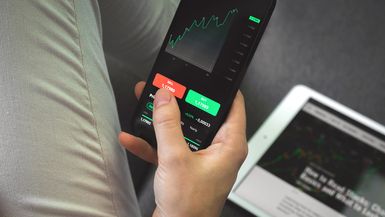
Your trade is routed from your initial order through a web of transactions.
© FellowNeko/stock.adobe.com
Financial trading on today’s platforms looks easy. Log into your account, hit that big green BUY button, and you’ve just exchanged money for shares of a stock. On the surface, that’s how it appears the market works.
Behind that smooth transaction, however, is a web of complex systems that ensures your money goes where it should and you get your shares without any disruptions. The financial markets have safeguards in place every step of the way to make sure both buyers and sellers are protected.
Key Points
- When you send a buy order on a stock (or other asset), it starts a complex process that guides your request through the financial market system until you receive your shares and the seller receives your money.
- The financial industry has a series of safeguards to ensure all market participants are treated fairly.
- Settlement in the securities markets transitioned from two days (T+2) to one day (T+1) in May 2024.
The financial markets work thanks to behind-the-scenes systems such as clearinghouses, which make sure trades are valid. Once trades are cleared, they go on to settlement, which finalizes the sale, ensures assets and money change hands, and confirms that everything balances on both ends.
What happens after I place an order?
When you place an order on a trading platform—perhaps to buy shares of a stock, a futures contract on crude oil or gold, or a call option on an ETF that tracks the S&P 500 —a signal is sent to your brokerage firm that you’re requesting a trade.
The order flows through your broker’s risk management department, which checks for potential risks, including:
Once the review is satisfied, the broker will send your order to be matched. There are a few ways trades are matched for a retail trader. The trade may go to:
Note: No matter where an order is actually matched, brokers have an obligation to ensure the “best execution” of customer orders and conduct periodic reviews of their policies and procedures.
After the trade is matched and confirmed with a suitable seller, brokers on both sides of the trade—your broker and the entity that sold the shares—receive post-trade confirmation. Brokers then share that information with their clients, and it shows up in your account as an electronic confirmation notice. The trading notice will contain the following information:
- Security purchased (or sold)
- Date and time of purchase
- Quantity
- Price (this may be broken down in separate amounts if some securities traded at different prices to complete the trade)
- Total cost, including any commissions or fees
In general, all of this happens within a few seconds after you send your order. Pretty amazing.
Although it might look like a done deal in your trading account, there are still some behind-the-scenes processes to come, namely clearing and settlement.
What are clearing and settlement and why are they important?
When you’re notified that a trade was completed, your buy order is halfway through its life cycle. It takes time to reconcile the trade. This is known as clearing and settlement.
To make trading efficient and smooth, all trades go through exchange clearinghouses, also known as clearing corporations. There are several clearinghouses that provide financial market infrastructure:
Clearinghouses record the transactions and act as implied buyers and sellers to fulfill trades. If the clearinghouse determines there’s a mismatch in a deal, the transaction becomes an “outtrade,” and the two parties get a chance to fix the discrepancy. If they can resolve their differences, the trade is resubmitted to the clearing house, but if differences remain, it heads to an exchange committee for arbitration and dispute resolution.
Settlement means the trade has been fulfilled. The buyer now owns the security and the seller has received cash. Most securities trades settle one day after an order is executed, known as T+1 (the trade date plus one day). So buyers who initiate a trade on a Monday should receive their shares by Tuesday. Likewise, the Monday seller will receive their money on Tuesday.
Today’s markets—particularly those for stocks, futures, options, and other exchange-listed securities—are mostly electronic. Outtrades are infrequent, and money transfers happen quickly, which is why settlement transitioned from T+2 to T+1 as of May 28, 2024.
How do futures markets clear trades? What is CCP?
Futures and OTC derivatives markets offer complex trades that include leverage. These clearinghouses use a process called central counterparty (CCP) clearing to match every trade and take on the counterparty risk with market participants—essentially acting as buyer to every seller and seller to every buyer. CCP clearing offers the markets stability and minimizes the chances of a trade falling through the cracks.
Futures exchanges require members who want to take on the responsibility of being a clearing firm to register as futures commission merchants (FCMs). These firms segregate their customers’ funds from their own funds to offer another layer of protection as they take on the counterparty risk. The exchange also collects performance bonds on a daily basis from its clearing members to collateralize the risk of potential futures losses. Performance bonds are good-faith deposits on open positions.
At the end of each trading day, the exchanges “mark to market” every open position to avoid debt accumulating on trades. The exchanges may adjust the dollar amount on performance bonds at any time, increasing the amount due as market volatility rises or reducing the amounts if market volatility falls.
The securities markets completed their transition to T+1 settlement on May 28, 2024. There’s also a push by some in the industry to accelerate clearing to T+0, which would shorten the cycle to an end-of-day settlement. Some market participants—including those who participate in cryptocurrency markets—see T+0 as inevitable.
But as SIFMA works to reduce the settlement time, the organization has found that T+0 would be more costly across the board and could increase risk. For example, in the crypto markets, part of the real-time trading-to-clearing efficiencies came from the blurred lines between market making, trade execution, and clearing functions. But the 2022 collapse of the global cryptocurrency firm FTX demonstrated the need to keep the various segments of an order’s life cycle separate.
When these functions are run by separate organizations (brokers, market makers, exchanges, and clearinghouses), the process may be slower, but it could prevent concentration of risk and the potential for fraud.
This article was most recently revised and updated by Debbie CarlsonThis article was most recently revised and updated by Doug Ashburn