Shooting for the stars, or shooting for average?
© travelpixpro—E+/Getty Images
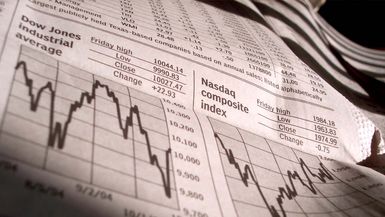
The financial industry tracks stock indexes as a simple way to chart specific markets. But how can investors position their portfolios in line with those benchmarks? The answer is index investing.
Many mutual funds and exchange-traded funds (ETFs) try to mirror the performance of major market indexes. That means that with a simple purchase, you can gain exposure to all 500 stocks in the S&P 500 Index through one of those funds or ETFs (for example).
Key Points
- Index funds were designed to mirror the performances of Wall Street’s major stock and bond indexes.
- Investing in index funds is typically cheaper than investing in actively managed funds.
- One downside of index funds is a lack of protection if the stock market has a bad year.
The same goes for other popular market benchmarks, like the small-cap Russell 2000 Index or the Wilshire U.S. Mid-Cap Index. It would be challenging to gather 500 or 2,000 stocks on your own. These funds and ETFs make it easy.
The S&P 500 has had a long-term average annual gain of 9.2%, so investing in a fund that tracks its performance would have been a pretty good option over the last few decades. It’s a rare mutual fund or ETF that can beat that kind of average annual return year after year. But remember, past performance is no guarantee of future results.
There’s a lot to be said for stashing some of your money in a stock index fund or ETF. These products:
- Allow your portfolio to accurately mirror a large segment of the U.S. stock market.
- Prevent bad performance that could result from the whims of an inexperienced or unsuccessful fund manager.
- Keep you invested in the biggest companies, which can often provide more predictable results.
- Offer relatively cheap trading fees, because index-tracking funds are less expensive to run.
Index investing is also convenient if you want to mirror a particular segment of the market, including large, small-, or mid-cap stocks.
The idea behind index funds is that most investors aren’t savvy enough to decide what mix of stocks to choose, and most fund managers charge a lot for their services and still aren’t guaranteed to beat the broader market. So why pay more than you need to?
Putting your money in an S&P 500 index fund costs very little in fees and typically means at least matching, if not outperforming, most of the expensive actively managed funds out there. A 2022 Morningstar analysis found that during the previous year, only 31.9% of actively managed U.S. large growth funds beat their benchmark indexes. That means you’d typically have better results with a large index fund.
Another advantage of index funds is getting plenty of exposure to the biggest stocks. These are typically companies with long histories, often well managed and with generous dividends. If you feel most comfortable sticking with what has worked historically, a stock index fund may be the place to put your money.
Actively managed funds sometimes find diamonds in the rough, but they also bet on plenty of busts. It’s more of a “feast or famine” approach, especially if you put your money into very specialized funds that focus on backwaters of the market.
Although some market experts tout index funds, they’re not for everyone and they do have drawbacks. Negatives of index funds include:
- Being subject to possible sharp declines when the market has a bad year.
- Having your portfolio tied to the handful of large stocks that comprise a large percentage of the value of certain indexes.
- Not getting the insight of an experienced fund manager.
- Receiving less value for your investment, because stocks in major indexes tend to be more expensive.
- Missing out on sudden bullish moves in different corners of the market where an index investment might have little or no exposure.
The biggest risk is losing dramatically during a major market crash like the one in 2008. That was one of the worst years in history for the S&P 500, which fell more than 36%. Anyone who entrusted their portfolio to an S&P 500 index fund that year had no protection from the storm.
As bad as that was for the average investor, it was even worse for those on the verge of retirement who suddenly saw their retirement savings drop by more than one-third. That’s why older investors might want to be extra careful about devoting too much of their portfolios to a fund or ETF that mimics a major index.
And although most fund managers can’t regularly beat the S&P 500’s returns, there are some who do. In a bad year, having your funds managed by an expert who can quickly maneuver in and out of stocks and sectors may mean higher fees, but also could shield you from the worst impacts of a bear market.
Most people think of index investing in terms of stocks, but there are also investing options in the fixed-income (”bond”) market that mirror indexes like the Bloomberg U.S. Aggregate Float Adjusted Index.
A bond index fund typically doesn’t often give you the same kind of growth you might get with a stock index in a bull market, but it may not fall as sharply as a stock index in a bear market. Also, depending on what type of bond index you track, it might provide a better yield than most stock indexes.
But bond funds do fluctuate in price, and when interest rates rise, they can lose money as the value of existing bonds in the fund decreases relative to newly issued bonds. (Here’s a refresher on how the bond market works.)
How to invest in index funds
If you have a 401(k) account, you likely have index fund and ETF choices available. There might be a mix of large-cap, mid-cap, and small-cap stock index funds as well as a few bond index funds.
If you have a choice, look for index funds and ETFs with the lowest expense ratios. In 2021, the average expense ratio of actively managed equity mutual funds was 0.68%, according to the Investment Company Institute. In contrast, the average expense ratio for funds that track a major index, such as the S&P 500, was 0.06%. The average bond index fund expense ratio was about the same.
You may also have a choice between index mutual funds and index ETFs. An ETF can be traded throughout the day, but a mutual fund is priced after the close of trading. So if you plan to trade actively, the index ETF may be more suitable. An ETF sometimes comes with lower expenses and may be more tax efficient, as well.
If index funds sound right for you, consider some combination of small-cap, mid-cap, and large-cap equity index funds. For asset-type diversification, you could add a bond index fund that provides broad exposure to investment-rated bonds. And if you’re interested in more diversification in your equity portfolio, you might add some international exposure.
This article was most recently revised and updated by Dan RosenbergThis article was most recently revised and updated by Doug Ashburn