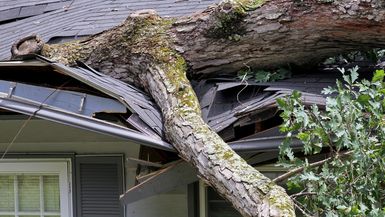
Who’s going to pay for this?
© WideAwake/stock.adobe.com
Buying your first home? Congratulations! You’ll need homeowner’s insurance. Insurance helps to protect you from financial risk, and a home is often a person’s biggest asset.
While researching the best policy, you’ll want to know what a given homeowner’s insurance plan covers, and just as importantly, what it doesn’t cover. Without insurance, you would have to repair or replace your home on your own if the need arises—which is why your mortgage servicer will likely require at least enough insurance to cover the mortgage balance, if not more.
Key Points
- Homeowner’s insurance covers you from financial risk.
- There are different types of home insurance policies for houses and condos, owners and renters.
- Read policies carefully to understand what a policy covers and what it doesn’t.
Do you rent instead? We’ll also look at what renter’s insurance covers—and doesn’t—for your abode.
First, let’s review a few insurance-specific terms so you understand what you’re buying.
Explaining insurance and key terms to know
Insurance helps you manage risk; it can compensate you if your house is damaged or destroyed. Here are some key terms to know when buying insurance for your home:
- Insurance policy. Policies are written contracts between a policyholder (the person who is buying the policy) and the insurance company.
- Acts of God. A natural event or disaster where the homeowner could do little to prevent damage. Some acts of God are covered by standard policies, such as tornadoes and hail, but some aren’t, such as floods and earthquakes.
- Claim. If your property is damaged, you file a claim and request that the insurance company pay to cover the damage under the terms of the policy.
- Covered expenses. These are losses the insurance company pays for in the event of a claim.
- Deductible. The amount of money you have to pay out of pocket before an insurance company begins paying for damage. For example, if you file a claim for $3,000, but your deductible is $500, the insurance company will cover $2,500, and you’ll be responsible for the $500.
- Exclusions. Reasons why an insurance company will not pay.
- Perils. A peril is an event that causes damages to your home.
- Premium. The price the insurer charges for the policy.
- Replacement cost. Insurers will calculate how much it costs to replace your items, repair damages, or rebuild your home without considering depreciation.
What homeowner’s insurance do I need?
The type of homeowner’s insurance policy you need depends on a number of factors, including your property, your possessions, where you live, and your home’s age. The Insurance Information Institute says the most popular policy is the HO-3, known as an “all risk” policy; it covers the home’s structure, your belongings, and personal liability if someone is hurt on your property. It offers the broadest coverage, protecting against 16 disasters or perils, including:
- Fire or lightning
- Wind or hail
- Theft or vandalism
- Damage caused by cars
- Smoke
There are other types of homeowner’s policies. HO-2, known as a broad, or “named-perils” policy, protects your home and belongings from specific damage—but only from the perils listed in the policy. There’s also the HO-1 (also perils-based, and even more restrictive than the HO-2). Some states no longer allow the HO-1 because of all the exclusions.
Condominium owners can purchase an HO-6 policy, which covers belongings and the part of the dwelling that belongs to the condo owner and is part of the building. Condo owners are also covered by named perils. As a condo owner, you likely pay into a homeowners association (HOA), which, among other things, pays to insure the actual structure.
If you have a home mortgage, a home equity line of credit (HELOC), or another lien on your home’s equity, your lender will likely require that you have homeowner’s insurance. After all, they have a financial interest in protecting the money that they loaned you to buy the home. If you live in an area prone to flooding, lenders may also require you purchase flood insurance, which is often a separate policy from traditional homeowner’s insurance.
If you don’t have a mortgage or home equity loan, there is no legal obligation for you to have house insurance; however, if your home is damaged, you will pay for any repairs yourself. This is known as self-insuring.
What does home insurance cover?
All policies are tailored to you. Typically, house insurance helps to cover your dwelling, meaning the structure of the house, including the home’s foundation, its walls, and the roof. Depending on your policy, the dwelling may include other structures attached to the house, such as a garage or porch.
- Other structures. Your homeowner’s policy will typically include other structures on your property such a detached garage, fence, shed, or a swimming pool—but that pool will likely increase the cost of your policy.
- Personal property. Homeowner’s insurance may also cover your personal belongings, such as your furniture, TVs, and other possessions to provide protection from events such as burglary or a fire. The personal property protection part of your policy may help you repair or replace what is damaged or stolen, if the policy covers that particular risk. Many companies provide coverage for 50% to 70% of the amount of insurance on the home’s structure. This often also includes off-premises coverage. Even plants and trees are often covered by insurers if they are damaged during certain perils.
- Liability protection. If your dog bites the postal carrier when they’re on your property, or if someone who doesn’t live with you injures themselves on your property, your homeowner’s liability policy may cover any legal expenses or the visitor’s medical bills if you are found at fault. Liability protection pays up to a certain limit; however, personal umbrella policies provide broader coverage for an array of perils with higher limits. These are available for an additional cost.
- Loss of use protection. Sometimes known as additional living expenses, insurance policies cover the additional costs you may incur if you can’t live in your home because of damage caused by a covered peril. These expenses include hotel bills, restaurant meals, and other expenses incurred while your house is being rebuilt.
- Extended coverage. Do you have expensive jewelry, a prized baseball collection, or art? A standard homeowner’s policy may not be enough to cover the value of those objects. Depending on the value, you may want additional coverage, known as a rider. Appraisals can help determine if you should add riders to your policy. These will come at an additional cost to your main policy.
Reading a policy
A homeowner’s policy is typically broken down into sections. The first section spells out coverages and amounts of insurance. You’ll likely see coverage explained in line items, with the coverage type and amount of insurance detailed. For example, the first section will include information about:
- Dwelling protection
- Other structures protection
- Personal property protection
- Loss of use protection
A subsection to the coverage information may include details about:
- Personal liability
- Medical payments to others
The second section spells out the deductibles and how much you’ll need to pay out of pocket if you file a claim. Section three details information and costs about other coverages, such as riders for jewelry or collectibles.
Section four may detail if your insurance offers any credits or discounts. Some common homeowner discounts include:
- Security system
- Combining an auto and home policy
- Claims-free discount
The last section will calculate the total policy premium cost, detailed by month, quarter, or annual price by adding up all the credits, discounts, optional coverage, and state taxes or surcharges, if applicable.
Read your policy carefully, especially when it comes to covered perils that are considered acts of God. Most severe weather impacts are considered acts of God, but not every storm impact is covered.
What is renter’s insurance?
You may not own your home, but you may still need to get renter’s insurance, as some landlords require coverage.
Renter’s insurance usually includes coverage for:
- Your belongings. This includes if they are stolen out of your car, taken while off premises, or damaged because of named perils.
- Additional living expenses. If you have to move out of your apartment because of damage from a covered peril, this covers the extra cost of food, rent, and other expenses.
- Personal liability. This covers you if a friend or visitor is injured while in your home, and pays your legal costs if you go to court.
Renter’s insurance doesn’t cover an apartment’s building or detached structures. Before buying renter’s insurance, take an inventory of your belongings to make sure you purchase enough coverage. Also, check to see if you may be covered by your parents’ policy.
What homeowner’s insurance doesn’t cover
House insurance (and renter’s insurance) covers a number of perils, but there are a few things it doesn’t:
- Floods. Standard homeowner’s insurance won’t cover flood damage. If you are in a flood zone, you may have to purchase insurance, either through the National Flood Insurance Program or through a private insurer.
- Earthquakes. Also not covered under standard policies. People who live in areas where temblors are common can purchase separate insurance, but it can be costly.
- Normal wear and tear.
- Mold. Some companies allow you to purchase additional coverage for mold.
- Foundation cracks and settling.
- Maintenance issues.
The bottom line
You’re mandated to carry insurance if you have a mortgage or home equity loan. If you’re a renter, a landlord might not rent to you if you don’t have a policy.
Insurance helps protect you financially when disasters hit. However, different insurers will quote you different prices for coverage, and coverage may vary from year to year.
Insurers may also drop you from their coverage if you live in an area subject to high risks, such as wildfires or hurricanes. It pays to shop around and see what coverage you can get for various prices. Even if you’re not mandated to have insurance, you’ll need to weigh whether you can afford to replace your home and belongings from your own savings. It’s typically not worth the risk to go without protection.
This article was most recently revised and updated by Debbie CarlsonThis article was most recently revised and updated by Doug Ashburn