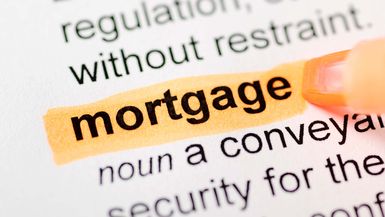
Plenty of confusing terms in those mortgage documents.
© payphoto—iStock/Getty Images
When you’re taking out a mortgage to buy or refinance a home, it can feel like visiting a foreign country. There are so many terms and phrases you’ve never heard before. And it’s likely those phrases are being thrown around quickly and casually.
Here’s an A-to-Z mortgage glossary to help you understand some of the most common terms you’ll encounter.
Key Points
- Taking out a mortgage means learning a new vocabulary, including terms such as escrow and PMI.
- Learning the ins and outs of mortgages can be essential to getting the best deal.
- Once you learn a few key terms, you’re on your way to getting the loan for the home you want.
Adjustable-rate mortgage (ARM). This is a mortgage whose interest rate will change periodically. That means your monthly payments will go up or down after the introductory period, depending on the loan as well as interest rate fluctuations in the broader market.
Amortization. As you pay off your mortgage loan and reduce what you owe, that’s amortization. As a borrower, full amortization is your goal, and one you can reach as long as your monthly payments are higher than the interest you incur each month.
Annual percentage rate (APR). This is the interest you’ll pay on your mortgage. As the borrower, lower is better.
Balloon mortgage. This is a mortgage with an unusually sizable one-time payment, which usually comes at the end of the term. Called a “balloon payment,” this installment can be much higher than your other payments and carry some financial risks.
Debt-to-income (DTI) ratio. This is one way lenders calculate your interest rate and ability to repay a mortgage. It divides all your monthly debt payments by your monthly income.
Earnest money. This is a deposit you pay when you sign the agreement to buy a home. Once the sale is finalized, this deposit can be used for your closing costs or as part of your down payment. But if you cancel the sale for reasons outside those listed in the initial agreement, the seller can keep the earnest money.
Equity. This is the value of your home over and above what you owe on your mortgage’s principal balance. So, if your home is worth $350,000 and you still owe $150,000 in principal, you have $200,000 in equity. When you pay your mortgage in full, your home’s value is your equity.
Escrow. When you buy a home, a lot of money changes hands. An escrow account is where the money is held by a third party—an escrow agent—for the buyer and seller until the deal is complete.
Fixed-rate mortgage. This is a mortgage whose interest rate never changes throughout the term of the loan. That means your monthly payments won’t change, unless you refinance.
Interest. Interest is the money you pay a lender in order to borrow their money to finance your home. The interest rate is described in the loan’s APR and can be either fixed or adjustable.
Loan-to-value (LTV) ratio. This ratio describes the relationship of the lifetime cost of your mortgage with the value of the home you’re buying. This metric helps lenders decide whether you’ll need private mortgage insurance.
Points. Many lenders offer the option to lower your mortgage’s interest rate by paying additional cash up front. Each 1% of the loan amount (one “point”) can get your interest rate down roughly 0.25%. Although this raises your up-front cost (with no reduction in the principal you owe), if you hold that mortgage for many years, with no refinancing, you could save thousands of dollars in interest.
Preapproval. Early on in the home-buying process, a bank will give you this document estimating how much you can expect to borrow. It’s not binding, but will give you a sense of what you can afford.
Principal. This is the money you’re borrowing to buy your home. Your mortgage payments will go toward paying back both the principal and the interest.
Private mortgage insurance (PMI). Some lenders may ask you to pay PMI when taking out a mortgage, particularly if your down payment is less than 20% of the overall loan. If you’re paying PMI, it’s in your best interest to bump your home’s equity up to 20%, after which you can request to have the PMI requirement removed.
Refinance. This is when you take out a new loan on your home after you buy it. You may refinance to get lower interest rates or to pay for other needs in your life, such as a remodeling job or a child’s education.
Before you shop for a home, you might shop for a lender, who will assess your debt-to-income ratio and other metrics, tell you how much you’re preapproved to borrow, and explain what APRs are available for several loan types—fixed rate, adjustable rate, and perhaps a balloon mortgage. Depending on how long you plan to stay in the home, you might lower your rate by paying points up front. But if your LTV is below a certain threshold—such as 20%—be prepared to pay PMI.
Found a home you like and you’ve agreed to a price with the seller? Put some earnest money into the escrow account and apply for that mortgage. Once you’ve settled into the new home and begun making payments toward the principal and interest, your loan will start amortizing. And someday, you might choose to refinance to capture a lower rate or tap into the home’s equity.
Can you remember all that as lenders and brokers sling these terms at you? If not, you might keep this glossary on hand to help you cut through the jargon. Happy house hunting!
This article was most recently revised and updated by Colin DoddsThis article was most recently revised and updated by Jennifer Agee