
- Pali:
- “Basket of Discourse”
- Sanskrit:
- Sutra Pitaka

Sutta Pitaka
-
What is the Sutta Pitaka?
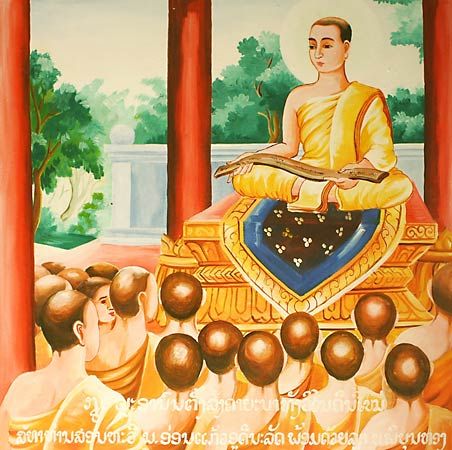
The Sutta Pitaka, or "Basket of Discourse," is the second of the three divisions of the Tipitaka, the Pali canon of Theravada Buddhism. It contains the Buddha's discourses. The Sutta Pitaka consists of five collections (Nikayas) of the Buddha’s teachings. From a literary perspective, the discourses seem repetitive but are characterized by beautiful similes and sublimity of thought. The schools that wrote in Sanskrit divided this body of literature into four collections called Agamas.
3 Britannica SourcesCreated from Britannica articles using AI. AI can make mistakes, so verify using Britannica articles. -
Why is the Sutta Pitaka important in Buddhism?
The Sutta Pitaka, or "Basket of Discourse," is a central part of the Pali Tipitaka, the earliest collection of Buddhist sacred texts. It contains the Buddha's discourses and is arranged into five collections (Nikayas). The Sutta Pitaka is important because the contents within are attributed to Gautama Buddha, with few exceptions. It includes varied texts, from basic teachings and legends to monastic life aspects. As such, the Sutta Pitaka is the basic doctrinal section of the Buddhist canon.
3 Britannica SourcesCreated from Britannica articles using AI. AI can make mistakes, so verify using Britannica articles. -
What kinds of teachings are found in the Sutta Pitaka?
The Sutta Pitaka contains the basic teachings and doctrines of Buddhism. With few exceptions, the contents are attributed to Gautama Buddha. The Sutta Pitaka is divided into Nikayas, which are collections of texts. These Nikayas contain legends, moral rules, and doctrinal expositions.
The Nikayas are divided as follows:
* Digha Nikaya contains 34 long suttas, including the Brahmajala Sutta that deals with rival philosophies and Buddhist doctrines.
* Majjhima Nikaya contains 152 suttas that cover nearly all aspects of Buddhism.
* Samyutta Nikaya contains 7,762 suttas arranged by subject matter.
* Anguttara Nikaya contains 9,557 terse suttas arranged numerically for mnemonic purposes.2 Britannica SourcesCreated from Britannica articles using AI. AI can make mistakes, so verify using Britannica articles. -
How is the Sutta Pitaka organized?
The Sutta Pitaka, a core section of the Buddhist canon, contains the teachings of the Gautama Buddha. For schools that wrote in Sanskrit, this collection is divided into four Agamas. The Theravada school's Pali texts are organized into five Nikayas.
The five Nikayas are:
* Digha Nikaya: Long Collection of 34 suttas, including legends and moral rules.
* Majjhima Nikaya: Medium Length Collection of 152 suttas covering many aspects of Buddhism.
* Samyutta Nikaya: Cluster Collection with 7,762 suttas arranged by subject matter.
* Anguttara Nikaya: Item-more Collection with 9,557 suttas arranged numerically.
* Khuddaka Nikaya: Short Collection of diverse texts, including important poetic works.2 Britannica SourcesCreated from Britannica articles using AI. AI can make mistakes, so verify using Britannica articles. -
What are some famous suttas included in the Sutta Pitaka?
The Sutta Pitaka contains the basic teachings of the Buddhist canon. With few exceptions, the contents are attributed to Gautama Buddha. The Sutta Pitaka is divided into five collections, called Nikayas.
Some famous suttas include:
* Brahmajala Sutta The first sutta of the Digha Nikaya, it deals with fundamental Buddhist doctrines and rival philosophies.
* Ambattha Sutta Denounces the principles of caste and the pretensions of Brahmins.
* Mahanidana Sutta Gives the fullest canonical treatment of the doctrine of dependent origination, or the chain of causation.
* Mahaparinibbana Sutta Narrates the activities and teachings of the Buddha’s last year and describes his death.
* Sigalovada Sutta A comprehensive treatment of domestic and social ethics directly addressed to laymen.
* Dhammacakkappavattana-sutta Contains the Buddha’s first sermon.1 Britannica SourceCreated from Britannica articles using AI. AI can make mistakes, so verify using Britannica articles. -
How has the Sutta Pitaka influenced Buddhist practices and teachings today?
The Sutta Pitaka, containing the Buddha's discourses, significantly shapes contemporary Buddhist practices and teachings, especially within the Theravada tradition. Its texts, believed to be the words of the Gautama Buddha, offer insights into fundamental doctrines, ethical guidelines, and monastic life.
Key Suttas like the Brahmajala Sutta and Sigalovada Sutta continue to inform moral and social ethics, while others provide foundational teachings. The Dhammacakkappavattana-sutta, containing the Buddha's first sermon, remains central to understanding Buddhist doctrine. The Sutta Pitaka's influence extends to monastic rules and philosophical thought, guiding practitioners in Southeast Asia and Sri Lanka.
3 Britannica SourcesCreated from Britannica articles using AI. AI can make mistakes, so verify using Britannica articles.
Sutta Pitaka, extensive body of texts constituting the basic doctrinal section of the Buddhist canon—properly speaking, the canon of the so-called Hinayana (Lesser Vehicle) doctrinal schools, including the Theravada (Way of the Elders) form of Buddhism predominant in present-day Sri Lanka (Ceylon) and Southeast Asia. The contents of the Sutta Pitaka are attributed, with few exceptions, to the Gautama Buddha himself. The schools whose works were written in Sanskrit divided this body of literature into four collections, called Agamas. Roughly comparable collections, called Nikayas, comprise the Pali texts of the Theravada school, but with a fifth group added—the Khuddaka Nikaya (“Short Collection”). The other four Nikayas are as follows:
1. Digha Nikaya (“Long Collection”; Sanskrit Dirghagama), 34 long suttas including doctrinal expositions, legends, and moral rules. The first, the Brahmajala Sutta (“Discourse on the Divine Net”), renowned and much quoted, deals with fundamental Buddhist doctrines and with rival philosophies and tells much about everyday life and religious practices of the period. The Ambattha Sutta (“Discourse of Ambattha”) denounces the principles of caste and the pretensions of Brahmins. The Mahanidana Sutta (“Discourse on the Great Origin”) gives the fullest canonical treatment of the doctrine of dependent origination, or the chain of causation. The famous Mahaparinibbana Sutta (“Discourse on the Great Final Extinction”—i.e., the Buddha’s release from the round of rebirths), one of the oldest texts in the canon (though containing later interpolations), narrates the activities and teachings of the Buddha’s last year and describes his death. The Sigalovada Sutta (“Discourse of Sigalovada”), the only one of these discourses directly addressed to laymen, is a comprehensive treatment of domestic and social ethics.
2. Majjhima Nikaya (“Medium [Length] Collection”; Sanskrit Madhyamagama), 152 suttas, some of them attributed to disciples, covering nearly all aspects of Buddhism. Included are texts dealing with monastic life, the excesses of asceticism, the evils of caste, Buddha’s debates with the Jains, and meditation, together with basic doctrinal and ethical teachings and many legends and stories.


 " height="20" alt="HEW Logo">
3. Samyutta Nikaya (“Cluster Collection”; Sanskrit Samyuktagama), a total of 7,762 individual suttas, some quite brief, arranged more or less by subject matter into 56 samyuttas, or “clusters.” The best known of these is the Dhammacakkappavattana-sutta (“Discourse on the Turning of the Wheel of the Law”), which contains the Buddha’s first sermon.
4. Anguttara Nikaya (“Item-more Collection”; Sanskrit Ekottarikagama), a numerical arrangement, for mnemonic purposes, of 9,557 terse suttas. Its first nipata (“group”) contains suttas dealing with single things, such as the mind or the Buddha; the suttas in the second nipata speak of pairs—e.g., 2 kinds of sin; in the third there are triplets; and so on up to 11. Examples are the 3 praiseworthy acts, the 4 places of pilgrimage, the 5 obstacles, the 6-fold duty of a monk, 7 kinds of wealth, 8 causes of earthquake, 9 types of person, 10 objects of contemplation, and 11 kinds of happiness.