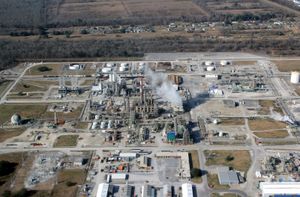
naphtha reforming
Quick Summary
Naphtha reforming is a chemical process used in petroleum refining to improve the quality of gasoline. It rearranges the molecular structure of hydrocarbons found in naphtha, a fraction of crude oil.
Initially, thermal reforming used high temperatures and pressures to increase the octane number of low-quality naphthas. However, this produced unstable compounds.
Later, catalytic reforming was developed, using catalysts like platinum. This process, often involving hydrogen, converts naphtha into high-octane gasoline components, such as isoparaffins and aromatics, which are more stable and desirable for fuel. This method significantly enhances the yield and quality of transportation fuels.1
Ask Britannica AI about this topic
Britannica doesn't have a full article on this topic, so we've curated a list of our relevant coverage.