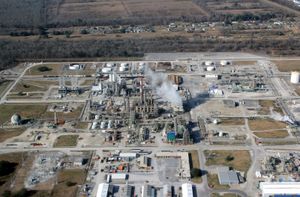
thermal reforming
Quick Summary
Thermal reforming is a chemical process used in petroleum refining to rearrange the molecular structure of hydrocarbons, primarily to improve the quality of low-grade gasoline stocks. This is achieved by exposing these materials to high temperatures and pressures, which converts their molecules into those with a higher octane number. This process was developed in the late 1920s and typically uses temperatures between 510–565 °C (950–1,050 °F) at moderate pressures. While effective, thermal reforming can produce unstable products like olefins and aromatic compounds. A later development, catalytic reforming, uses a catalyst, often platinum, to achieve similar results with improved product stability and yield.12
Ask Britannica AI about this topic
Britannica doesn't have a full article on this topic, so we've curated a list of our relevant coverage.