


toxic waste
-
What is toxic waste?
Toxic waste refers to chemical waste that can cause harm or death to living organisms. It is considered toxic if it exhibits characteristics such as being poisonous, radioactive, explosive, carcinogenic, mutagenic, teratogenic, or bioaccumulative.
Toxic waste comes from industrial, chemical, and biological processes and can be found in household, office, and commercial wastes. Common examples include batteries, pesticides, cell phones, and computers.
Effective methods for reducing the impact of toxic waste involve eliminating its production. This can be achieved through the substitution of nonpolluting alternatives, the adoption of "green chemistry" practices, efficient production processes, and the recycling of certain wastes like heavy metals.
3 Britannica SourcesCreated from Britannica articles using AI. AI can make mistakes, so verify using Britannica articles. -
How does toxic waste become pollution?
Toxic waste becomes pollution when it is improperly released into the environment, leading to contamination and harm. Toxic wastes include chemical, radioactive, and medical wastes that can be poisonous, explosive, carcinogenic, or mutagenic.
These wastes can enter the environment through various pathways:
* Water Pollution Toxic chemicals from industrial wastewater or pesticide runoff contaminate water bodies.
* Land Pollution Improper disposal of solid and liquid wastes contaminates soil and groundwater, posing risks to public health and ecosystems.
* Air Pollution Factories release toxic chemicals into the air, contributing to air pollution.The consequences of toxic waste pollution are far-reaching, resulting in economic costs, human health problems (such as cancers and birth defects), and damage to plant and animal populations.
4 Britannica SourcesCreated from Britannica articles using AI. AI can make mistakes, so verify using Britannica articles. -
What are common sources of toxic waste?
Toxic waste comes from industrial, chemical, and biological processes and can be found in household, office, and commercial waste.
Common sources include:
* Industrial plants and chemical processing facilities that improperly dispose of wastewater containing heavy metals such as lead, mercury, and chromium.
* Pesticides from agricultural areas and suburban lawns containing chemicals like chlordane, dieldrin, and heptachlor.
* Everyday products like batteries, cell phones, and computers.
* Medical waste such as tissues, fluids, and materials that can harbor infectious disease-causing organisms.
* Combustion processes that create dioxins and furans as by-products, and polychlorinated biphenyls (PCBs) from the manufacturing of paints, plastics, and electrical transformers.
* Radioactive wastes from elements and compounds that produce or absorb ionizing radiation.
* Municipal solid waste, construction and demolition waste, and hazardous waste improperly disposed of on land.3 Britannica SourcesCreated from Britannica articles using AI. AI can make mistakes, so verify using Britannica articles. -
How does toxic waste harm the environment and living things?
Toxic waste can severely harm the environment and living organisms. It includes chemical, radioactive, and medical wastes that are poisonous, explosive, carcinogenic, or mutagenic.
These wastes contaminate soil and groundwater, destroy habitats, and diminish populations by directly affecting sensitive species or inhibiting their reproduction. Exposure to toxic waste has been linked to various health issues, including cancers, birth defects, and neurological disorders, resulting in substantial economic and healthcare costs.
To mitigate these effects, strategies include reducing toxin production through the use of non-polluting alternatives and green chemistry, as well as employing proper waste disposal methods such as landfills and bioremediation processes.
2 Britannica SourcesCreated from Britannica articles using AI. AI can make mistakes, so verify using Britannica articles. -
What are some ways to safely manage or reduce toxic waste?
Toxic waste can be reduced through methods such as green chemistry that eliminates toxins in chemical processes, substitution of nonpolluting alternatives, efficient production, and proper machinery maintenance. Recycling valuable heavy metals cuts the need for toxins and production costs.
Treatment methods include chemical, thermal, biological, and physical processes. High-temperature incineration detoxifies and destroys certain organic wastes, but poses air pollution risks. Bioremediation uses microbes to degrade or transform contaminants to safe levels, while phytoremediation uses plants to draw toxic substances from the soil. Landfills should be sealed to contain waste, but leaks may occur. The "cradle-to-grave" manifest system helps to properly label, transport, and track all hazardous wastes.
3 Britannica SourcesCreated from Britannica articles using AI. AI can make mistakes, so verify using Britannica articles. -
How do governments and organizations work to prevent toxic waste pollution?
Governments and organizations combat toxic waste pollution through various strategies. Substituting toxins with non-polluting alternatives, such as using oxygen instead of chlorine for wood bleaching, is one approach. Green chemistry also seeks to eliminate the need for toxic substances in chemical products and processes.
Efficient production, proper machinery maintenance, and recycling valuable heavy metals can reduce toxins. Hazardous waste transport is closely monitored by governmental agencies using a "cradle-to-grave" manifest system to track waste from origin to disposal, reducing illegal dumping.
The EPA (Environmental Protection Agency) sets and enforces national pollution-control standards. International cooperation is also essential, with treaties and agreements addressing environmental problems and promoting sustainable practices.
6 Britannica SourcesCreated from Britannica articles using AI. AI can make mistakes, so verify using Britannica articles.
toxic waste, chemical waste material capable of causing death or injury to life. Waste is considered toxic if it is poisonous, radioactive, explosive, carcinogenic (causing cancer), mutagenic (causing damage to chromosomes), teratogenic (causing birth defects), or bioaccumulative (that is, increasing in concentration at the higher ends of food chains). Waste containing dangerous pathogens, such as used syringes, is sometimes considered to be toxic waste. Poisoning occurs when toxic waste is ingested, inhaled, or absorbed by the skin.

Toxic waste results from industrial, chemical, and biological processes. Toxins are found in household, office, and commercial wastes. Examples of common products that routinely become part of the toxic waste streams of industrialized countries include batteries for electronic devices, pesticides, cell phones, and computers. The U.S. Environmental Protection Agency estimated that U.S. factories released 1.8 million metric tons (about 2 million tons) of toxic chemicals into the air, land, and surface waters in 2011, including a number of chemicals that are known carcinogens. In the United States hundreds of billions of gallons of groundwater are also contaminated with uranium and other toxic chemicals, and more than 63.5 million metric tons (about 70 million tons) of radioactive waste, which is mostly uranium waste derived from spent nuclear fuel, is buried in landfills, trenches, and unlined tanks.
Several social and ethical issues permeate the discussion of toxic waste. In countries with lax pollution regulations where polluters have no incentive to limit the disposal of toxins in the air, water, or landfills, negative externalities (costs imposed on society at large but not borne by the polluter) exist; such a shifting of costs raises fundamental questions of fairness. In countries with more stringent pollution regulations, toxic wastes may be dumped illegally, and some polluters may attempt to cover up that activity. Another approach taken to dealing with toxic waste is to send it elsewhere; much electronic waste produced in the U.S. is shipped to developing countries, risking spillages and the health of local residents, who often lack the expertise and technology to safely deal with toxic waste. In addition, the practice of siting toxic waste storage or handling facilities in minority enclaves in some countries is considered by some environmentalists to be a form of environmental racism, the disproportionate shifting of environmental hazards to people of colour.



 " height="20" alt="HEW Logo">
Types
Toxic waste products are divided into three general categories: chemical wastes, radioactive wastes, and medical wastes. Chemical wastes, such as those that are considered corrosive, flammable, reactive (that is, chemicals that interact with others to create explosive or toxic by-products), acutely poisonous, carcinogenic, mutagenic, and teratogenic—as well as heavy metals (such as lead and mercury)—are placed in the first category. Radioactive wastes include elements and compounds that produce or absorb ionizing radiation and any material that interacts with such elements and compounds (such as the rods and water that moderate nuclear reactions in power plants). Medical wastes are a broad category, spanning the range from tissues and fluids capable of harbouring infectious disease-causing organisms to the materials and containers that hold and transfer them.
The world’s most dangerous chemical toxins, which are commonly grouped into a collection called the “dirty dozen” by chemists and environmentalists, are categorized as persistent organic pollutants (POPs). Several POPs are pesticides: aldrin, chlordane, DDT, dieldrin, endrin, heptachlor, hexachlorobenzene, mirex, and toxaphene. Other POPs are produced during the combustion process. For example, dioxins and furans are by-products of chemical production and the burning of chlorinated substances, and polychlorinated biphenyls (PCBs), which are used to manufacture such products as paints, plastics, and electrical transformers, may be released into the air when those products are burned. Other toxins such as arsenic, beryllium, cadmium, copper, lead, nickel, and zinc belong to a wider group of chemicals called persistent bioaccumulative toxins (PBTs), which include the dirty dozen and can linger in the environment for long periods.
Hazards
Well before the 1962 publication of American biologist Rachel Carson’s Silent Spring, which described how DDT accumulated in the fatty tissues of animals and caused cancer and genetic damage, the risks of many toxic wastes were evident. For example, lead was a known toxin in the 19th century, with reformers documenting lead poisoning in the workforce and leading cleanup efforts. Nevertheless, auto companies, oil companies, and the U.S. government authorized the manufacture, distribution, and use of tetraethyl lead, Pb(C2H5)4, in gasoline in the 1920s. Health officials warned against depositing millions of pounds of inorganic lead dust from automobile exhaust onto the streets. However, the lead industry pointed to lead’s importance to the automotive and petrochemical industries in increasing engine performance and reducing engine knock (spontaneous ignition of the fuel-air mixture in vehicle engines). Similarly, despite evidence of lead paint’s toxic effects on children as early as the 1920s, the lead industry campaigned for decades to deter concerns. The National Lead Company, manufacturer of Dutch Boy paints and lead pigments, produced children’s colouring books, including The Dutch Boy’s Lead Party, extolling the benefits of lead paint. The federal government finally banned lead in paint and gasoline in the 1970s and ’80s.
Although limited cases of accidental poisonings, such as from the accidental ingestion of lead and household cleaners, occur daily throughout the world, one of the first high-profile episodes of mass poisonings affecting neighbourhoods and whole cities occurred in Minamata, Japan, in the 1950s. Many of the town’s residents contracted mercury poisoning resulting from the Nippon Chisso Hiryo Co.’s manufacturing of acetaldehyde, and that material was later associated with the deaths of at least 3,000 people. Mercury from the production process spilled into the bay and entered the food chain, including seafood, which was the town’s primary protein source. Deformed fish appeared in Minamata Bay, and townspeople exhibited strange behaviours, including trembling, stumbling, uncontrollable shouting, paralysis, hearing and vision problems, and body contortions. While mercury was long known to be a toxin (the neurological degeneration caused by mercury used in hat making in the 19th century led to the phrase “mad as a hatter”), Minamata vividly highlighted its dangers in the food chain.
The trusted destination for professionals, college students, and lifelong learners.
SUBSCRIBE


Hooker Chemical and Plastics Corporation used an empty canal in Love Canal, a section of Niagara Falls, New York, in the 1940s and ’50s to dump 20,000 tons of toxic waste in metal drums. After the canal was filled and the land given to the city, houses and an elementary school were built on the site. By the late 1970s the toxic chemicals had leaked through their drums and risen to the surface, resulting in high rates of birth defects, miscarriages, cancer and other illnesses, and chromosome damage. The neighbourhood was subsequently evacuated by September 1979.
Dust from the remains of the three World Trade Center buildings that were destroyed during the September 11, 2001, terrorist attacks in New York City were found to contain mercury, lead, dioxin, and asbestos. Aside from the dangers of breathing in toxic building materials, the attacks raised concerns about potential sabotage of toxic waste sites, such as storage facilities adjacent to nuclear power plants, or of the transport of such waste between sites. More than 15,000 chemical plants and refineries nationwide were also in danger, with more than 100 of them putting at least a million people at risk should an attack occur.
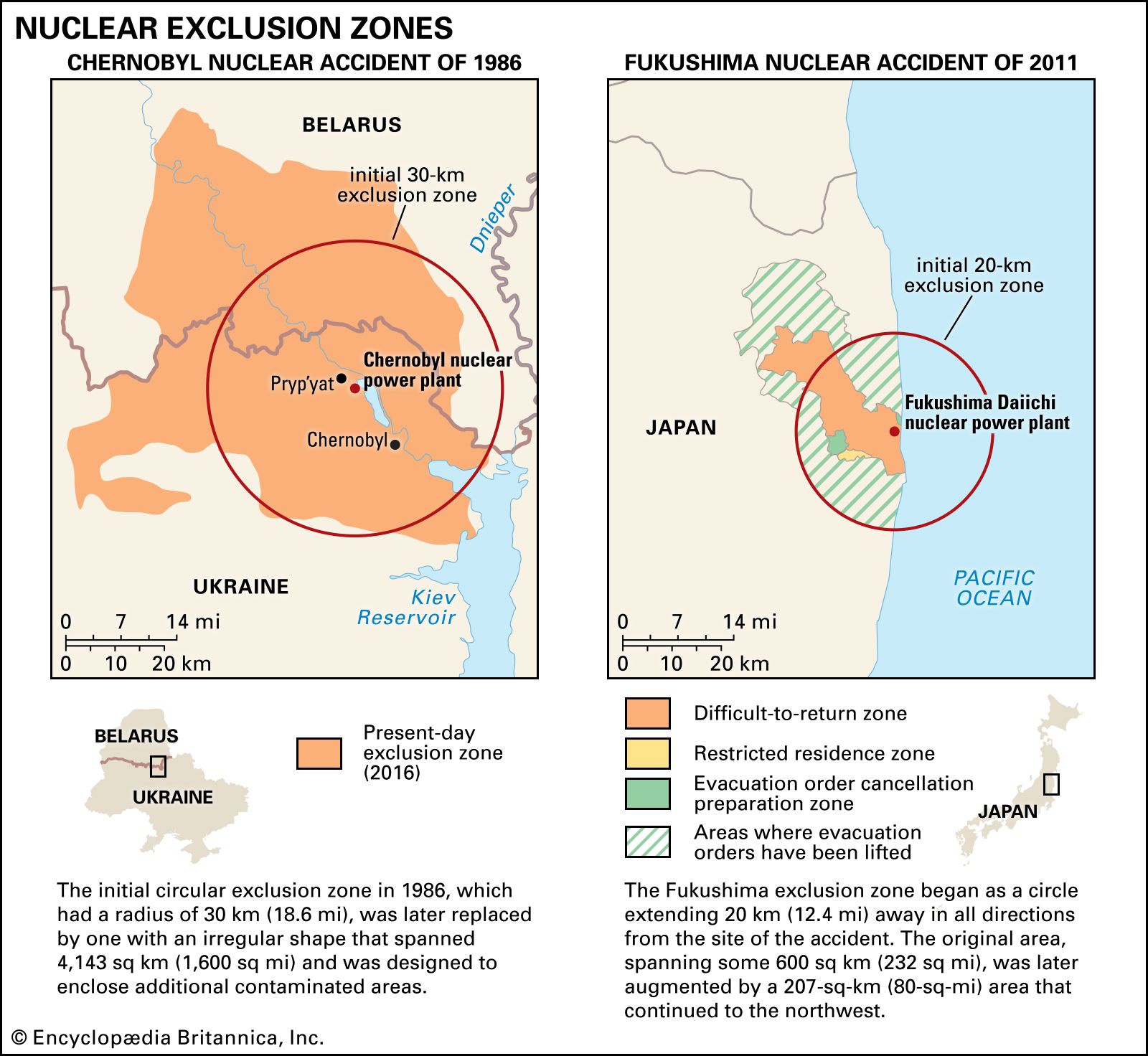
In addition, the danger of a sudden release of toxic material also looms in the aftermath of extreme weather events, natural disasters, and accidents. Three Superfund toxic waste sites in and around New Orleans were flooded in 2005 by Hurricane Katrina, and toxic waste was found in debris deposited throughout the flooded area. The devastating Indian Ocean earthquake and tsunami of 2004 stirred up and dispersed vast amounts of toxic wastes—including radioactive waste, lead, heavy metals, and hospital wastes—across the Indian Ocean basin, and the tsunami that struck Japan in 2011, which caused the Fukushima nuclear accident, released tremendous amounts of irradiated water into the Pacific Ocean. Those and other high-profile examples—including the Exxon Valdez oil spill in 1989, the Chernobyl disaster in 1986, the Bhopal gas leak in 1985, and the Three-Mile Island scare in 1979—raised public awareness and concern.