



- Also called:
- alopecia
- Key People:
- Madam C.J. Walker
- On the Web:
- National Center for Biotechnology Information - Alopecia (Nov. 01, 2026)

baldness
News •
-
What is baldness?
Baldness, also known as alopecia, is the systematic involution of hair follicles, which results in organs similar to primitive embryonic follicles; however, the number of follicles does not necessarily decrease.
Male pattern baldness is hereditary and more common in people of European or indigenous Australian ancestry. It is associated with miniaturized hair follicles, fewer progenitor hair cells, and a defect in stem cell maturation. Imbalances in male hormones and variations in the androgen receptor gene have also been implicated.
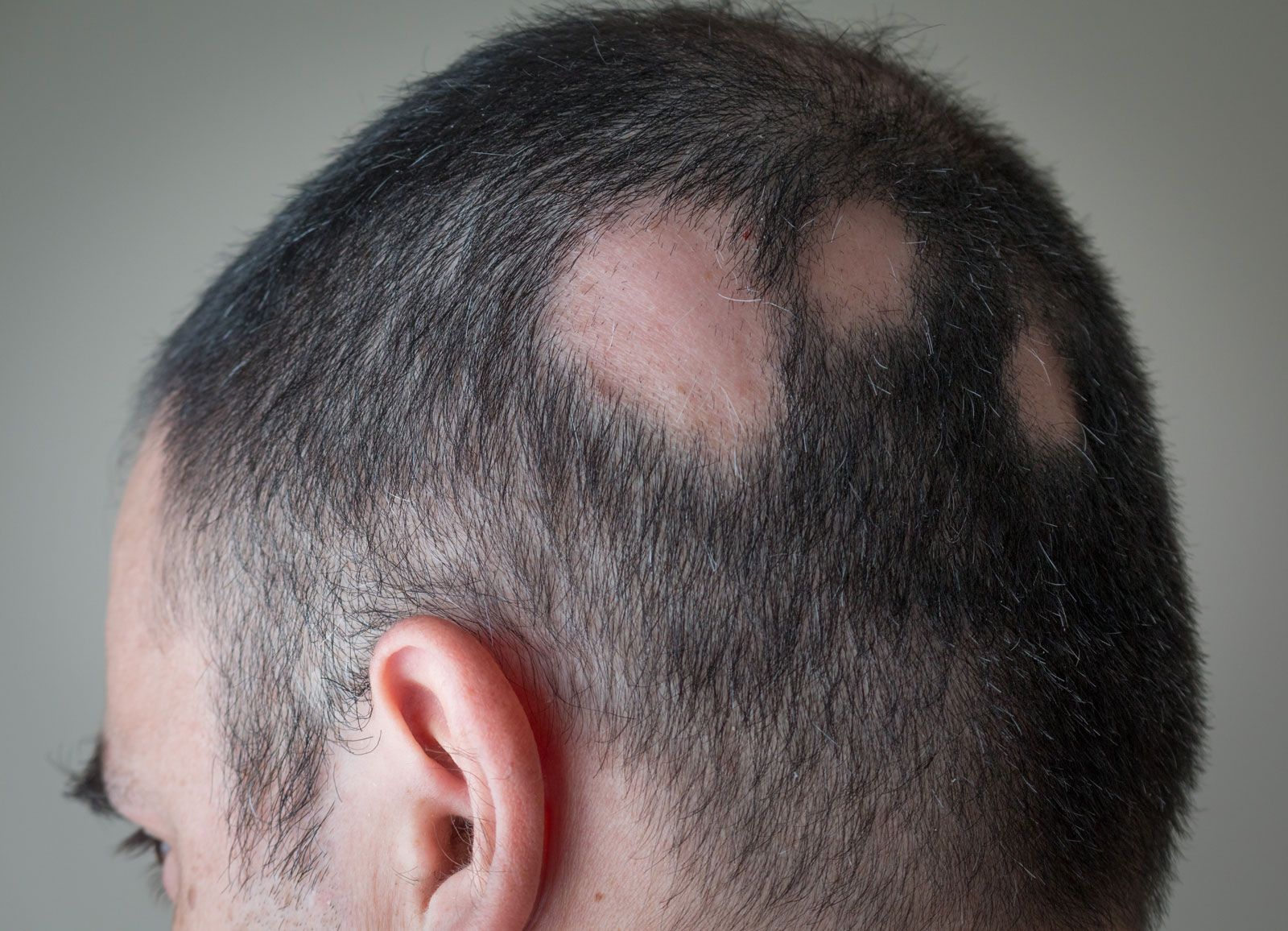
Other causes of permanent baldness include scar-producing skin diseases and injuries, inborn lack of hair development, and severe injury to hair follicles. Temporary hair loss can occur after high fever, X-rays, ingestion of certain metals or drugs, malnutrition, inflammatory skin diseases, chronic wasting diseases, and endocrine disorders. Alopecia areata, a disorder of unknown cause, is characterized by sudden, complete baldness and is usually temporary.
3 Britannica SourcesCreated from Britannica articles using AI. AI can make mistakes, so verify using Britannica articles. -
What causes baldness in people?
Baldness can be caused by hereditary factors, hormonal imbalances, scar-producing skin diseases and injuries, or inborn lack of hair development.
Male pattern baldness is genetic and more common in people of European or indigenous Australian ancestry. It is associated with miniaturized hair follicles and a defect in stem cell maturation. Imbalances in male hormones also play a role.
Other causes include alopecia areata, a disorder of unknown cause characterized by sudden, complete baldness. Temporary hair loss can occur after high fever, X-rays, metals or drugs, malnutrition, inflammatory skin diseases, chronic wasting diseases, and endocrine disorders. Stress can also lead to premature graying and potentially hair loss.
5 Britannica SourcesCreated from Britannica articles using AI. AI can make mistakes, so verify using Britannica articles. -
How does male and female baldness differ?
Male and female pattern baldness, both hereditary, differ in their presentation. Male pattern baldness typically starts with a receding hairline or thinning crown, potentially leading to a "Hippocratic wreath" pattern. Conversely, female pattern baldness is usually more diffuse. Male pattern baldness is associated with heavy body and facial hair and is linked to defects in hair stem cells and androgen imbalances. Androgens stimulate most hair growth, yet paradoxically, are necessary for this type of baldness to occur.
2 Britannica SourcesCreated from Britannica articles using AI. AI can make mistakes, so verify using Britannica articles. -
What role do genetics play in baldness?
Genetics play a significant role in baldness, especially in male-pattern baldness, which is hereditary and more common in people of European or indigenous Australian ancestry. This type of baldness is associated with variations in genes encoding androgen receptors, indicating that male hormones also play a role. These genetic variations, along with those in the androgen receptor gene, could potentially predict the condition. Follicles in bald patches are miniaturized and contain fewer progenitor hair cells, possibly due to a defect in stem cell maturation.
2 Britannica SourcesCreated from Britannica articles using AI. AI can make mistakes, so verify using Britannica articles. -
How can dermatologists diagnose baldness?
Dermatologists diagnose baldness, such as alopecia areata, through visual examinations and biopsies of hair and affected skin areas. In some instances, blood tests are also used. While there is no cure for alopecia areata, treatments like injected corticosteroids can prevent the immune system from attacking hair follicles. Other options include oral or topical minoxidil to increase blood flow to the follicles, promoting hair growth. For severe hair loss, topical immunotherapy or Janus kinase (JAK) inhibitors may be used to block inflammation-causing pathways.
1 Britannica SourceCreated from Britannica articles using AI. AI can make mistakes, so verify using Britannica articles. -
What treatments are available for baldness?
For baldness, also called alopecia, treatments include medical procedures, drugs, and cosmetic options.
Medical treatments:
* Hair transplantation involves moving hair follicles from areas where hair grows to bald areas.
* Minoxidil, applied topically, can prevent hair loss and, less often, grow new hair by increasing blood flow to follicles.
* Finasteride, taken orally, reduces dihydrotestosterone production, which can prevent further hair loss and, in some cases, grow new hair.
* Corticosteroids injections can prevent the immune system from attacking hair follicles.
* Janus kinase (JAK) inhibitors block inflammation-causing pathways.Those experiencing hair loss may also choose to use hairpieces, wigs, strategic hairstyles, scalp micropigmentation, makeup, or tattoos to cover the affected areas.
3 Britannica SourcesCreated from Britannica articles using AI. AI can make mistakes, so verify using Britannica articles.
baldness, the lack or loss of hair. Two primary types of baldness can be distinguished: permanent hair loss, arising from abnormalities in or destruction of hair follicles, and temporary hair loss, arising from transitory damage to the follicles. The first category is dominated by male pattern baldness (androgenetic alopecia). By age 50, some 30 to 50 of men have been affected by male pattern baldness, which progresses gradually, beginning with a characteristic recession of the hairline at the front or thinning of the crown hair and proceeding, in extreme cases, until only a thin rim of hair remains at the sides and back of the head (the “Hippocratic wreath”).
Characteristics and causes
Male pattern baldness varies in degree and is usually seen in persons with comparatively heavy body and facial hair. It has a hereditary basis and is common among people of European or indigenous Australian ancestry. In the latter it is often accompanied by balding of the calves of the legs. It is less common among Asians, American Indians, and Africans. Bald patches of the scalp in male pattern baldness, rather than lacking hair follicles, actually contain miniaturized follicles. Follicle miniaturization appears to be associated with the fact that each follicle contains fewer progenitor hair cells than normal (progenitor hair cells eventually develop into mature hairs). In contrast, the follicles still contain normal numbers of hair stem cells, which are found in the bulge of the follicle and give rise to progenitor cells.
Thus, it is suspected that the lack of hair growth in this form of baldness is caused by a defect in stem cell maturation. Imbalances in the level of male hormones (testosterone and androgens) circulating in the blood have also been implicated in male pattern baldness. A variation in a gene that encodes a type of androgen receptor has been associated with male pattern baldness, further indicating that abnormal activity of male hormones plays a role in the condition. Genetic variations associated with male pattern baldness have been identified elsewhere in the human genome as well and, along with the known variations in the androgen receptor gene, could be used to predict the condition.



 " height="20" alt="HEW Logo">

Other causes of permanent baldness include many scar-producing skin diseases and injuries, inborn lack of hair development, and severe injury to hair follicles by chemical or physical agents. A temporary loss of hair occurs fairly commonly after conditions accompanied by high fever but may also be produced by X rays, ingestion of metals (such as thallium, tin, and arsenic) or drugs, malnutrition, some inflammatory skin diseases, chronic wasting diseases, and endocrine disorders. Alopecia areata, a fairly common disorder of unknown cause characterized by sharply outlined patches of sudden complete baldness, is also usually temporary.
Treatment
There are three medical treatments for male pattern baldness. The first, hair transplantation, involves the transplanting of hair follicles from areas of the scalp where hair is still growing to areas where it is not—e.g., from the back to the front of the head.
The second treatment consists of the topical application of drugs. One drug, minoxidil, when applied to thinning areas of the scalp on a daily basis, is thought to be effective in preventing further hair loss in many cases and in growing new hair in a much smaller proportion of cases. The mechanism of minoxidil’s action remains unknown but is apparently related to the drug’s ability to dilate blood vessels, thereby affecting the blood supply (and the supply of circulating male hormones) to those areas of the scalp that are losing hair.
The third treatment is the systemic application of the drug finasteride. This drug is taken in pill form on a daily basis and appears to be effective in preventing further hair loss in most cases and growing new hair in a significant minority of cases. Finasteride works by reducing the body’s production of dihydrotestosterone, a powerful variant of testosterone that helps cause male pattern baldness.
The trusted destination for professionals, college students, and lifelong learners.
SUBSCRIBE


Agents that restore the activity of hair stem cells in male pattern baldness are under investigation.