Karl Montevirgen is a professional freelance writer who specializes in the fields of finance, cryptomarkets, content strategy, and the arts. Karl works with several organizations in the equities, futures, physical metals, and blockchain industries. He holds FINRA Series 3 and Series 34 licenses in addition to a dual MFA in critical studies/writing and music composition from the California Institute of the Arts.
Encyclopaedia Britannica's editors oversee subject areas in which they have extensive knowledge, whether from years of experience gained by working on that content or via study for an advanced degree. They write new content and verify and edit content received from contributors.

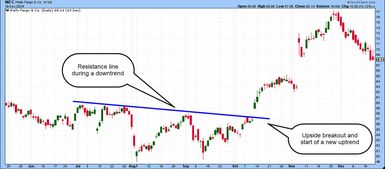
In financial markets, a technical breakout takes place when the price of an assetâa stock, commodity, or cryptocurrency, for exampleâmoves decisively above a resistance level or below a support level. These breakouts are often accompanied by a surge in trading volume and may signal a continuation of the current trend, a reversal, or the start of a new trend following a period of non-trending (sideways) movement.
Technical analysis is the art (and science) of using chart patterns and indicators to help you spot trends and time entry and exit points. Interested in technical analysis? Start here.
Breakouts are significant because resistance and support levels represent psychological thresholds where prices have previously stalled. Hence, traders often refer to resistance as a âprice ceilingâ and support as a âprice floor,â analogies that reflect how prices hesitate and reverse when approaching these levels.Â
These reversals are driven by investor behaviorâselling when the value of a stock (or other asset) is perceived to be too high (causing resistance) or buying when a stockâs value is perceived to be a bargain (creating support).Â
Notably, historic resistance and support levels tend to influence future price actions, particularly if a stock âretestsâ those levels. Traders pay attention to technical breakouts because they signal that the market is reassessing price levels that were previously considered either too high or too low.Â