Editor’s note: This article first appeared in Money Matters, a newsletter from Britannica Money, on March 29, 2026.
A smarter way to fund summer travel.
© Nancy Pauwels, Kittiphan/stock.adobe.com; Photo illustration Encyclopædia Britannica, Inc.
Who doesn’t like the idea of summer travel? Whether it’s hopping across the Atlantic to explore Europe, boarding a cruise ship to see Alaska, or heading out on an iconic American road trip, packing up and setting out go hand in hand with the season.
The less appealing part, of course, is paying for it all. But the cost of your getaway doesn’t have to linger on a credit card statement. With some planning and a bit of discipline, you can set aside much of the cost before you leave—and keep any post-vacation debt to a minimum.
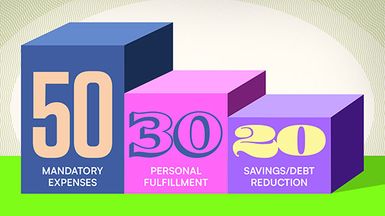
The 50-30-20 rule is a simple guideline for building a budget.
Photo illustration Encyclopædia Britannica, Inc.
Under the 50-30-20 budgeting rule, roughly 30% of your take-home pay goes toward discretionary spending—the “creature comforts” that make life more enjoyable. Travel fits squarely in that category, but that doesn’t mean it fits there automatically. If you want a bigger trip, you may need to scale back other discretionary spending and redirect those dollars into a travel fund. The goal isn’t to cut out fun; it’s to decide which kind matters most this summer.
Start by estimating the cost of your trip—flights, lodging, tickets, and the daily spending you expect while you’re there. Divide the total by the number of pay periods between now and your departure. That simple math tells you how much to set aside from each paycheck.
Then, open a separate savings account, much like you would for an emergency fund, and set up automated transfers for each pay period. The earlier you start, the smaller each transfer needs to be. By the time you board your flight or check into your hotel, much of the expense is already covered—and your credit card balance remains more manageable.
74%
A 2025 national survey found that nearly 3 in 4 U.S. adults planned to travel during the summer.
Plan for what you can’t prepay
Even if flights and hotels are covered before you leave, not every vacation expense can be paid in advance. Meals, local transportation, tips, souvenirs, and last-minute activities are costs that show up while you’re there—and they can add up quickly.
Before your trip, estimate a realistic amount to spend daily. Multiply that number by the number of travel days and add it to your savings target. Treat that amount as part of the total cost of the trip, not an afterthought. A rough estimate is better than none.
If you expect to use a credit card while traveling, decide in advance how much you’re comfortable charging and how quickly you’ll pay it off once you return. Ideally, any remaining balance is small enough that you can pay it in full when the statement arrives. The goal isn’t to eliminate every post-trip expense; it’s to avoid carrying a balance that accrues interest for months.
What credit card interest costs
Carrying even a modest balance on your credit card can make your trip more expensive than you planned. Interest on card balances compounds quickly, especially if you pay only the minimum.
- High rates: Many credit cards carry annual percentage rates above 20%. Any balance that isn’t paid off by the due date can begin accruing interest immediately after the grace period ends.
- Minimum trap: Paying only the minimum stretches repayment over months or years. Those manageable payments will linger well after the glow of your trip has dimmed.
- Added cost: Interest doesn’t improve your trip or buy you anything new. It simply increases the total amount you ultimately pay for flights, hotels, and meals.
- Opportunity loss: Money spent on interest could instead fund your next trip, build savings, or pay down other debt. Over time, that trade-off can meaningfully affect your overall financial progress.
Paying your balance in full each month keeps travel spending predictable. Planning ahead won’t eliminate every cost, but it can prevent adding interest to the bill.
A little structure goes a long way. These small steps can help you pay for more of your summer travel before you leave and keep your post-trip debt under control.
- Set a target. Add up airfare, lodging, tickets, and estimated daily spending. Use that amount as your savings goal to limit how much you’ll need to pay off after your trip.
- Automate transfers. Open a separate savings account and schedule transfers with each paycheck. Automatic contributions reduce the temptation to spend that money elsewhere.
- Reallocate spending. Review your discretionary expenses and temporarily scale back where possible. Redirect those dollars into your travel fund rather than adding new costs on top.
- Plan repayment. If you expect to charge some expenses, decide now how quickly you’ll repay them. Aim to pay off the balance when the statement arrives.
Travel should leave you with memories—not an unpaid credit card balance. With a plan in place, you can enjoy your trip knowing most of the cost was handled even before you packed your bags.
More from Britannica Money
This article was most recently revised and updated by David Schepp