

- On the Web:
- Cato Institute - Dr. Kevorkian Was Convicted of Murder 25 Years Ago Today (Oct. 30, 2026)

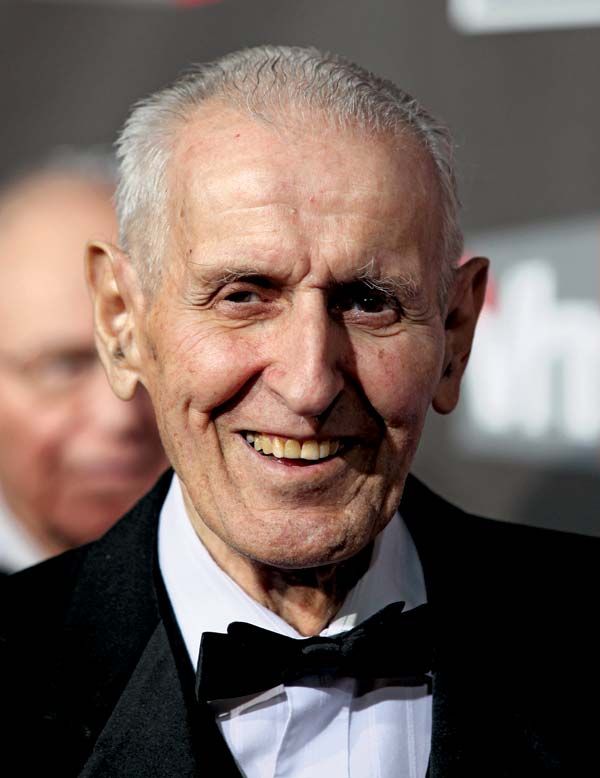
Jack Kevorkian
-
Who was Jack Kevorkian?
Jack Kevorkian, born in Pontiac, Michigan, on May 26, 1928, was an American pathologist known as "Dr. Death" for assisting in the suicides of over 100 terminally ill patients.
In 1990, he gained international attention after helping Janet Adkins end her life using his "Mercitron" machine. Facing legal challenges, Kevorkian was convicted of second-degree murder in 1999 and sentenced to 10–25 years in prison after administering a lethal injection to a patient with Lou Gehrig's disease.
He was paroled in 2007 after serving eight years and died on June 3, 2011, in Royal Oak, Michigan. Kevorkian's actions sparked intense debate about assisted suicide, raising ethical and legal questions about a patient's right to end their own life.
3 Britannica SourcesCreated from Britannica articles using AI. AI can make mistakes, so verify using Britannica articles. -
What was Jack Kevorkian's main profession?
Jack Kevorkian was an American physician who gained international attention for his involvement in the physician-assisted suicides of over 100 patients, many of whom were terminally ill.
Early in his career, Kevorkian worked as a pathologist at hospitals in Michigan and Southern California during the 1960s and 1970s. In 1982, he retired to focus on helping patients end their lives.
3 Britannica SourcesCreated from Britannica articles using AI. AI can make mistakes, so verify using Britannica articles. -
Why did Jack Kevorkian become famous?
Jack Kevorkian (1928-2011) was an American pathologist known as "Dr. Death" who gained international attention for assisting in the suicides of over 100 patients, many terminally ill. In 1990, he assisted Janet Adkins in committing suicide using his "Mercitron" machine. Facing legal challenges, Kevorkian was charged with murder in 1998 after administering a lethal injection to a patient with Lou Gehrig's disease. He was convicted of second-degree murder in 1999 and sentenced to prison. Kevorkian's actions ignited debates about physician-assisted suicide, with many medical professionals opposing it based on the principle of "do no harm".
3 Britannica SourcesCreated from Britannica articles using AI. AI can make mistakes, so verify using Britannica articles. -
What did Jack Kevorkian believe about assisted suicide?
Jack Kevorkian was an American physician known for assisting in the suicides of over 100 patients, many of whom were terminally ill. He retired from practice in 1982 to dedicate himself to helping patients end their lives.
Kevorkian asserted he only cared about his patients' welfare and that most doctors failed them by not responding to their suffering. He faced criticism from medical ethicists who believed his actions violated the basic medical tenet of "do no harm," and that he sought publicity to promote his ideas. Some euthanasia proponents also condemned his actions.
In 1999, Kevorkian was convicted of second-degree murder and served eight years in prison. He was released on parole in 2007.
2 Britannica SourcesCreated from Britannica articles using AI. AI can make mistakes, so verify using Britannica articles. -
How did Jack Kevorkian help patients who were suffering?
Jack Kevorkian was an American physician who assisted in the suicides of over 100 patients, many of whom were terminally ill. Kevorkian claimed he cared about his patients' welfare and that most American doctors failed them by not responding to their suffering. He retired from practice in 1982 to devote himself full time to helping patients end their lives.
Kevorkian gained international attention in 1990 when he enabled Janet Adkins, who had early-stage Alzheimer's disease, to commit suicide using his Mercitron machine. In response to Kevorkian’s role in the death of Hugh Gale, the Michigan legislature passed a bill making it a felony to assist in suicide.
2 Britannica SourcesCreated from Britannica articles using AI. AI can make mistakes, so verify using Britannica articles. -
What controversies or legal issues did Jack Kevorkian face because of his work?
Jack Kevorkian, known as "Dr. Death," faced numerous legal and ethical controversies due to his assistance in over 100 suicides of terminally ill patients. In 1993, the Michigan legislature made it a felony to provide someone with the means to commit suicide.
Kevorkian was arrested multiple times and served jail sentences for violating the state's law against assisted suicide. In 1998, after he administered a lethal injection to a patient with Lou Gehrig's disease on 60 Minutes, he was charged with first-degree murder. Ultimately, he was convicted of second-degree murder and served over eight years in prison before being paroled in 2007. Kevorkian argued his actions were "mercy killings," but the courts disagreed.
2 Britannica SourcesCreated from Britannica articles using AI. AI can make mistakes, so verify using Britannica articles.
Jack Kevorkian (born May 26, 1928, Pontiac, Michigan, U.S.—died June 3, 2011, Royal Oak, Michigan) was an American physician who gained international attention through his assistance in the suicides of more than 100 patients, many of whom were terminally ill.
Jack Kevorkian attended the University of Michigan and in 1952 graduated from the University of Michigan Medical School. Early in his professional training, Kevorkian distanced himself from the medical mainstream. As a pathology resident, he lobbied for carrying out medical experiments on death-row inmates at the hour set for their execution, and then giving them lethal injections, which earned him the sobriquet “Dr. Death.” Later he advocated establishing suicide clinics (“obitoria”). In the 1960s and ’70s he worked as a staff pathologist at hospitals in Michigan and southern California; then in 1982 he retired from practice and began to devote full time to his mission: helping patients end their lives.
Kevorkian gained international attention when in 1990 he enabled Janet Adkins of Portland, Oregon, who was 54 years old and in the early stages of Alzheimer disease, to kill herself by using his so-called Mercitron machine. Over the following three and a half years he was present at the deaths of 20 others. In response to Kevorkian’s role in the death of 70-year-old Hugh Gale, the Michigan legislature passed a bill making it a felony to knowingly provide a person with the means to commit suicide or to physically assist in the act. The legislators believed that Gale may have had second thoughts after Kevorkian placed a carbon-monoxide-dispensing mask over his face.



On November 22, 1993, Kevorkian attended the suicide of Ali Khalili. By going to Kevorkian for help, Khalili, a physician himself, seemed to be making a statement to the medical profession about its need to confront troubling ethical issues.
Physician-assisted suicide, legalized in the Netherlands in February 1993, was largely opposed by the American medical establishment. Many practitioners believed that such actions violate the most basic tenet of medicine: to do no harm. Medical ethicists criticized Kevorkian for assisting in the deaths of virtual strangers and seeking publicity in order to promote his own ideas. Even some proponents of euthanasia (“mercy killing”) condemned the Michigan doctor’s acts.
Countering his detractors, Kevorkian claimed that he had never cared about anything but the welfare of the patient in front of him and that most American doctors failed their patients by not responding to their suffering. Previously having refused to be stopped by laws, at the end of the year Kevorkian said he would no longer assist patients but would redirect his efforts toward changing those laws.
In November and December 1993 Kevorkian served two jail sentences on charges that he had violated the state’s law against assisting in a suicide. During his first prison sentence he threatened to starve himself to death to protest what he called “this immoral law.” He subsequently was released from jail. However, in November Kevorkian attended the suicide of Khalili, and he was sentenced to jail a second time. A second hunger strike left him frail and weakened, and he was released from jail on December 17, 1993, after promising that he would not participate in the deaths of any further individuals. On December 18 a Wayne county circuit court judge ruled that Michigan’s law against suicide assistance was unconstitutional, but the ruling was not binding in neighbouring Oakland county, where Kevorkian resided.
The trusted destination for professionals, college students, and lifelong learners.
SUBSCRIBE


In November 1998, just three days after the news program 60 Minutes aired footage of Kevorkian administering a lethal injection to a patient suffering from Lou Gehrig disease (amyotrophic lateral sclerosis), he was charged with first-degree murder because he not only violated the law banning physician-assisted suicide (a charge that was later dropped) but also delivered a controlled substance without a medical license. A year later he was convicted of second-degree murder and the unlawful delivery of a controlled substance and sentenced to 10–25 years in prison. In 2007, after having served more than eight years of his sentence, he was released on parole for good behaviour. The following year he unsuccessfully campaigned for a seat in the U.S. Congress representing the suburbs of Detroit.