
How did Archimedes’ work influence the later development of calculus?
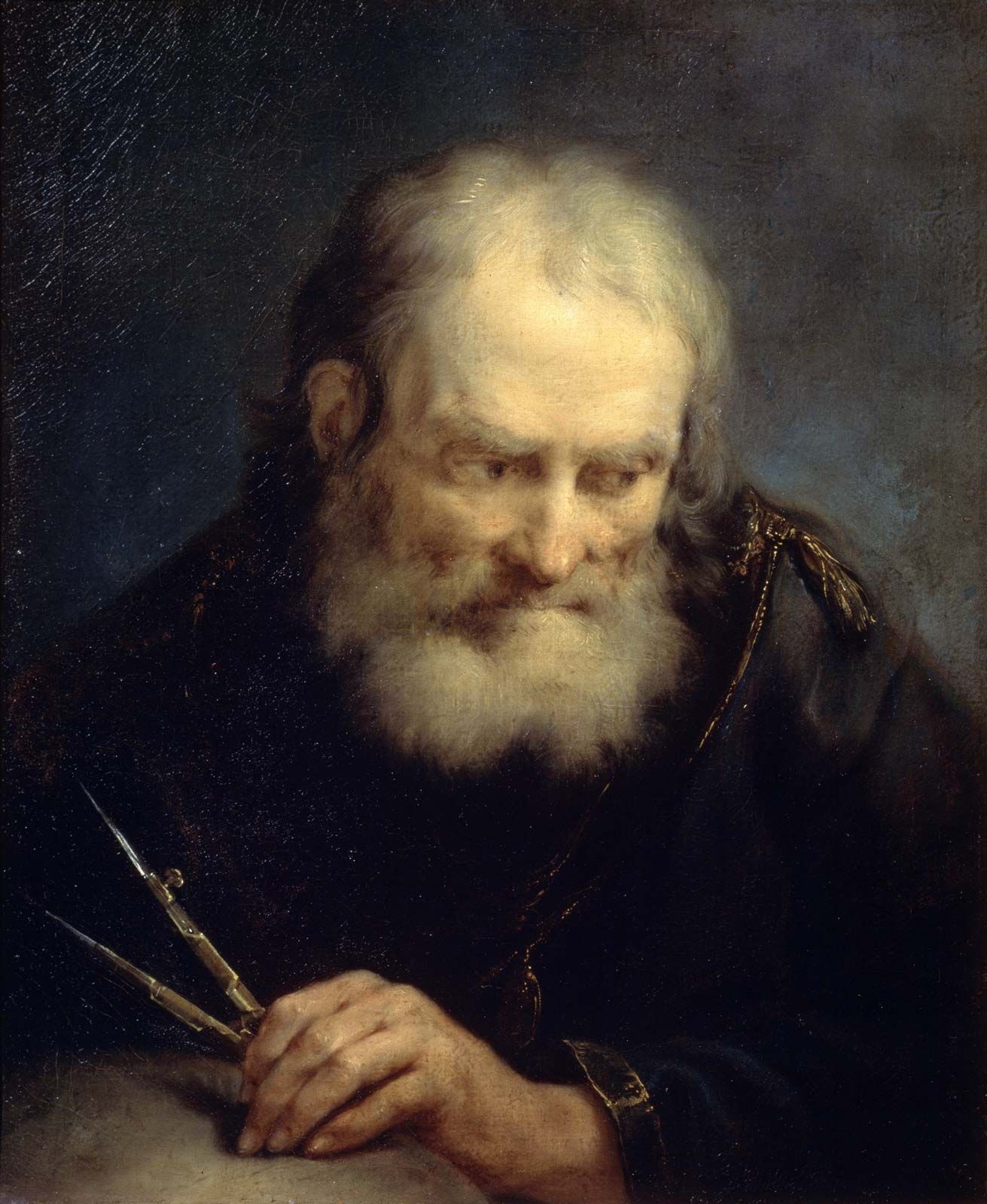
Archimedes’ work served as a foundational inspiration for the development of integral calculus by providing early techniques for solving problems involving areas and volumes of curved figures.12
His primary contribution was the method of exhaustion, which involved approximating the area or volume of a shape by inscribing and circumscribing it with simpler polygons or solids. This rigorous approach to limits was a precursor to modern integration. Additionally, his work Method Concerning Mechanical Theorems—which remained unknown to Renaissance mathematicians until its late 19th-century rediscovery—demonstrated a heuristic technique of dividing figures into an infinite number of infinitesimally thin strips to determine their ratios.1324
In the 17th century, the study of Archimedes' rediscovered texts was essential for mathematicians like Johannes Kepler, Pierre de Fermat, and Bonaventura Cavalieri. Cavalieri’s method of indivisibles, which treated areas and volumes as sums of infinitesimal elements, directly evolved from these Archimedean roots, eventually leading to the formalization of calculus.14