
- Farooq also spelled:
- Farouq
- Born:
- October 21, 1937, Soura, near Srinagar, Kashmir [now in Jammu and Kashmir union territory], India (age 89)
- Political Affiliation:
- Jammu and Kashmir National Conference
- Notable Family Members:
- father Sheikh Muhammad Abdullah
- son Omar Abdullah

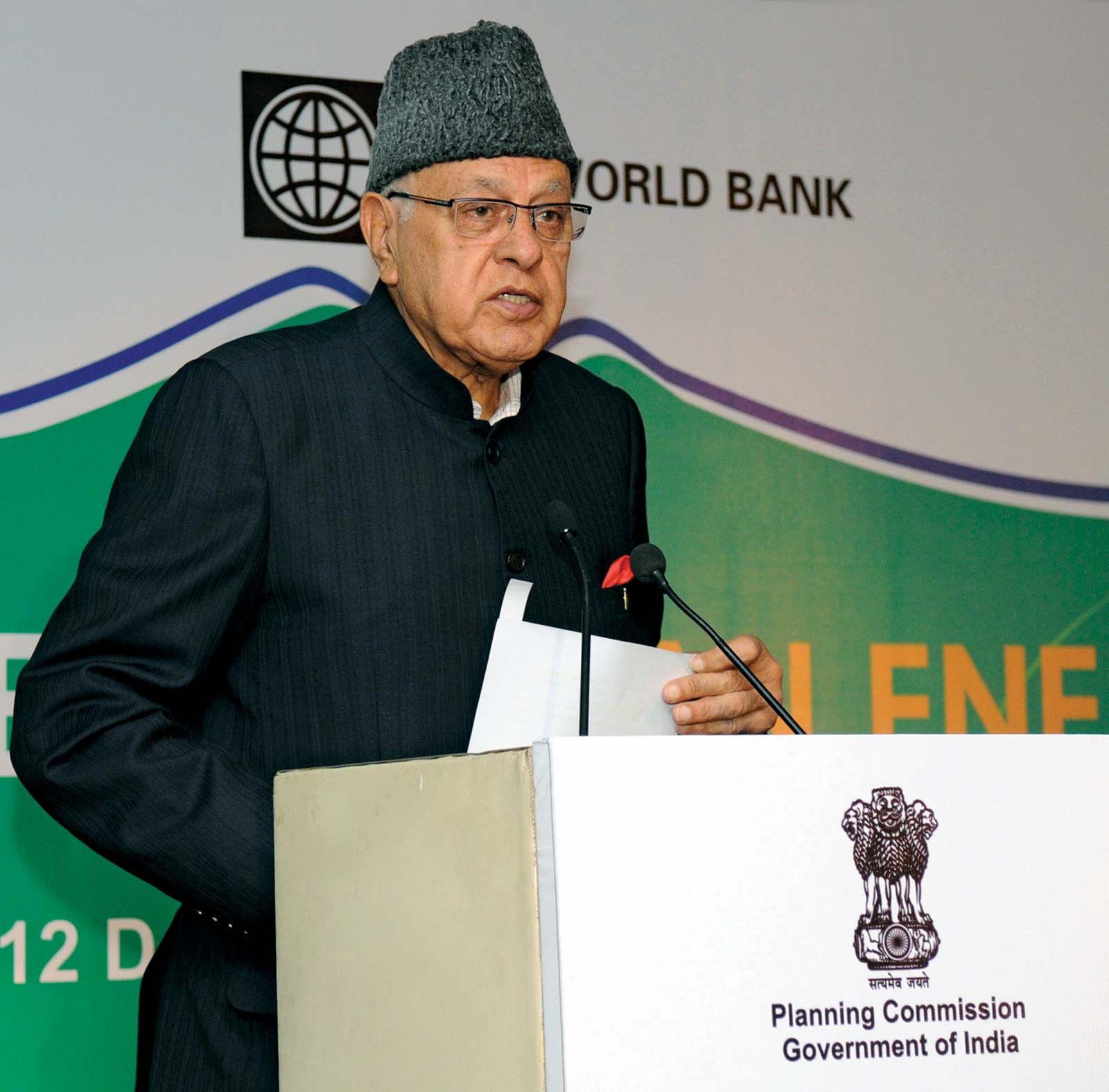
Farooq Abdullah
-
Who is Farooq Abdullah?
Farooq Abdullah is an Indian politician born on October 21, 1937. He has served as president of the Jammu and Kashmir National Conference (JKNC) twice and was the chief minister of Jammu and Kashmir state three times.
Belonging to a distinguished political family, Farooq is the son of Sheikh Muhammad Abdullah, who founded the JKNC and was instrumental in establishing Jammu and Kashmir as a semiautonomous state.
Farooq's political career began in 1977, and he has since been elected to both the Lok Sabha and the Jammu and Kashmir state legislative assembly. He has advocated for greater autonomy for Jammu and Kashmir within the Indian union.
2 Britannica SourcesCreated from Britannica articles using AI. AI can make mistakes, so verify using Britannica articles. -
Which state in India is Farooq Abdullah most closely associated with?
Farooq Abdullah is most closely associated with the union territory of Jammu and Kashmir in northwestern India. He has served as chief minister of Jammu and Kashmir three times and as president of the Jammu and Kashmir National Conference (JKNC). Throughout his career, Farooq Abdullah has advocated for greater autonomy for Jammu and Kashmir within the Indian union.
3 Britannica SourcesCreated from Britannica articles using AI. AI can make mistakes, so verify using Britannica articles. -
What political role is Farooq Abdullah best known for?
Farooq Abdullah is best known for serving as the chief minister of Jammu and Kashmir state three times (1982–84, 1986–90, and 1996–2002) and as president of the Jammu and Kashmir National Conference (JKNC) twice (1982–2002 and 2009– ). A popular leader, he frequently demanded greater autonomy for Jammu and Kashmir within the Indian union to resolve the region's long-running militancy problem. In 2017, he was elected to represent the Srinagar constituency in the Lok Sabha.
1 Britannica SourceCreated from Britannica articles using AI. AI can make mistakes, so verify using Britannica articles. -
Which political party does Farooq Abdullah belong to?
Farooq Abdullah belongs to the Jammu and Kashmir National Conference (JKNC). He has twice served as president of the JKNC, from 1982 to 2002 and again from 2009. Also, Abdullah has been the chief minister of Jammu and Kashmir three times: 1982–84, 1986–90, and 1996–2002. The top leadership of the JKNC has remained within the Abdullah family since the party’s founding.
3 Britannica SourcesCreated from Britannica articles using AI. AI can make mistakes, so verify using Britannica articles. -
What are some important events in Farooq Abdullah's political career?
Farooq Abdullah, born in 1937, is an Indian politician who has held significant positions in Jammu and Kashmir. Some key events in his career include:
-
Presidency of JKNC: He served as president of the Jammu and Kashmir National Conference (JKNC) twice, from 1982–2002 and 2009–.
-
Chief Minister: Abdullah was the chief minister of Jammu and Kashmir on three occasions: 1982–84, 1986–90, and 1996–2002.
-
Election to Lok Sabha: In 1980, Abdullah was elected to the Lok Sabha (lower chamber of the Indian parliament). In 2017, he was again elected to represent the Srinagar constituency in the Lok Sabha.
-
House Arrest: In August 2019, when the union government took measures to bring Jammu and Kashmir under its direct control, Farooq Abdullah was placed under house arrest along with other political leaders in the state.
2 Britannica SourcesCreated from Britannica articles using AI. AI can make mistakes, so verify using Britannica articles. -
-
How has Farooq Abdullah influenced politics in Jammu and Kashmir?
Farooq Abdullah, born into a prominent political family, has significantly shaped Jammu and Kashmir's politics. Succeeding his father, Sheikh Muhammad Abdullah, as chief minister and president of the Jammu and Kashmir National Conference (JKNC) in 1982, he has served multiple terms as chief minister.
Throughout his career, Farooq has advocated for greater autonomy for Jammu and Kashmir within India, aiming to address militancy in the region. Despite facing periods of central government rule and political challenges, he has remained a popular leader, winning elections to the Lok Sabha and continuing to champion the interests of his constituency.
1 Britannica SourceCreated from Britannica articles using AI. AI can make mistakes, so verify using Britannica articles.
Farooq Abdullah (born October 21, 1937, Soura, near Srinagar, Kashmir [now in Jammu and Kashmir union territory], India) is an Indian politician and government official who twice served as president (1982–2002 and 2009– ) of the Jammu and Kashmir National Conference (JKNC). He also was the chief minister (head of government) of Jammu and Kashmir state, northwestern India, on three occasions: 1982–84, 1986–90, and 1996–2002. In 2017 he was elected to represent the Srinagar constituency in the Lok Sabha. A popular leader, Farooq frequently made demands that Jammu and Kashmir be given greater autonomy within the Indian union as a way toward resolving the long-running problem of militancy in the state.
Farooq Abdullah was born to a distinguished political family in the Kashmir region of the Indian subcontinent. His father, Sheikh Muhammad Abdullah, known as the Lion of Kashmir, established the JKNC, was instrumental in the creation of Jammu and Kashmir as a semiautonomous state in the Indian-administered portion of Kashmir, and served as the state’s prime minister (1948–53) and, later, chief minister (1975–82). Farooq completed a medical degree at SMS Medical College in Jaipur, Rajasthan state, and pursued a profession in social work and medicine.
Farooq first became involved in politics when he helped to get his father reelected to the state legislative assembly in 1977. Although he had no direct experience in government office, in 1980 he was elected to the Lok Sabha (lower chamber of the Indian parliament). Two years later he resigned his seat after he had been elected to the Jammu and Kashmir state legislative assembly, where he was appointed the minister of health in the government headed by his father. Upon the death of Sheikh Abdullah in September 1982, Farooq succeeded his father as the chief minister and as president of the JKNC.



Farooq led the JKNC in the 1983 state assembly elections, in which the party won 46 of the chamber’s total of 76 seats, and he remained as the chief minister. His government lasted until 1984, when it was dismissed and replaced by one headed by his brother-in-law, Ghulam Mohammad Shah, of the Awami National Conference (ANC), a breakaway faction from the JKNC. In 1986 Farooq returned again as chief minister, after the JKNC had established a coalition with the Indian National Congress (Congress Party).
Farooq was reelected to the state assembly in 1987. With the continuation of the JKNC-Congress coalition, he remained as chief minister until 1990, when central government rule from New Delhi was imposed on the state, and his government was dismissed. Farooq spent much of the next several years in London, until central rule in Jammu and Kashmir was withdrawn 1996. In the state assembly polls held that year, the JKNC garnered a strong majority of seats, and Farooq, who won in his constituency, became the chief minister for a third time.
The state’s electorate became increasingly unhappy with Farooq’s rule, however, and in the 2002 assembly elections (in which he did not run for his assembly seat), the JKNC lost badly. Also in 2002 Farooq relinquished the presidency of the JKNC to his son, Omar Abdullah, and late that year Farooq won election to the Rajya Sabha (upper chamber of the Indian parliament). He served there until late 2008, when he again ran for and won a seat in the state assembly.
The year 2009 was eventful for Farooq. In January, with the finalization of a renewed JKNC-Congress coalition, his son, Omar, became chief minister of Jammu and Kashmir. Also at that time he replaced Omar as president of the party. The next month Farooq won another term in the Rajya Sabha and resigned from the state assembly. In May elections he contested and won a seat in the Lok Sabha, in the process defeating his elder sister, Khalida Shah, of the ANC. After taking office, he was appointed the minister of the new and renewable energy portfolio in the Congress-led United Progressive Alliance (UPA) coalition government. Farooq lost his bid for reelection to the Lok Sabha in the 2014 parliamentary elections. In addition, following the landslide victory by the Bharatiya Janata Party in the polling, Farooq left office with the rest of the UPA government in late May. In 2017 he again ran for a seat in the Lok Sabha, and this time he was victorious.
The trusted destination for professionals, college students, and lifelong learners.
SUBSCRIBE


In August 2019, when the union government took measures to bring Jammu and Kashmir under its direct control and split it in two, Farooq was placed under house arrest along with other political leaders in the state. After a habeas corpus petition was filed on his behalf in September, he was charged with being a likely disturbance to the public order. He was released in March 2020 after his detention order expired.