
- Date:
- 1939 - present
- Related People:
- Farooq Abdullah
- Omar Abdullah


Jammu and Kashmir National Conference
-
What is the Jammu and Kashmir National Conference?
The Jammu and Kashmir National Conference (JKNC) is a regional political party in the union territory of Jammu and Kashmir, India. Founded in 1932 as the All Jammu and Kashmir Muslim Conference by Sheikh Muhammad Abdullah, it was renamed the JKNC in 1939.
The party has historically advocated for autonomy for Kashmiris while maintaining that Jammu and Kashmir is an integral part of India. The top leadership of the JKNC has remained within the Abdullah family since its founding. Sheikh Mohammad Abdullah was president until 1981, succeeded by his son Farooq Abdullah. In 2002, Farooq’s son, Omar Abdullah, became president, then relinquished the office back to his father when he became chief minister in 2009.
2 Britannica SourcesCreated from Britannica articles using AI. AI can make mistakes, so verify using Britannica articles. -
When and why was the Jammu and Kashmir National Conference founded?
The Jammu and Kashmir National Conference (JKNC) was founded as the All Jammu and Kashmir Muslim Conference in October 1932 by Sheikh Muhammad Abdullah in Srinagar. It was renamed the Jammu and Kashmir National Conference on June 11, 1939.
Sheikh Muhammad Abdullah fought for the rights of the Kashmir region and against discrimination exercised by the Hindu ruling house. He supported the concept of a secular state, and when India achieved independence in 1947, he strongly opposed the idea of Kashmir joining Muslim Pakistan.
2 Britannica SourcesCreated from Britannica articles using AI. AI can make mistakes, so verify using Britannica articles. -
Who were some important leaders of the Jammu and Kashmir National Conference?
The Jammu and Kashmir National Conference (JKNC) has been led by influential figures, primarily from the Abdullah family.
Key leaders include:
-
Sheikh Muhammad Abdullah: Founder of the JKNC, known as the "Lion of Kashmir," he served as prime minister and later chief minister of Jammu and Kashmir.
-
Farooq Abdullah: Son of Sheikh Muhammad Abdullah, Farooq served multiple terms as chief minister and president of the JKNC.
-
Omar Abdullah: Grandson of Sheikh Muhammad Abdullah, Omar also served as chief minister and president of the JKNC.
4 Britannica SourcesCreated from Britannica articles using AI. AI can make mistakes, so verify using Britannica articles. -
-
What are the main goals or beliefs of the Jammu and Kashmir National Conference?
The Jammu and Kashmir National Conference (JKNC) advocates for the disputed territory of Jammu and Kashmir as an integral part of India, while also supporting autonomy for Kashmiris. The JKNC believes that autonomous status would strengthen the bond between Jammu and Kashmir and the Indian government, aligning with the original agreement when Jammu and Kashmir joined India in the early 1950s. The party has also been a proponent of trade between Jammu and Kashmir and the portions of the Kashmir region administered by Pakistan and supported the reopening of a road link between Srinagar and Muzaffarabad in 2005.
1 Britannica SourceCreated from Britannica articles using AI. AI can make mistakes, so verify using Britannica articles. -
How has the Jammu and Kashmir National Conference influenced politics in the region?
The Jammu and Kashmir National Conference (JKNC) has significantly shaped the political landscape of Jammu and Kashmir. Founded in 1932, the party has advocated for autonomy for Kashmiris while maintaining that the region is an integral part of India.
Throughout its history, the JKNC has experienced periods of dominance and decline in the state assembly, holding power under leaders like Sheikh Mohammad Abdullah and Farooq Abdullah. The party has also had a presence in national politics, with members representing Jammu and Kashmir in the Lok Sabha and participating in coalition governments. In the 2024 assembly elections, the JKNC regained power, marking a resurgence in the region.
1 Britannica SourceCreated from Britannica articles using AI. AI can make mistakes, so verify using Britannica articles. -
What major events or decisions has the Jammu and Kashmir National Conference been involved in throughout its history?
The Jammu and Kashmir National Conference (JKNC) was founded in 1932 as the All Jammu and Kashmir Muslim Conference and renamed in 1939. At the time of Indian independence in 1947, Sheikh Abdullah of the JKNC became prime minister of Kashmir. The party won all 75 seats in the state's first legislative assembly elections in 1951.
In 1965, the JKNC merged with the Indian National Congress, but later, a splinter faction led by Sheikh Abdullah reclaimed the JKNC name when he returned to power in 1975. The JKNC has advocated for autonomy for Kashmiris and trade between Jammu and Kashmir and Pakistan-administered Kashmir. The party governed the state for most of the time between 1947 and 2019. In August 2019, the national government removed Jammu and Kashmir’s autonomy. The JKNC surged back to power in the assembly elections held in October 2024.
2 Britannica SourcesCreated from Britannica articles using AI. AI can make mistakes, so verify using Britannica articles.
Jammu and Kashmir National Conference (JKNC), regional political party in the union territory of Jammu and Kashmir, northwestern India. In October 1932 the All Jammu and Kashmir Muslim Conference, the precursor of the Jammu and Kashmir National Conference (JKNC), was founded at Srinagar by Sheikh Muhammad Abdullah. It was rechristened as the JKNC on June 11, 1939.
The party has maintained an unequivocal stand that the disputed territory of Jammu and Kashmir is an integral part of India, but it has also advocated autonomy for Kashmiris. Its rationale for the latter position is that autonomous status would strengthen the bond between the territory and the national government in New Delhi, because it would be in keeping with the original agreement when Jammu and Kashmir joined the Indian union in the early 1950s. The JKNC has been a strong protagonist for trade between Jammu and Kashmir and the portions of the Kashmir region administered by Pakistan. It supported the reopening of a road link between Srinagar (now the summer capital of Jammu and Kashmir union territory) and Muzaffarabad (in Azad Kashmir) in 2005.
The top leadership of the JKNC has remained within the Abdullah family since the party’s founding. Sheikh Mohammad Abdullah was the president until 1981, at which time his son, Farooq Abdullah, succeeded him. In 2002 Farooq’s son, Omar Abdullah, became president, although—when Omar became chief minister (head of government) of the state in January 2009—he relinquished the office back to his father.


 " height="20" alt="HEW Logo">
At the time of Indian independence from Britain in 1947, Sheikh Abdullah assumed what was then the office of prime minister of Kashmir. The state’s first elections to its legislative assembly were held in September 1951, and the JKNC won all 75 seats. Sheikh Abdullah remained the prime minister of Jammu and Kashmir until August 1953, when he was dismissed by the central government and detained on grounds of conspiracy against the government of India. Sheikh Abdullah was absolved of the charges and released in 1964, but he was rearrested in 1965 and held until 1968 under the same allegations.
In 1965 the JKNC merged with the Indian National Congress (Congress Party) and became the Jammu and Kashmir branch of Congress. However, the Plebiscite Front, a splinter faction controlled by Sheikh Abdullah, appropriated the name of the original JKNC after he was allowed to return to power as chief minister in February 1975.
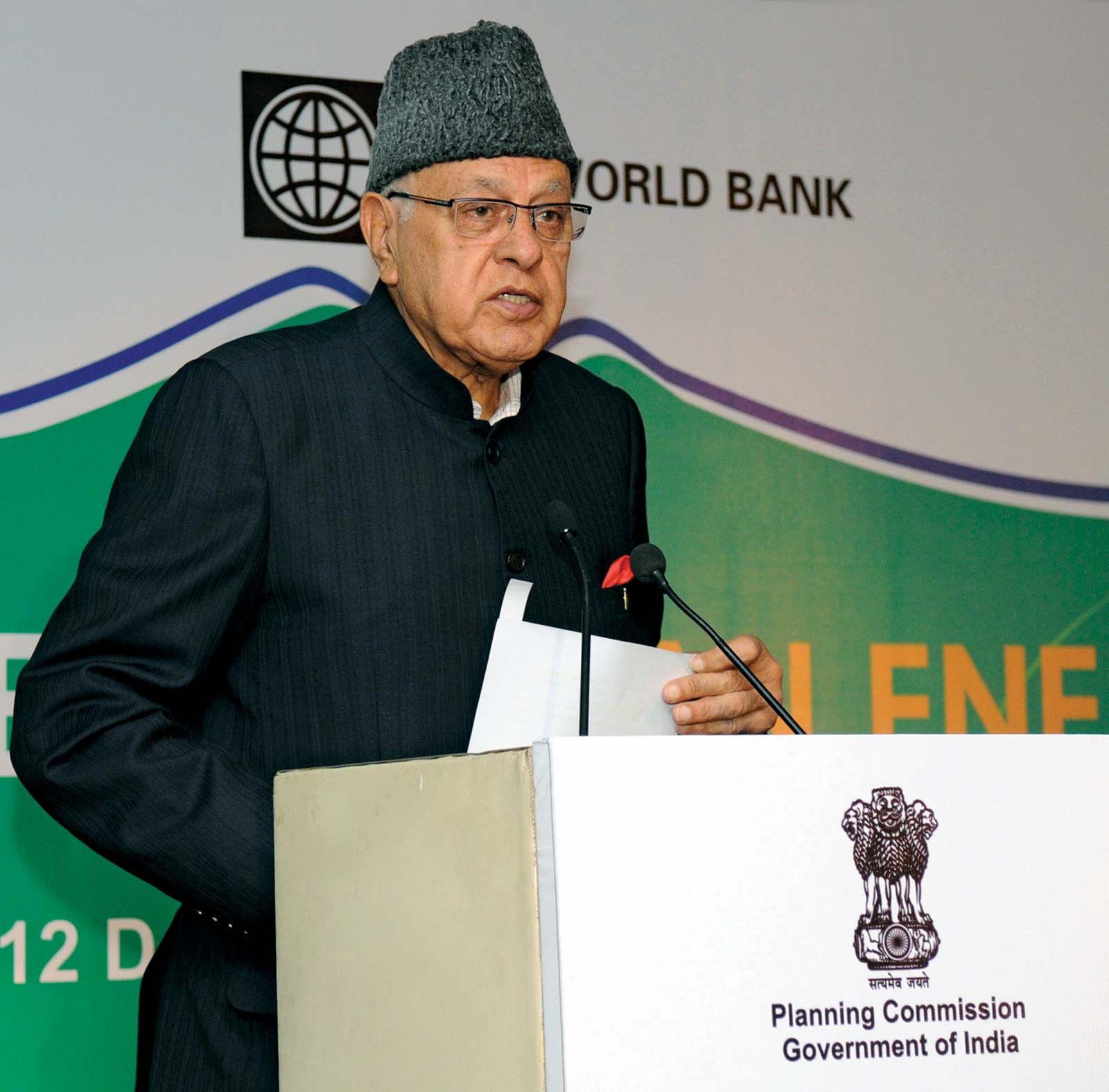
The reconstituted JKNC won majorities in the state assembly elections in 1977 (47 seats out of 76) and 1983 (46 seats), with Sheikh Abdullah and Farooq Abdullah becoming chief ministers, respectively. In 1987 the party’s seat total dropped to 40, and it formed a coalition government with the Congress Party, Farooq Abdullah again serving as chief minister. There were times during that decade, however, when governance of the state was under the control of the central government, and in 1990 New Delhi again took over the state and ruled it until 1996. Elections to the state assembly were resumed in 1996, and the JKNC won by a huge margin, securing 57 seats out of a total 87 and returning Farooq Abdullah as chief minister. He had been required to sign an accord with the central government on the status of Jammu and Kashmir before the election could be held.
Farooq Abdullah’s administration became known for misrule and nondelivery on its electoral promises, however, and in the 2002 assembly elections the JKNC’s strength was reduced to 28 seats, and it lost power. In the heavily populated Vale of Kashmir, the party’s longtime stronghold, it could win only 18 seats. The Congress Party cobbled together a coalition government with the Jammu and Kashmir People’s Democratic Party (PDP). The JKNC again won only 28 seats in the 2008 state assembly elections, but its fortunes were revived when Congress agreed to join it in a coalition government with Omar Abdullah as chief minister (the government took office in January 2009). In the 2014 state contests, however, the JKNC managed to win only 15 seats, and Abdullah resigned as chief minister. The PDP won the largest number of seats and formed a coalition government with the Bharatiya Janata Party.
The trusted destination for professionals, college students, and lifelong learners.
SUBSCRIBE


The JKNC has had only a modest presence at the national political level. The party first contested and won a seat in the Lok Sabha (lower chamber of the Indian parliament) in 1967, and in elections in the 1970s and ’80s it generally returned three members to the chamber. After a hiatus of several years with no party representation in the chamber, the JKNC again began garnering two to four seats with each election, beginning with the 1998 poll. The party was a member of the Bharatiya Janata Party-led National Democratic Alliance coalition government in 1999–2003. Farooq Abdullah was first elected to the Lok Sabha in 1980, serving there for two years. He won a second term to the chamber in 2009, at which time the JKNC joined the ruling Congress-led United Progressive Alliance coalition. Farooq Abdullah was named minister of New and Renewable Energy, becoming the first party member to hold a national cabinet-level post. He and other party candidates were unsuccessful in the 2014 elections to the Lok Sabha, and, after the landslide victory by the Bharatiya Janata Party (BJP) in the polling, he left office along with the rest of the UPA government in late May.
Farooq Abdullah was returned to the Lok Sabha after winning an election in 2017. His membership in the parliamentary body, however, offered little opportunity to oppugn the BJP-led government’s revocation of Jammu and Kashmir’s autonomy and statehood in 2019, nor did it prevent his detention in a subsequent crackdown against leaders of the JKNC and the PDP. Although leaders were released in 2020, they continued to report restrictions on their movement.
The JKNC surged back to power in Jammu and Kashmir in the assembly elections held in October 2024, the first polls held in the union territory since the 2014 election and the revocation of Jammu and Kashmir’s special status in 2019. It won 42 seats out of a target of 46 (the seat strength in the Jammu and Kashmir assembly is 95—elections were held for 90 seats). Four independent candidates who won their respective seats pledged their support to the JKNC, making up the shortfall. The party’s allies, the Indian National Congress and the Communist Party of India (Marxist), also won six seats and one seat, respectively.