
- In full:
- Edward Joseph Snowden
- Born:
- June 21, 1983, Elizabeth City, North Carolina, U.S. (age 43)
- Notable Works:
- “Permanent Record”
- Subjects Of Study:
- PRISM

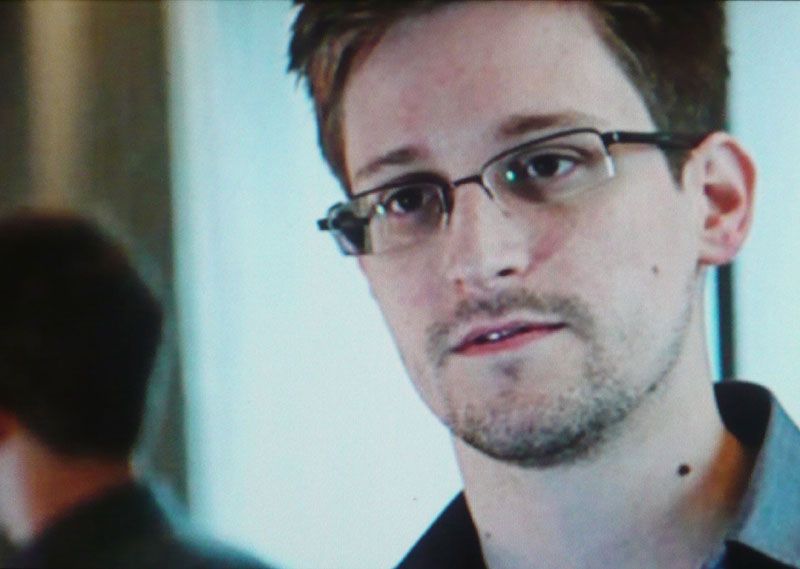
Edward Snowden
-
Who is Edward Snowden?
Edward Snowden, born on June 21, 1983, is an American intelligence contractor and whistleblower. In 2013, he revealed secret, wide-ranging information-gathering programs conducted by the National Security Agency (NSA). Snowden's actions highlighted debates about government power, digital privacy, whistleblowing ethics, and the role of the Internet in facilitating such disclosures.
He worked for the Central Intelligence Agency (CIA) and as a contractor for Dell and Booz Allen Hamilton. Snowden's leaks included a court order compelling Verizon to release metadata and the existence of PRISM, a data-mining program. Facing espionage charges in the U.S., he sought asylum and was granted temporary refugee status in Russia, later receiving a residence permit and, in 2022, Russian citizenship.
1 Britannica SourceCreated from Britannica articles using AI. AI can make mistakes, so verify using Britannica articles. -
What job did Edward Snowden have before becoming well-known?
Before gaining public attention, Edward Snowden worked as an American intelligence contractor. He demonstrated a knack for computers, which led to his hiring by the Central Intelligence Agency (CIA) in 2006. In 2007, he was stationed in Geneva as a network security technician under diplomatic cover. Snowden left the CIA in 2009 and then worked for the National Security Agency (NSA) as a private contractor for Dell and Booz Allen Hamilton. In 2013, he leaked secret NSA surveillance programs to journalists and the media.
2 Britannica SourcesCreated from Britannica articles using AI. AI can make mistakes, so verify using Britannica articles. -
What did Edward Snowden reveal to the public?
Edward Snowden, an American intelligence contractor, exposed secret, extensive data-collection programs by the National Security Agency (NSA) in 2013.
Among the revelations were a court order compelling Verizon to hand over metadata on millions of subscribers and the existence of PRISM, a data-mining program that gave the NSA, the FBI, and Britain’s GCHQ “direct access” to the servers of major internet companies like Google, Facebook, Microsoft, and Apple. Snowden believed these surveillance programs were too broad.
His actions sparked debate about government power, digital privacy, and whistleblowing ethics.
2 Britannica SourcesCreated from Britannica articles using AI. AI can make mistakes, so verify using Britannica articles. -
Why did Snowden's actions cause a lot of debate and controversy?
Edward Snowden's release of classified information regarding the National Security Agency's (NSA) secret surveillance programs sparked considerable debate and controversy because it highlighted the secret use of government power and privacy in the digital age. Some viewed Snowden as a whistleblower, committed to the public interest by revealing governmental mismanagement. Conversely, others considered his actions a violation of nondisclosure agreements, jeopardizing national security. This led to charges of espionage by the U.S. government.
2 Britannica SourcesCreated from Britannica articles using AI. AI can make mistakes, so verify using Britannica articles. -
How did different governments react to Snowden's disclosures?
Edward Snowden's 2013 disclosures of secret NSA surveillance programs sparked varied governmental reactions. The United States charged Snowden with espionage. Hong Kong declined to act on extradition requests, and Russia granted him temporary asylum and later citizenship.
President Obama created a panel to review surveillance practices. In the United Kingdom, Snowden's leaks ignited debate over government surveillance, with some condemning the leaks while others defended the necessity of GCHQ activities for national security.
2 Britannica SourcesCreated from Britannica articles using AI. AI can make mistakes, so verify using Britannica articles. -
What is Edward Snowden's situation today, and how have his actions influenced discussions about privacy and security?
Edward Snowden, born on June 21, 1983, is an American intelligence contractor and whistleblower who revealed the existence of secret, wide-ranging information-gathering programs conducted by the National Security Agency (NSA) in 2013.
After spending over a month in the Sheremetyevo transit zone, Russia granted Snowden temporary refugee status. In 2020, he was granted permanent residency, and in September 2022, Vladimir Putin granted him Russian citizenship.
Snowden's actions highlighted issues such as the secret use of government power, privacy in the digital age, and the ethics of whistleblowing.
1 Britannica SourceCreated from Britannica articles using AI. AI can make mistakes, so verify using Britannica articles.
Edward Snowden (born June 21, 1983, Elizabeth City, North Carolina, U.S.) is an American intelligence contractor and whistleblower who in 2013 revealed the existence of secret wide-ranging information-gathering programs conducted by the National Security Agency (NSA). The case highlighted a host of issues, including the secret use of government power, privacy in the digital age, the ethics of whistleblowing, and the role that the Internet and anonymous browsers on the dark web such as Tor can play in facilitating such whistleblowing.
Snowden was born in North Carolina, and his family moved to central Maryland, a short distance from NSA headquarters at Fort Meade, when he was a child. He dropped out of high school and studied intermittently between 1999 and 2005 at a community college; he completed a GED but did not receive a college degree. He enlisted in the army reserve as a special forces candidate in May 2004, but he was discharged four months later. In 2005 he worked as a security guard at the Center for Advanced Study of Language, a University of Maryland research facility affiliated with the NSA. Despite a relative lack of formal education and training, Snowden demonstrated an aptitude with computers, and he was hired by the Central Intelligence Agency in 2006. He was given a top secret clearance and in 2007 was posted to Geneva, where he worked as a network security technician under a diplomatic cover.
Snowden left the CIA for the NSA in 2009. There he worked as a private contractor for the companies Dell and Booz Allen Hamilton. During this time, he began gathering information on a number of NSA activities—most notably, secret surveillance programs that he believed were overly broad in size and scope. In May 2013 Snowden requested a medical leave of absence and flew to Hong Kong, where during the following month he conducted a series of interviews with journalists from the newspaper The Guardian. Footage filmed during that period was featured in the documentary Citizenfour (2014). Among the NSA secrets leaked by Snowden was a court order that compelled telecommunications company Verizon to turn over metadata (such as numbers dialed and duration of calls) for millions of its subscribers. Snowden also disclosed the existence of PRISM, a data-mining program that reportedly gave the NSA, the Federal Bureau of Investigation, and the Government Communications Headquarters—Britain’s NSA equivalent—“direct access” to the servers of such Internet giants as Google, Facebook, Microsoft, and Apple.



On June 9, 2013, days after stories were initially published in The Guardian and The Washington Post without revealing the identity of their source, Snowden came forward, stating that he felt no need to hide because he had done nothing wrong. In a subsequent interview with the South China Morning Post, he claimed that the NSA had been hacking into Chinese computers since 2009 and that he had taken a job with Booz Allen Hamilton expressly to obtain information about secret NSA activities. The U.S. charged Snowden with espionage on June 14, and Justice Department officials, including Attorney General Eric Holder, began negotiating with authorities in Hong Kong in an attempt to initiate extradition procedures. The Hong Kong government declined to act, and Snowden, with the assistance of the media organization WikiLeaks, flew to Moscow, where his exact whereabouts became the source of intense speculation. Russian Pres. Vladimir Putin confirmed that Snowden, whose passport had been revoked by the U.S., remained within the confines of the international transit zone of Moscow’s Sheremetyevo airport.
Putin resolutely stated that Russia would take no part in his extradition to the United States, and Snowden applied for asylum in some 20 countries, including Russia. Putin also made clear that he did not wish for Snowden’s presence to damage relations with the United States, and he said that if Snowden wished to remain in Russia, “he must stop his work aimed at bringing harm to our American partners.” After having spent more than a month in the Sheremetyevo transit zone, Snowden was granted temporary refugee status by Russia, and he left the airport in the company of a WikiLeaks staffer.
Although U.S. Pres. Barack Obama was critical of Snowden’s methods, in August 2013 he announced the creation of an independent panel to examine the U.S. government’s surveillance practices. That panel’s findings, published in December 2013, recommended that the mass collection of telephone records be suspended and advised greater oversight of sensitive programs, such as those targeting friendly foreign leaders. Obama acted on a number of these suggestions and recommended congressional review of others, but the role of the NSA and its data-collection efforts remained a bone of contention between the intelligence community and privacy advocates. In April 2014 The Guardian U.S. and The Washington Post were awarded the Pulitzer Prize for public service for their roles in reporting on the NSA leaks. Snowden characterized the award as “a vindication” of his efforts to bring the secret surveillance programs to light.
In August 2014, as Snowden’s grant of temporary asylum expired, the Russian government awarded him a three-year residence permit (effective August 1), which would allow him to leave the country for up to three months. The permit was extended in 2017, and Snowden was granted permanent residency in 2020. In September 2022 Russian Pres. Vladimir Putin granted Snowden Russian citizenship.
The trusted destination for professionals, college students, and lifelong learners.
SUBSCRIBE


In September 2019 Snowden released the memoir Permanent Record. On the same day, the U.S. Justice Department sued him to recover all of his earnings from the book, claiming that he had violated his nondisclosure agreements with the CIA and NSA by not submitting the work to them for a prepublication review.