
- Also called:
- Afonso de Albuquerque the Great
- Born:
- 1453, Alhandra, near Lisbon, Portugal
- Died:
- December 15, 1515, at sea, off Goa, India (aged 62)

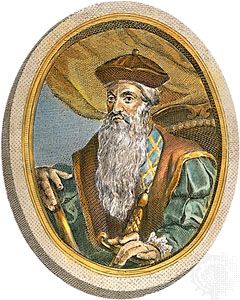
Afonso de Albuquerque
-
Who was Afonso de Albuquerque?
Afonso de Albuquerque (1453–1515) was a Portuguese soldier who established Portuguese hegemony in the Orient by gaining control of the main maritime trade routes of the East and building permanent fortresses with settled populations.
Albuquerque served in North Africa for 10 years, gaining military experience against Muslims. Later, King Manuel I appointed Albuquerque to succeed Dom Francisco de Almeida as governor in India. Albuquerque conquered Goa in India (1510) and Melaka on the Malay Peninsula (1511).
1 Britannica SourceCreated from Britannica articles using AI. AI can make mistakes, so verify using Britannica articles. -
Which country did Afonso de Albuquerque serve?
Afonso de Albuquerque served Portugal as a soldier and conqueror. He was born in Alhandra, near Lisbon, Portugal, in 1453. Albuquerque is known for his conquest of Goa, India, in 1510, and Malacca (now Melaka) on the Malay Peninsula in 1511. His efforts to control maritime trade routes and establish permanent fortresses were instrumental in establishing Portuguese dominance in the East.
1 Britannica SourceCreated from Britannica articles using AI. AI can make mistakes, so verify using Britannica articles. -
What was Afonso de Albuquerque best known for doing?
Afonso de Albuquerque (1453-1515) was best known for his role in establishing Portuguese hegemony in the Orient. As a Portuguese soldier, he conquered Goa, India, in 1510 and Melaka on the Malay Peninsula in 1511. His strategic program aimed to control the main maritime trade routes of the East and construct permanent fortresses with settled populations. These efforts laid the groundwork for Portugal's dominance in the region.
1 Britannica SourceCreated from Britannica articles using AI. AI can make mistakes, so verify using Britannica articles. -
Which important cities did Afonso de Albuquerque capture for Portugal?
Afonso de Albuquerque captured key cities to solidify Portuguese dominance in the East. In 1510, he conquered Goa in India, which he planned to transform into a naval base and colony. Then, in 1511, Albuquerque seized Malacca (now Melaka) on the Malay Peninsula, a crucial distribution point for the Spice Islands. Additionally, Albuquerque captured Hormuz (Ormuz), an island in the channel between the Persian Gulf and the Gulf of Oman, to open Persian trade with Europe.
2 Britannica SourcesCreated from Britannica articles using AI. AI can make mistakes, so verify using Britannica articles. -
Why was controlling trade routes important to Afonso de Albuquerque?
Afonso de Albuquerque aimed to control the main maritime trade routes of the East to establish Portuguese hegemony in the Orient. By controlling these routes, Albuquerque sought to monopolize the European spice trade, diverting it through Portuguese-controlled territories and ensuring that all trade activities were licensed by them.
Establishing permanent fortresses with settled populations was also a key part of Albuquerque's plan to maintain control over strategic locations and trade. This would enable the Portuguese to dominate the Indian Ocean trade.
4 Britannica SourcesCreated from Britannica articles using AI. AI can make mistakes, so verify using Britannica articles. -
How did Afonso de Albuquerque influence the spread of the Portuguese Empire in Asia?
Afonso de Albuquerque significantly contributed to the Portuguese Empire in Asia through his strategic conquests and policies.
Albuquerque aimed to dominate maritime trade routes and establish permanent fortresses. In 1510, he conquered Goa, making it a naval base against Muslims and a hub for the spice trade. He encouraged Portuguese men to marry local women to establish a local population. In 1511, Albuquerque captured Malacca, a key distribution point for the Spice Islands, and garrisoned it.
Albuquerque's efforts laid the groundwork for Portuguese dominance in the East by establishing military and trade control.
1 Britannica SourceCreated from Britannica articles using AI. AI can make mistakes, so verify using Britannica articles.
Afonso de Albuquerque (born 1453, Alhandra, near Lisbon, Portugal—died December 15, 1515, at sea, off Goa, India) was a Portuguese soldier, conqueror of Goa (1510) in India and of Melaka (1511) on the Malay Peninsula. His program to gain control of all the main maritime trade routes of the East and to build permanent fortresses with settled populations laid the foundations of Portuguese hegemony in the Orient.
Albuquerque was the second son of the senhor of Vila Verde. His paternal great-grandfather and grandfather had been confidential secretaries to Kings John I and Edward (Duarte), and his maternal grandfather had been admiral of Portugal. Albuquerque served 10 years in North Africa, where he gained early military experience crusading against Muslims. He was present at Afonso V’s conquest of Asilah and Tangier in 1471. King John II (ruled 1481–95) made him master of the horse, a post Albuquerque held throughout the reign. In 1489 he again served in North Africa at the defense of Graciosa. Under John’s successor, Manuel I, Albuquerque was less prominent at court but again served in Morocco.
Although Albuquerque made his mark under the stern John II and gained his experience in Africa, his reputation rests on his service in the East. When Vasco da Gama returned to Portugal in 1499 from his pioneering voyage around the Cape of Good Hope to India, King Manuel straightway sent a second fleet under Pedro Álvares Cabral to open relations and trade with the Indian rulers. The Muslim traders who had monopolized the distribution of spices turned the zamorin (Hindu prince) of Calicut (now Kozhikode) against the Portuguese. His dependency, however, Cochin (now Kochi), on the southwestern Indian coast, welcomed them. In 1503 Albuquerque arrived with his cousin Francisco to protect the ruler of Cochin, where he built the first Portuguese fortress in Asia and placed a garrison. After setting up a trading post at Quilon (now Kollam), he returned to Lisbon in July 1504, where he was well received by Manuel and participated in the formulation of policy. In 1505 Manuel appointed Dom Francisco de Almeida first governor in India, with the rank of viceroy. Almeida’s object was to develop trade and aid the allies of the Portuguese.



Albuquerque left Lisbon with Tristão da Cunha in April 1506 to explore the east coast of Africa and build a fortress on the island of Socotra to block the mouth of the Red Sea and cut off Arab trade with India. This done (August 1507), Albuquerque captured Hormuz (Ormuz), an island in the channel between the Persian Gulf and the Gulf of Oman, to open Persian trade with Europe. His project of building a fortress at Hormuz had to be abandoned because of differences with his captains, who departed for India. Albuquerque, though left with only two ships, continued to raid the Persian and Arabian coasts.
King Manuel appointed Albuquerque to succeed Almeida at the end of his term, though without the rank of viceroy. When Albuquerque reached India in December 1508, Almeida had crushed the improvised sea force of Calicut, but a navy from Egypt had defeated and killed his son. Insisting on retaining power until he had avenged his son’s death, Almeida, to avoid interference, had Albuquerque imprisoned. Almeida defeated the Muslims off Diu in February 1509, and it was only in the following November, with the arrival of a fleet from Portugal, that he finally turned his office over to Albuquerque.
Albuquerque’s plan was to assume active control over all the main maritime trade routes of the East and to establish permanent fortresses with settled populations. His attempt to seize Cochin in January 1510 was unsuccessful. By February Albuquerque had realized that it was better to try to supplant the Muslims; assisted by a powerful corsair named Timoja, he took 23 ships to attack Goa, long ruled by Muslim princes. He occupied it in March 1510, was forced out of the citadel by a Muslim army in May, and was finally able to carry it by assault in November. The Muslim defenders were put to the sword.
After this victory over the Muslims, the Hindu rulers accepted the Portuguese presence in India. Albuquerque planned to use Goa as a naval base against the Muslims, to divert the spice trade to it, and to use it to supply Persian horses to the Hindu princes. By marrying his men to local women, he would give Goa its own population, and its supplies would be assured by the village communities under a special regime. After providing for the government of Goa, Albuquerque embarked on the conquest of Malacca (now Melaka), on the Malay Peninsula, the immediate point of distribution for the Spice Islands and points east. He took that port in July 1511, garrisoned it, and sent ships in search of spices.
The trusted destination for professionals, college students, and lifelong learners.
SUBSCRIBE


In the meantime Goa was again under heavy attack. He left in January 1512 and relieved Goa. Having established himself there and having gained control over the movement of goods by a licensing system, Albuquerque again turned to the Red Sea, taking a force of Portuguese and Indians. Because Socotra was inadequate as a base, he attempted to take Aden, but his forces proved insufficient. He thereupon explored the Arabian and Abyssinian coasts. Returning to India, he finally subdued Calicut, hitherto the main seat of opposition to the Portuguese.
In February 1515 he again left Goa with 26 ships for Hormuz, gaining control of part of the island. He was taken ill in September and turned back to Goa. On the way he learned that he had been superseded by his personal enemy, Lope Soares, and he died embittered on shipboard before reaching his destination.
Albuquerque’s plans derived from the crusading spirit of John II and others. He did not allow himself to be diverted from his schemes by considerations of mercantile gain. His boldest concepts, such as turning the Persians against the Turks or ruining Egypt by diverting the course of the Nile, were perhaps superhuman, but so perhaps was his achievement.