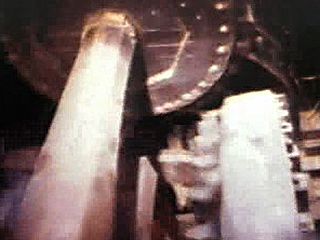
Study how a series of gears in a waterwheel translates a stream's energy to a millstone
Before the Industrial Revolution, power came from three main sources: humans, draft animals, and water.
The ingenuity people used in harnessing waterpower can be seen in this medieval-style mill. The waterwheel is turned by a stream and is connected to a shaft that leads into the building. At the other end of the shaft is a gear. The connection of a series of gears translates the power from the stream to a shaft that drives a millstone, which grinds flour from grain.
(30 sec; 1.84MB)
Public Domain
-
Contunico © ZDF Studios GmbH, MainzLearn about Chile's wine industry.
-
Encyclopædia Britannica, Inc.Dairy farming in Denmark.
-
Encyclopædia Britannica, Inc.Don't let film photography become a lost art.Media Editors: Lauren Sims , Kira Helm
-
Encyclopædia Britannica, Inc.There are two ways of releasing nuclear energy: fission and fusion.
-
© MinutePhysics (A Britannica Publishing Partner)Learn how the lack of an “absolute” time implies the conservation of energy.
-
© Massachusetts Institute of Technology (A Britannica Publishing Partner)Learn how a benign bacterial virus can be used to improve the performance of lithium-oxygen storage batteries.
-
Encyclopædia Britannica, Inc.Overview of how nuclear power plants work.