primary industry
Quick Summary
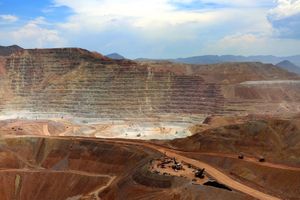
Primary industry is a fundamental sector of a nation's economy that focuses on the extraction and production of raw materials. This includes activities such as agriculture, forestry, fishing, mining, quarrying, and the extraction of minerals. Primary industries can be further categorized into genetic industries, which involve renewable resources that can be augmented through human intervention (like farming and livestock management), and extractive industries, which deal with non-renewable resources that are depleted with use (like mining).1
In undeveloped and developing nations, primary industry often forms the backbone of the economy. However, as economies mature and develop secondary (manufacturing) and tertiary (service) industries, the relative share of primary industry in the overall economic output tends to decrease.1
Ask Britannica AI about this topic
Britannica doesn't have a full article on this topic, so we've curated a list of our relevant coverage.