

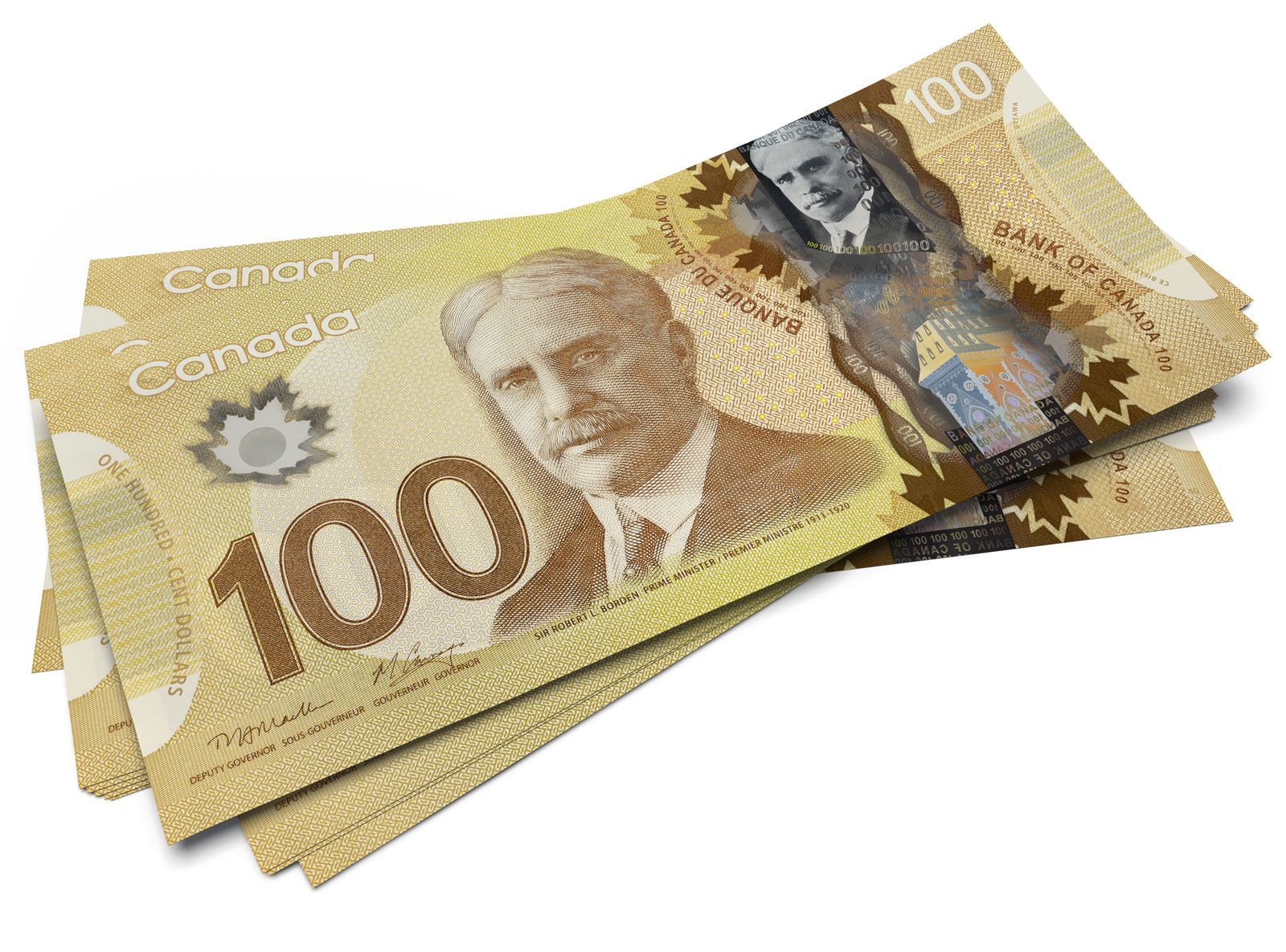
polymer banknote
-
What is a polymer banknote?
A polymer banknote is a bill made of polypropylene, offering several advantages over paper currency. Polymer banknotes are difficult to counterfeit because they contain security features such as clear plastic windows, metal films, and fluorescent compounds. The plastic in these banknotes makes them more durable, waterproof, and less likely to stain. Studies show they last about 2.5 times longer than paper notes and can be recycled into household, building, and industrial products. Australia was the first country to convert all its banknotes to polymer in the 1990s. By 2023, around 45 countries had adopted polymer banknotes, including the United Kingdom, Canada, and Mexico.
1 Britannica SourceCreated from Britannica articles using AI. AI can make mistakes, so verify using Britannica articles. -
How is a polymer banknote different from a paper banknote?
Polymer banknotes, made from polypropylene, offer several advantages over traditional paper banknotes. They are more secure, incorporating features like see-through plastic windows, metal films, and fluorescent compounds that make them harder to counterfeit. Polymer banknotes are also more durable, lasting about 2.5 times longer than paper notes, and are waterproof and resistant to stains. Additionally, worn polymer banknotes can be recycled. However, the colors on polymer banknotes can fade, and their texture can be slippery when dry or sticky when wet. Australia was the first country to widely issue polymer banknotes in 1998.
1 Britannica SourceCreated from Britannica articles using AI. AI can make mistakes, so verify using Britannica articles. -
Why are some countries switching to polymer banknotes?
Polymer banknotes offer several advantages over paper currency, leading some countries to switch to them. They are more difficult to counterfeit because they contain security features such as see-through plastic windows, metal films, and fluorescent compounds. Polymer banknotes are also more durable and damage-resistant, waterproof, and less likely to stain, lasting about 2.5 times longer than paper notes. Additionally, worn polymer banknotes can be recycled into various products. Australia was the first country to convert fully to polymer banknotes in the 1990s. By 2023, some 45 countries had adopted polymer banknotes.
1 Britannica SourceCreated from Britannica articles using AI. AI can make mistakes, so verify using Britannica articles. -
What materials are used to make polymer banknotes?
Polymer banknotes are made from polypropylene, a synthetic resin created through propylene polymerization, offering an alternative to traditional paper banknotes. Developed to combat counterfeiting, polymer banknotes incorporate several security features, such as metal films, see-through plastic windows, fluorescent compounds, and text that reacts to different angles of visible light and ultraviolet light. Australian chemist Dave Solomon and his team combined optically variable devices (OVDs) with a thin polymer base to develop polymer banknotes. OVDs are features, such as holograms, that change with light or movement.
1 Britannica SourceCreated from Britannica articles using AI. AI can make mistakes, so verify using Britannica articles. -
How do polymer banknotes help prevent counterfeiting?
Polymer banknotes are more difficult to counterfeit than paper money because they contain security features such as see-through plastic windows and text, metal films that react to light, and fluorescent compounds that react to ultraviolet light. These features, including optically variable devices (OVDs) like holograms, change with light or movement. The thin polymer base is resistant to damage, and designs resemble those on paper money, but with a see-through, ink-free area. Australia was the first country to widely issue polymer banknotes in 1998 to combat counterfeiting.
1 Britannica SourceCreated from Britannica articles using AI. AI can make mistakes, so verify using Britannica articles. -
What are the environmental impacts of using polymer banknotes compared to paper banknotes?
Polymer banknotes offer several environmental advantages over paper banknotes. Polymer banknotes are more durable and last about 2.5 times longer than paper notes, reducing the frequency of replacements. Also, worn polymer banknotes can be recycled into various products.
However, the colors on polymer banknotes can fade over time, and they can feel more slippery when dry and stickier when wet compared to paper currency.
1 Britannica SourceCreated from Britannica articles using AI. AI can make mistakes, so verify using Britannica articles.
polymer banknote, form of cash currency made from polypropylene, a synthetic resin built up by the polymerization of propylene, that was developed as an alternative to traditional paper banknotes. Polymer banknotes were first widely issued in Australia in 1998 as a tool to prevent counterfeiters from replicating bills.
Advantages over paper currency
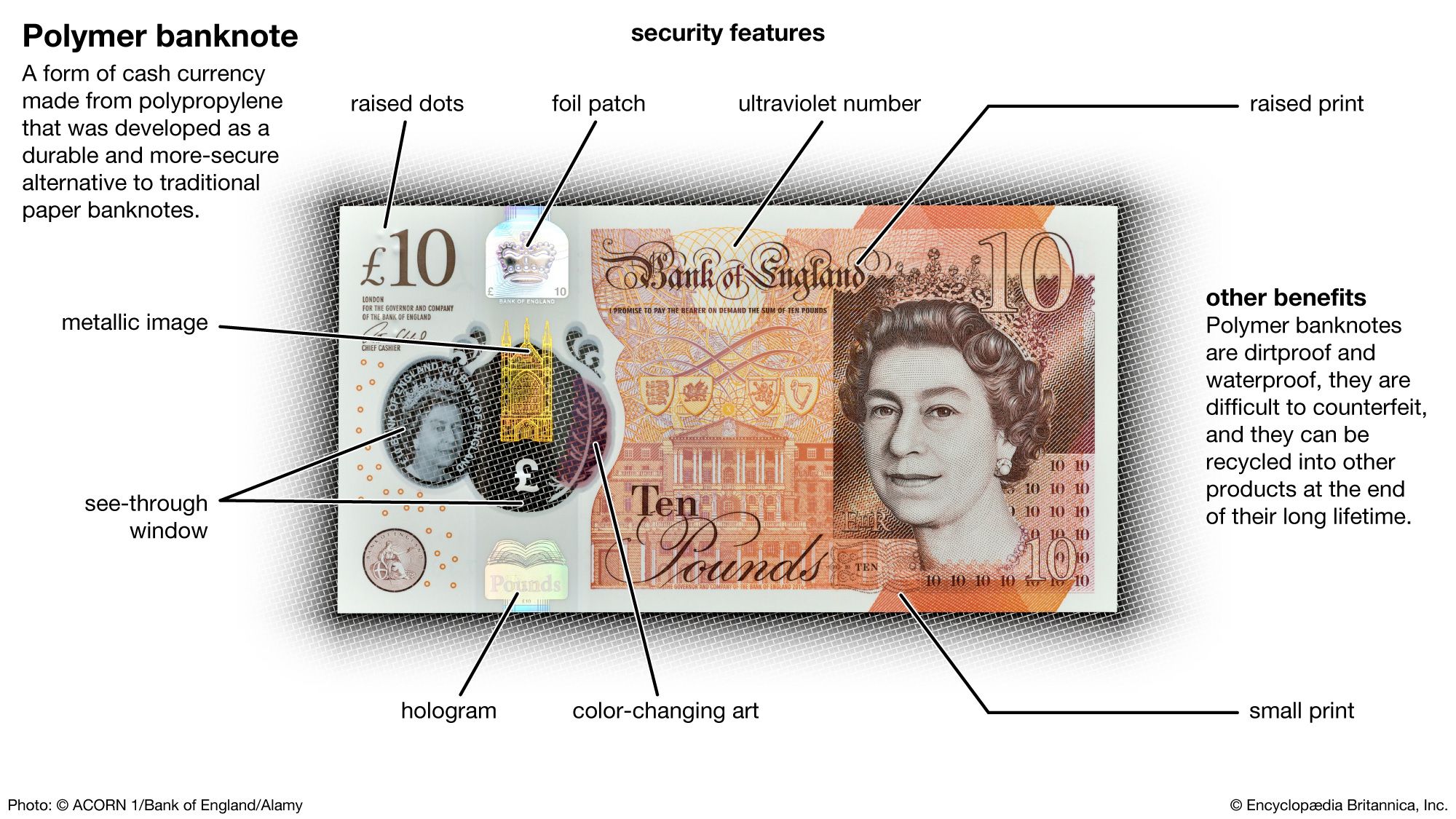
A banknote made of polypropylene has several advantages over its paper counterpart. It is more difficult to counterfeit because it contains a number of security features, such as see-through plastic windows and text, metal films that react to different angles of visible light, and fluorescent compounds that can react to ultraviolet light (see also fluorescence). When compared with paper notes, a polymer banknote is more durable and damage-resistant; the banknote’s plastic nature makes it waterproof and less likely to stain, and studies have shown that polymer banknotes last about 2.5 times longer than paper notes. In addition, worn polymer banknotes removed from circulation can be recycled into household, building, and industrial products. However, the colors on polymer banknotes can fade over time, and they can feel more slippery when dry and stickier when wet than paper currency.
Origin
The origin of polymer banknotes can be traced back to the issuance of enhanced paper bills by the Reserve Bank of Australia in 1966. The notes contained metal threads, a watermark (a faint design visible under certain lighting conditions), and raised printing. Although Australian currency developers hoped that these features would prevent criminals from counterfeiting, soon after these bills appeared, forgers began producing good-quality counterfeits.


 " height="20" alt="HEW Logo">
In 1968 scientists from the Commonwealth Scientific and Industrial Research Organisation (CSIRO) joined with university researchers to develop new ways to stop money forgeries. Australian chemist and CSIRO chief research scientist Dave Solomon led a team that combined optically variable devices (OVDs) with a thin polymer base. OVDs are features that change with light or movement, such as holograms that appear as three-dimensional images and pictures that change color. The thin polymer base on which they chose to print the money is resistant to tearing and other damage. If crumpled, a polymer bill returns to its original shape. The designs on the polymer resemble those on traditional paper money. However, Australian designers elected to frame the OVDs on the polymer banknotes with a see-through, ink-free area.
Once the polymer process was perfected, the Australian government conducted a test to see whether the public would use such bills. The Reserve Bank of Australia printed a limited number of $10 commemorative polymer banknotes for Australia’s 1988 bicentennial, and the public readily accepted them. During the 1990s Australia converted all its banknotes to polymer, becoming the first country to do so. Some 45 countries had adopted the use of polymer banknotes in their monetary and banking systems by 2023—including Canada, the United Kingdom, Russia, China, India, Brazil, Mexico, and Saudi Arabia.