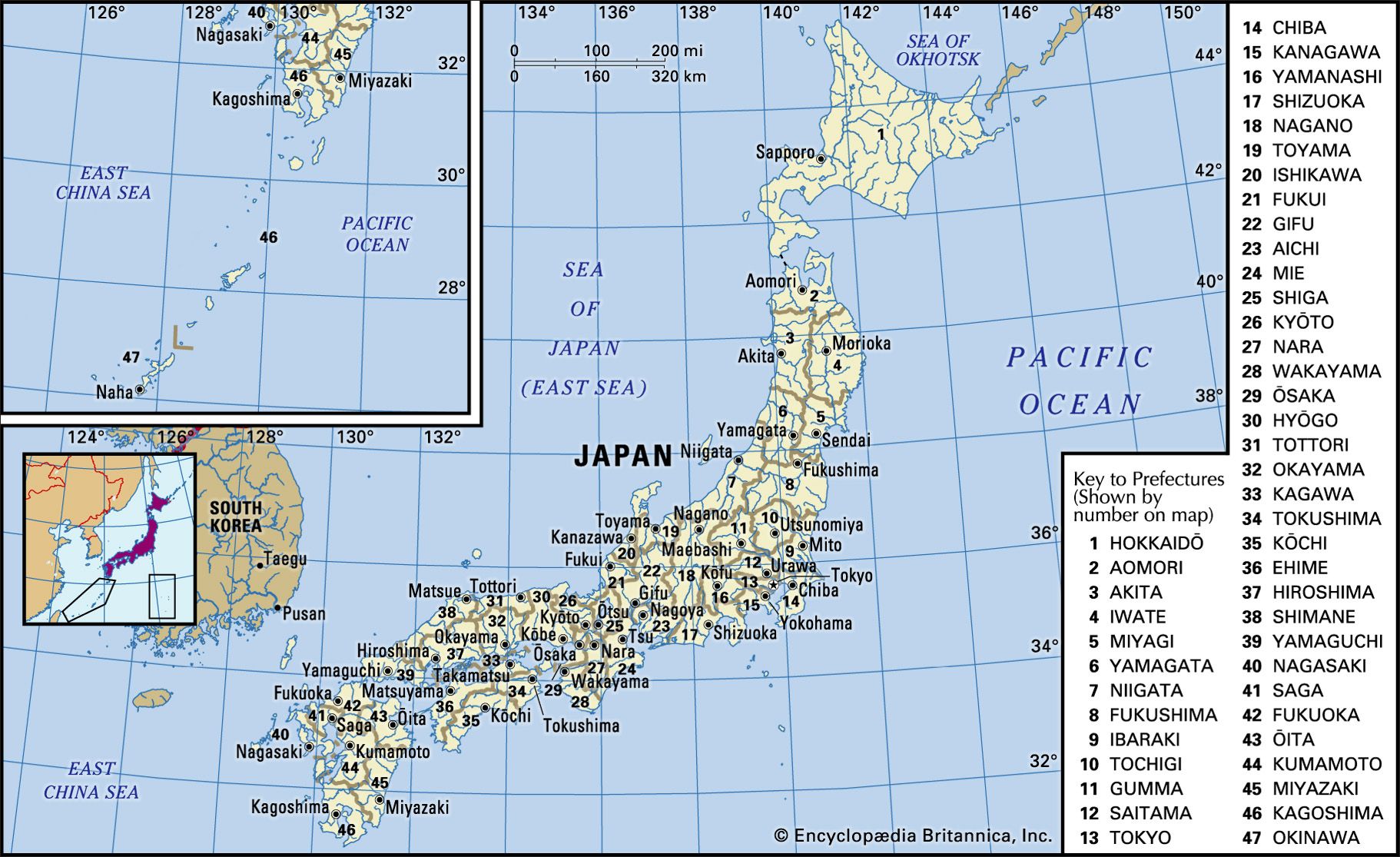
kuni
Quick Summary
The kuni were the largest political units in Japan during the 7th century, established by the Taika-era reforms. Each kuni was governed by an appointed official and comprised various geographical features like plains, basins, and mountains, aiming for a balanced geographic entity. These provinces were grouped into larger administrative regions called dō.1
Later, a third regional system emerged, categorizing kuni based on their proximity to Kyoto: kingoku (proximate), chūgoku (intermediate), and engoku (remote). Peripheral lands were termed henkyō. In 1871, the feudal system was abolished, and Japan was reorganized into prefectures (ken), urban prefectures (fu), and a district (dō). This system evolved into the current structure of 47 prefectures, including metropolitan prefectures and urban prefectures.12
Ask Britannica AI about this topic
Britannica doesn't have a full article on this topic, so we've curated a list of our relevant coverage.