

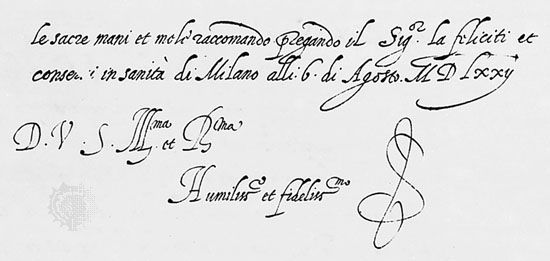

italic bastarda
Quick Summary

Italic bastarda was a 16th-century calligraphy script that evolved from a blend of formal cancellaresca and mercantile black-letter styles. Developed by Gianfrancesco Cresci, it is characterized by its cursive, free-flowing nature and ornamental features.1
A key characteristic of italic bastarda is the testeggiata, which are plumelike terminals or headed ascenders found on letters like b, d, h, and l. These were created by doubling back at the start of a stroke and applying pressure with a flexible nib.1
The term "bastarda" itself refers to a Gothic script from the 14th and 15th centuries, particularly in France and Germany, which combined cursive and book hand elements with flourishes and hairlines. This script was known for its vivacity and mixed heritage.23
Ask Britannica AI about this topic
Britannica doesn't have a full article on this topic, so we've curated a list of our relevant coverage.
