heavy industry
Quick Summary
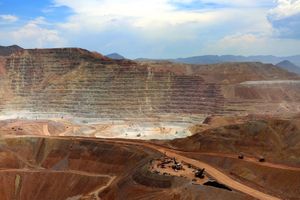
Heavy industry refers to the production of goods, such as coal and steel, that are used to create other goods. It is a classification within secondary industries, which transform raw materials into consumer or capital goods. Heavy industry is characterized by large-scale operations requiring significant capital investment in plants and machinery, serving diverse markets, and often employing a specialized workforce. Examples include petroleum refining, steel manufacturing, and cement production. Historically, heavy industry, particularly iron and steel production, was closely tied to coalfields due to transportation costs, though technological advancements have altered this localization. Mass production, often associated with heavy industry, requires substantial investment and advanced planning, and its economic effects include increased productivity but also significant environmental challenges related to resource consumption and waste disposal.1234
Ask Britannica AI about this topic
Britannica doesn't have a full article on this topic, so we've curated a list of our relevant coverage.