

electronic health record
News •
-
What is an electronic health record (EHR)?
An electronic health record (EHR) is a system using computers and telecommunications to store and share patient health information, including history, medications, test results, and demographics. EHRs need computer hardware, specialized software, and a high-speed internet connection.
When properly used, EHRs can help health care providers avoid redundant testing and medical errors, support patient decision-making, improve care quality and patient safety, and potentially lower health care costs.
However, the implementation of EHRs can be hindered by costs, difficulties in ensuring interoperability, and concerns about privacy and security. The inability of EHR systems to interact and communicate across care settings and providers can substantially hinder the success of EHRs. Breaches of EHRs could lead to identity theft, fraud, or the public release of an individual’s health information.
1 Britannica SourceCreated from Britannica articles using AI. AI can make mistakes, so verify using Britannica articles. -
How do electronic health records differ from paper medical records?
Electronic health records (EHRs) use computer and telecommunication-based systems to store and share patient health information, including history, medications, test results, and demographics. Conversely, health care providers traditionally kept paper records on patient history and status.
EHRs, operating over a high-speed internet connection, need computer hardware and specialized software. When properly used, they reduce duplicative testing and medical errors while also facilitating patient decision-making.
Although full-scale use of EHRs could decrease healthcare costs, substantial up-front implementation expenses place considerable pressure on public and private budgets.
2 Britannica SourcesCreated from Britannica articles using AI. AI can make mistakes, so verify using Britannica articles. -
What kind of information is stored in an EHR?
An electronic health record (EHR) system stores and shares patient health information using computer and telecommunication technologies. EHRs contain data on patient history, medications, test results, and demographics.
EHRs operate over a high-speed internet connection and need computer hardware and specialized software. When used correctly, they reduce medical errors and duplicative testing, improve patient safety and care quality, facilitate patient decision making, and may decrease healthcare costs.
1 Britannica SourceCreated from Britannica articles using AI. AI can make mistakes, so verify using Britannica articles. -
How do electronic health records help doctors and nurses provide care?
Electronic health records (EHRs) enhance healthcare by providing a centralized system for storing and sharing patient information, including medical history, medications, test results, and demographics.
When properly implemented, EHRs can help healthcare providers avoid redundant testing and reduce medical errors, improving both the quality of care and patient safety. They also support telemedicine by facilitating remote healthcare through telecommunication technologies.
Despite the benefits, challenges such as costs, interoperability issues, and privacy and security concerns can limit the effectiveness of EHRs.
2 Britannica SourcesCreated from Britannica articles using AI. AI can make mistakes, so verify using Britannica articles. -
What are some ways EHRs can improve patient safety?
Electronic Health Records (EHRs) enhance patient safety by reducing medical errors and preventing duplicative testing. EHRs consolidate patient data, including history, medications, and test results, in a computer-based system that can be shared via telecommunications.
However, the effectiveness of EHRs is limited by interoperability problems, which hinder the ability of providers to access and share patient information. Privacy and security concerns also impede progress.
1 Britannica SourceCreated from Britannica articles using AI. AI can make mistakes, so verify using Britannica articles. -
What challenges or problems can happen with using electronic health records in hospitals?
Electronic health records (EHRs) enhance healthcare by centralizing patient data, but their implementation faces challenges. High initial costs can strain budgets, and interoperability issues may prevent seamless data exchange between providers, limiting the system's effectiveness in reducing redundant tests and preventing errors.
Privacy and security are also major concerns; data breaches could lead to identity theft or the exposure of sensitive health information. Legislation like HIPAA in the U.S. aims to address these risks. Despite these challenges, overcoming these hurdles is crucial to realizing the full potential of EHRs in improving healthcare quality and patient safety.
1 Britannica SourceCreated from Britannica articles using AI. AI can make mistakes, so verify using Britannica articles.
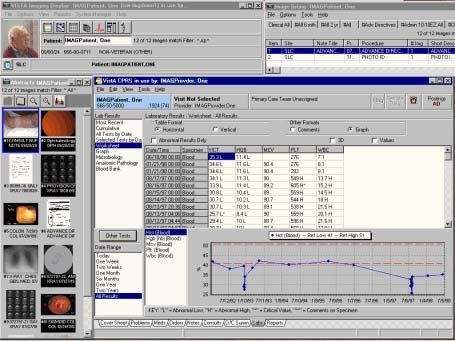
electronic health record (EHR), computer- and telecommunication-based system capable of housing and sharing patient health information, including data on patient history, medications, test results, and demographics.
The technical infrastructure of electronic health records (EHRs) varies according to the needs of the health care provider or other entity using the system and the provider’s chosen EHR technology platform. In general, EHRs operate over a high-speed Internet connection and therefore require computer hardware and specialized software. When properly deployed, EHRs allow health care providers to avoid duplicative testing, reduce medical errors, and facilitate patient decision making, which may ultimately improve care quality and patient safety and possibly decrease health care costs.
Health care providers throughout the world have worked to implement EHRs. However, costs and interoperability problems, which limit providers’ ability to access and share patient information, as well as concerns about the privacy and security of patient and provider information, have impeded progress and limited EHR effectiveness (see below Cost, privacy, and interoperability issues).


 " height="20" alt="HEW Logo">
Implementation of EHRs
The Health Information Technology for Economic and Clinical Health (HITECH) Act is the primary financial driving force for EHR implementation in the United States. Passed in 2009 as part of the American Recovery and Reinvestment Act, the HITECH Act creates financial incentives for providers participating in federal and state government health care programs (i.e., Medicare and Medicaid) that implement and demonstrate “meaningful use” of EHRs. Those providers may demonstrate meaningful use by meeting certain objectives established by the Centers for Medicare & Medicaid Services (CMS). Objectives include maintaining an active medication list and having the capacity to exchange “key clinical information.” In order to help providers adopt sufficient EHR infrastructures, the Office of the National Coordinator for Health Information Technology (ONC) maintains a list of EHR products certified as capable of meeting the meaningful use criteria. In the second decade of the 21st century, however, even with the support of the federal and state governments, only a small percentage of physicians had access to EHRs in their offices, and most hospitals lacked a basic EHR platform.
EHRs have been implemented with varying success in countries throughout the world. For example, the U.K. government launched a program in 2002 to support the use of EHR systems in the National Health Service (NHS), with the goal of having an EHR for all patients by 2010. By that time, however, only 20 percent of providers had begun to use EHR systems, and, as a result, in 2011 the program underwent reconceptualization. U.K. health officials subsequently developed a framework to determine how to more effectively use data and technology to improve health care, with the eventual aim of giving citizens online access to their personal health records.
Implementation met with relative success in New Zealand, where general practitioners began developing health information technology (HIT), including EHRs, in the 1980s, leading to widespread physician group and practice investment in the 1990s. New Zealand’s health care system has since made extensive use of EHRs to store patient information, including test results, medication lists, and clinical notes. The country’s health care providers actively exchange patient information and have worked to expand patient access to personal EHRs.
By the 2010s only several highly industrialized countries had made significant progress toward adopting EHRs; less-developed countries, particularly in Africa, lagged behind.
The trusted destination for professionals, college students, and lifelong learners.
SUBSCRIBE


Cost, privacy, and interoperability issues
While policymakers around the world believe that full-scale use of EHRs could decrease health care costs, substantial up-front implementation expenses place considerable pressure on public and private budgets. This was especially true in the early 2000s, when health care budgets were strained by global economic downturn and demand for EHR implementation increased considerably. CMS estimated that the U.S. EHR Incentive Program would cost $14.6 billion for the period 2014 through 2019. This estimate did not include government expenses or expenses sustained by participating providers.
Numerous privacy and security concerns accompany the increased use of EHRs. Breach of an EHR could result in, for example, identity theft, fraud, or the public dissemination of an individual’s health information as well as the release of sensitive information about health care providers. Governments have tried to alleviate those concerns through patient privacy, security, and access laws, examples of which include the U.S. Health Insurance Portability and Accountability Act (HIPAA) of 1996 and Sweden’s Patient Data Act of 2008.
Because the gains of EHR implementation hinge on interoperability, the inability of EHR systems to interact and communicate across care settings and providers can substantially hinder the success of EHRs. For example, a hospital’s EHR system will not be fully effective in reducing duplicative testing or preventing medication errors if it cannot communicate with the EHR system used in a nearby primary care practice. The issue of interoperability is evident particularly in Sweden, where providers implemented incompatible EHR systems at the regional level and were forced to reconfigure their systems. The European Union was working toward interoperability among all member countries.