

air toxic
Quick Summary
Air toxics are specific substances present in the atmosphere in trace amounts that are considered hazardous. These pollutants can cause genetic mutations, cancer, and other health problems, including adverse effects on brain tissue and fetal development. While the total emissions of air toxics are smaller compared to other pollutants, they can pose immediate health risks.1
Most air toxics are organic chemicals, many of which are volatile organic compounds (VOCs). VOCs readily evaporate and are used in fuels, solvents, and plastics. Some VOCs also act as greenhouse gases, contributing to global warming. Other air toxics include metals like mercury, arsenic, and cadmium.1
Sources of air toxics include industrial processes, vehicle exhaust, burning fossil fuels, and accidental releases. Regulations exist in many countries to control industrial emissions of specific air toxics.1
Ask Britannica AI about this topic
Britannica doesn't have a full article on this topic, so we've curated a list of our relevant coverage.
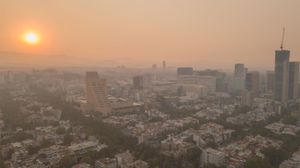
- air pollution control
…other air pollutants called “air toxics.” Most air toxics are organic chemicals, comprising molecules that contain carbon, hydrogen, and other atoms. Specific emission regulations have been implemented against those pollutants. In addition, the long-term and far-reaching effects of the “greenhouse gases” on atmospheric chemistry and climate have been
Read More…other air pollutants called “air toxics.” Most air toxics are organic chemicals, comprising molecules that contain carbon, hydrogen, and other atoms. Specific emission regulations have been implemented against those pollutants. In addition, the long-term and far-reaching effects of the “greenhouse gases” on atmospheric chemistry and climate have been
Read More - air pollution controlControl of gases
…compounds (VOCs) and other gaseous air toxics, are controlled by means of three basic techniques: absorption, adsorption, and incineration (or combustion). These techniques can be employed singly or in combination. They are effective against the major greenhouse gases as well. In addition, a fourth technique, known as carbon sequestration, is…
Read More…compounds (VOCs) and other gaseous air toxics, are controlled by means of three basic techniques: absorption, adsorption, and incineration (or combustion). These techniques can be employed singly or in combination. They are effective against the major greenhouse gases as well. In addition, a fourth technique, known as carbon sequestration, is…
Read More