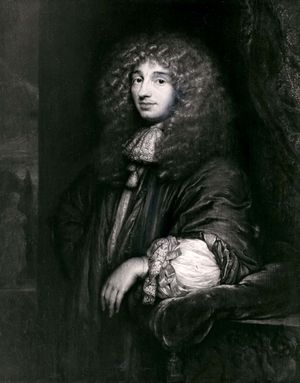
Treatise on Light
Quick Summary
Christiaan Huygens's Treatise on Light (1690) proposed the first detailed wave theory of light. This work explained the laws of reflection and refraction based on the principle that light travels as waves. Huygens's principle states that each point on a wave front acts as a source of secondary spherical wavelets, and the new wave front is the envelope of these wavelets. This theory provided a mechanical explanation for light's behavior, contrasting with Isaac Newton's corpuscular (particle) theory, which suggested light particles were attracted to denser media. While Newton's particle theory dominated for a time, later experiments by Thomas Young and Augustin-Jean Fresnel in the 19th century provided strong evidence for light's wave nature.1234
Ask Britannica AI about this topic
Britannica doesn't have a full article on this topic, so we've curated a list of our relevant coverage.