
- Date:
- 2003 - 2018
- Areas Of Involvement:
- diagnosis
- medical technology
- laboratory diagnosis
- blood analysis
- laboratory
- Related People:
- Elizabeth Holmes


Theranos, Inc.
News •
-
What was Theranos, Inc.?
Theranos, Inc. was a medical diagnostic company founded in 2003 by Elizabeth Holmes, a Stanford University dropout. Theranos claimed to have developed a revolutionary technology that could perform various medical tests with only a few drops of blood. However, it was later revealed that the company falsified data and inflated its claims.
In 2015, reports exposed the unreliability of Theranos's technology, and the company faced scrutiny for its practices. In 2018, the U.S. Securities and Exchange Commission (SEC) charged Holmes and Balwani with fraud. Holmes stepped down as CEO, and Theranos ceased operations.
3 Britannica SourcesCreated from Britannica articles using AI. AI can make mistakes, so verify using Britannica articles. -
Who started Theranos, and when was it founded?
Elizabeth Holmes founded Theranos in 2003. The company aimed to revolutionize medical data collection by developing minimally invasive laboratory testing services. By 2014, Theranos claimed to offer over 1,000 medical tests from a few drops of blood, which garnered significant attention and funding.
However, the company's technology faced scrutiny, and in 2018, Holmes was forced to relinquish control of Theranos. She was later convicted of defrauding investors and began serving an 11-year prison sentence in 2023.
1 Britannica SourceCreated from Britannica articles using AI. AI can make mistakes, so verify using Britannica articles. -
What did Theranos claim its technology could do?
Theranos, Inc. claimed its technology could revolutionize medical data collection by performing over 1,000 medical tests on a few drops of blood. Traditional blood testing involves drawing a larger amount of blood, which can be painful and costly. Theranos claimed their method was less painful and less expensive, which could ease the diagnostic process and ensure more patients receive necessary care. The company also promoted improving laboratory blood collection and testing by automating and miniaturizing the process.
2 Britannica SourcesCreated from Britannica articles using AI. AI can make mistakes, so verify using Britannica articles. -
Why did many people and investors believe in Theranos?
Many people and investors believed in Theranos because the idea of easier, less painful, and cheaper blood testing was appealing. Elizabeth Holmes, with her youthful ingenuity and domineering leadership style, became the darling of Silicon Valley.
Holmes cultivated an image as an ambitious and confident college-dropout entrepreneur, similar to Steve Jobs, and implemented strict secrecy measures. By 2014, Forbes magazine named Holmes one of the richest women in America, valuing her personal wealth at $4.5 billion and her company at $9 billion. Once one billionaire trusted her, others followed. High-profile figures like George Shultz and Henry Kissinger joined the board. Walgreens partnered with Theranos to establish wellness centers in its pharmacies.
2 Britannica SourcesCreated from Britannica articles using AI. AI can make mistakes, so verify using Britannica articles. -
How was it discovered that Theranos's technology did not work as promised?
Erika Cheung and Tyler Shultz, low-level employees at Theranos, noticed employees were altering statistical data and test results from the Edison machine. They shared their concerns with The Wall Street Journal, and journalist John Carreyrou wrote an article detailing the company’s technological shortcomings. He reported that the Edison was being used for only a fraction of the company’s tests and produced unreliable results, despite Holmes’s claims to the contrary.
Other questions soon surfaced concerning the company and its processes, from releasing aggregate testing data to compliance problems with the company’s laboratory.
2 Britannica SourcesCreated from Britannica articles using AI. AI can make mistakes, so verify using Britannica articles. -
What were the consequences for Theranos and its founder after the truth became public?
After the truth about Theranos became public, the consequences for the company and its founder, Elizabeth Holmes, were extensive. In 2016, the Centers for Medicare & Medicaid Services (CMS) blocked Theranos from receiving Medicare and Medicaid reimbursements and forbade Holmes from operating a medical laboratory for two years after the company failed to correct errors and comply with federal regulations.
In 2018, the Securities and Exchange Commission (SEC) charged Holmes and Ramesh Balwani with fraud for allegedly taking over $700 million from investors by advertising a false product. Holmes settled with the SEC by paying a $500,000 fine, surrendering almost 19 million shares, relinquishing her controlling interest in the company, and consenting to a 10-year ban on serving as an officer or director of a public company. In June 2018, Holmes stepped down as CEO, and Theranos ceased operations later that year. Holmes was eventually convicted of defrauding investors and wire fraud, and began serving a prison sentence of more than 11 years in November 2022.
3 Britannica SourcesCreated from Britannica articles using AI. AI can make mistakes, so verify using Britannica articles.
Theranos, Inc., medical diagnostic company founded in 2003 by Stanford University dropout and entrepreneur Elizabeth Holmes that was later revealed to have falsified its data and inflated its claims. Holmes was charged with 11 counts of fraud, and the company shut down in 2018.
Founding, mission, and the Edison machine
Holmes founded Theranos in 2003, when she was just 19 years old, having dropped out of Stanford University during her sophomore year to pursue the endeavor. Between 2003 and 2014 Holmes grew Theranos by securing funding from investors, building infrastructure, and developing the company’s proprietary processes in secret. She received help from a Stanford professor whose lab she had worked in, and he gave the company credibility as a prominent bioengineer. She met former U.S. Secretary of State George Shultz in 2011, and he offered Holmes and her company full backing, including access to his rich array of connections.
Theranos produced its first offering in 2014, a laboratory testing process that claimed to run more than 1,000 medical tests on a sample of only a few drops of blood. It was a technology that would revolutionize medical data collection—if it worked. Theranos’s promotional materials—created by marketing professionals including Academy Award-winning documentarian Errol Morris, internationally renowned photographer Martin Schoeller, and the high-profile advertising agency TBWA\Chiat\Day, whose clients include Apple and McDonald’s—maintained that the company was improving laboratory blood collection and testing by miniaturizing and automating the process.


 " height="20" alt="HEW Logo">
Traditional blood testing relies on drawing 5–10 ml (0.17–0.34 fluid ounce) of blood through a large needle to fill one tube for each physician-requested test. The process is often painful for patients and costly for insurance carriers; experts worried that the procedure dissuaded patients who were young, elderly, or anxious about needles from getting blood work done in a timely manner. As laboratory data is one of the key tools physicians use to help patients make informed decisions about care, a less painful, less expensive blood-testing method could ease the diagnostic process and thus ensure that more patients receive necessary care.
Partnerships and building credibility
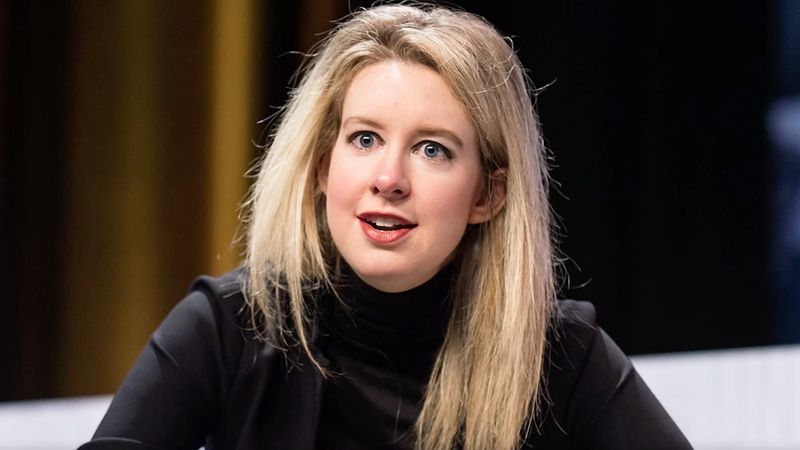
In building Theranos, Holmes made sure that production processes remained under layers of secrecy and security. In 2009 Ramesh (“Sunny”) Balwani, a technology entrepreneur whom Holmes had befriended when she was in high school, officially joined Theranos as its president and chief operating officer, despite having little scientific background. He and Holmes were known to be romantically involved.
In 2010 the prominent grocery chain Safeway signed a deal with Theranos to install its blood-testing device in its stores. The deal, worth more than $350 million, paved the way for Safeway to remodel almost 1,000 stores in preparation for the machines. In 2014 Walgreens, which owned more than 8,000 drugstores in the U.S., announced that it had partnered with Theranos to establish wellness centers inside its pharmacies. That year, Theranos offered diagnostic tests for more than 200 conditions, was licensed to operate in almost all U.S. states, and held a certification from the Centers for Medicare & Medicaid Services (CMS), the federal regulator overseeing medical laboratories. Forbes named Holmes one of America’s richest women, valuing her personal wealth at $4.5 billion and her company at $9 billion.
The idea of making blood testing easier, less painful, and cheaper was so appealing that few questioned if Theranos’s proposed solution was too good to be true.
The trusted destination for professionals, college students, and lifelong learners.
SUBSCRIBE


Scrutiny and whistleblowers
In 2015 low-level Theranos employees Erika Cheung and Tyler Shultz, grandson of George Shultz, noticed that other employees were tampering with statistical data and test results from Theranos’s main proprietary technology, the allegedly revolutionary Edison machine. The two became major whistleblowers, sharing their concerns with The Wall Street Journal (WSJ). Shortly after, WSJ journalist John Carreyrou published an article detailing the company’s technological shortcomings. He reported that the Edison was being used for only a fraction of the company’s tests and produced unreliable results, despite Holmes’s repeated claims to the contrary.
Carreyrou also revealed that Theranos scientist Ian Gibbons had committed suicide in 2013 after struggling with the pressures of working for Holmes, adding a tragic note to growing suspicion surrounding the company. Other questions concerning the company and its secretive processes soon surfaced, ranging from Theranos’s decision to release aggregate testing data (which could obscure statistical shortcomings more effectively than primary testing data) to the U.S. Food and Drug Administration to compliance problems with the company’s Newark, California, laboratory. Theranos was also under scrutiny for substantial delays in giving federal authorities full access to its medical devices and in subjecting its devices and technologies to scientific peer review.
In July 2016 CMS notified Theranos that the company had failed to provide adequate documentation showing that it had corrected its previous errors and was complying with federal regulations. CMS blocked Theranos from receiving reimbursements from Medicare and Medicaid and forbade Holmes from possessing or operating a medical laboratory for two years.
In March 2018 the U.S. Securities and Exchange Commission (SEC) charged Holmes and Balwani with fraud for allegedly taking more than $700 million from investors while advertising a false product. Holmes settled the charges with the SEC by agreeing to pay a fine of $500,000, surrendering almost 19 million shares in Theranos (valued at more than $4 billion at Theranos’s height) to relinquish her controlling interest in the company, and consenting to a ban on serving as either an officer or a director of a public company for a period of 10 years. In exchange, both Holmes and Theranos were able to avoid confirming the SEC’s allegations against them. In June 2018, however, she and Balwani were indicted by federal authorities on wire fraud charges. That same day, Holmes stepped down as CEO, and later that year Theranos ceased operations.
Legal outcomes
Beginning in August 2021 Holmes was tried in a federal court on 11 counts of fraud, and in January 2022 she was convicted on four counts of defrauding investors: three counts of wire fraud and one count of conspiracy to commit wire fraud. The jury found her not guilty on four counts of defrauding patients, and it failed to reach a verdict on the remaining counts. Later in 2022 Balwani went to trial, and he was also found guilty of wire fraud and conspiracy to commit wire fraud. In November 2022 Holmes was sentenced to more than 11 years in prison. Forbes revised her net worth to $0, and she began serving her prison sentence in May 2023. That same year Holmes’s lawyers stated that due to improper cross-examination of witnesses and Holmes’s legitimate belief that her device would work, she should have her fraud conviction dropped. The appeal was ongoing as of June 2024.
Holmes’s story has received no shortage of media attention. In 2018 Carreyrou released an investigative nonfiction book, Bad Blood: Secrets and Lies in a Silicon Valley Startup, chronicling Theranos’s secrets. Following Carreyrou’s breakthrough reporting, Holmes has also been the subject of an HBO documentary, The Inventor: Out for Blood in Silicon Valley (2019). An ABC podcast, titled The Dropout (2019–22), was adapted into a Hulu limited series by the same name, featuring Amanda Seyfried as Holmes. In addition to catastrophic losses for private investors (Theranos was never a publicly traded company), Holmes’s start-up caused medical harm to patients who relied on Theranos’s inaccurate blood tests.