

On Liberty
Quick Summary
John Stuart Mill's essay On Liberty (1859) argues for the utmost importance of individual liberty, asserting that the only justification for interfering with a person's actions is to prevent harm to others. This principle, known as the harm principle, suggests that society and government should not infringe upon individual freedoms for their own supposed good, whether moral or physical. Mill contended that the free collision of ideas is essential for discovering truth and that restricting speech is never justified. He advocated for a society that maximizes individual choice and action, provided it does not perceptibly harm others, forming a cornerstone of modern democracy.123
Ask Britannica AI about this topic
Britannica doesn't have a full article on this topic, so we've curated a list of our relevant coverage.
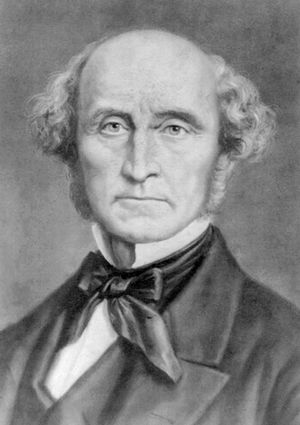


 liberalismLiberalism and utilitarianism
…advocacy in John Stuart Mill’s On Liberty (1859), which argues on utilitarian grounds that the state may regulate individual behavior only in cases where the interests of others would be perceptibly harmed.
Read More…advocacy in John Stuart Mill’s On Liberty (1859), which argues on utilitarian grounds that the state may regulate individual behavior only in cases where the interests of others would be perceptibly harmed.
Read More censorshipFreedom and truth
…developed in John Stuart Mill’s On Liberty (1859). Mill’s arguments are invoked today not only in opposition to government censorship but in opposition as well to those suppressive efforts by private organizations or interest groups that are sometimes more effective than government can be in a liberal democracy. Particularly susceptible…
Read More…developed in John Stuart Mill’s On Liberty (1859). Mill’s arguments are invoked today not only in opposition to government censorship but in opposition as well to those suppressive efforts by private organizations or interest groups that are sometimes more effective than government can be in a liberal democracy. Particularly susceptible…
Read More- press and government relationsTheories of Press–Government Relations
…as John Stuart Mill’s essay On Liberty, published in 1859. This conception emphasizes the need for a press independent of the state, which will provide the basis for the independent public opinion on which the legitimacy of democratic government is based. In its later formulations, this view is connected with…
Read More…as John Stuart Mill’s essay On Liberty, published in 1859. This conception emphasizes the need for a press independent of the state, which will provide the basis for the independent public opinion on which the legitimacy of democratic government is based. In its later formulations, this view is connected with…
Read More