

Information Processing Techniques Office
Learn about this topic in these articles:
 ARPANETRoots of a network
…the first director of ARPA’s Information Processing Techniques Office (IPTO), the SAGE network demonstrated above all else the enormous power of interactive computing—or, as he referred to it in a seminal 1960 essay, of “man-computer symbiosis.” In his essay, one of the most important in the history of computing, Licklider…
Read More…the first director of ARPA’s Information Processing Techniques Office (IPTO), the SAGE network demonstrated above all else the enormous power of interactive computing—or, as he referred to it in a seminal 1960 essay, of “man-computer symbiosis.” In his essay, one of the most important in the history of computing, Licklider…
Read More- Defense Advanced Research Projects AgencyOrganization
…oversaw the creation of the Information Processing Techniques Office (IPTO) under the direction of Joseph Licklider, a former psychologist at the Massachusetts Institute of Technology (MIT) who was active in the emerging field of human-computer interactions. As head of IPTO from 1962 to 1964, Licklider initiated three of the most…
Read More…oversaw the creation of the Information Processing Techniques Office (IPTO) under the direction of Joseph Licklider, a former psychologist at the Massachusetts Institute of Technology (MIT) who was active in the emerging field of human-computer interactions. As head of IPTO from 1962 to 1964, Licklider initiated three of the most…
Read More 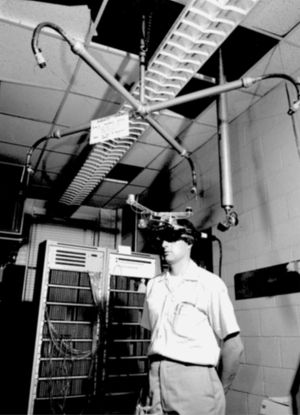 virtual realityEarly work
…founding director of the new Information Processing Techniques Office (IPTO) of the Defense Advanced Research Projects Agency (DARPA), Licklider was able to fund and encourage projects that aligned with his vision of human-computer interaction while also serving priorities for military systems, such as data visualization and command-and-control systems.
Read More…founding director of the new Information Processing Techniques Office (IPTO) of the Defense Advanced Research Projects Agency (DARPA), Licklider was able to fund and encourage projects that aligned with his vision of human-computer interaction while also serving priorities for military systems, such as data visualization and command-and-control systems.
Read More
 Vinton Cerf
…a program manager in the Information Processing Techniques Office (IPTO), where he began to envision a network of packet-switching networks—essentially, what would become the Internet. In 1973 Kahn approached Cerf, then a professor at Stanford, to assist him in designing this new network. Cerf and Kahn soon worked out a…
Read More…a program manager in the Information Processing Techniques Office (IPTO), where he began to envision a network of packet-switching networks—essentially, what would become the Internet. In 1973 Kahn approached Cerf, then a professor at Stanford, to assist him in designing this new network. Cerf and Kahn soon worked out a…
Read More- Robert Kahn
…Kahn left BB&N for DARPA’s Information Processing Techniques Office (IPTO). There he confronted a set of problems related to the deployment of packet switching technology in military radio and satellite communications. However, the real technical problem lay in connecting these disparate military networks—hence the name Internet for a network of…
Read More…Kahn left BB&N for DARPA’s Information Processing Techniques Office (IPTO). There he confronted a set of problems related to the deployment of packet switching technology in military radio and satellite communications. However, the real technical problem lay in connecting these disparate military networks—hence the name Internet for a network of…
Read More