

History
Quick Summary
Herodotus, often called the "father of history," was a Greek author who lived around 484–425 BCE. He is renowned for his work, The History, which chronicles the Greco-Persian Wars (499–479 BCE).12
Herodotus's History details the background and events of these wars, including the growth and organization of the Persian Empire, its geography, and social structure. He describes Xerxes's invasion of Greece and the subsequent Greek victory.12
While Herodotus was an engaging narrator with a keen interest in diverse customs, he also had a reputation for credulity and recorded traditions without necessarily endorsing them. Despite inaccuracies, his work is a crucial source for understanding Greece, western Asia, and Egypt during the period of 550–479 BCE.12
Ask Britannica AI about this topic
Britannica doesn't have a full article on this topic, so we've curated a list of our relevant coverage.

 asymmetrical warfare
… in Book IV of his History, the Scythians retreated before the main body of the Persian army, drawing it deeper into Scythian territory, only to launch lethal mounted strikes on Persian encampments. Darius was forced to retire, leaving the Scythians in command of the lands beyond the Danube River.
Read More… in Book IV of his History, the Scythians retreated before the main body of the Persian army, drawing it deeper into Scythian territory, only to launch lethal mounted strikes on Persian encampments. Darius was forced to retire, leaving the Scythians in command of the lands beyond the Danube River.
Read More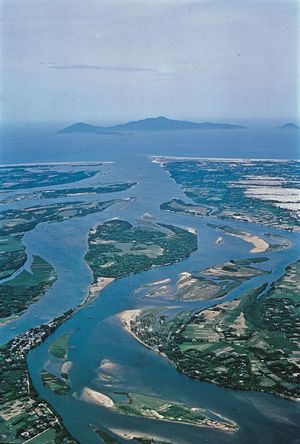 delta
…texts to describe deltas was History, written during the 5th century bce by Greek historian Herodotus. In that work, Herodotus mentioned that the Ionian people used the term delta to describe the low-lying region of the Nile River in Egypt. During a visit to the region, Herodotus also recognized that…
Read More…texts to describe deltas was History, written during the 5th century bce by Greek historian Herodotus. In that work, Herodotus mentioned that the Ionian people used the term delta to describe the low-lying region of the Nile River in Egypt. During a visit to the region, Herodotus also recognized that…
Read More- Melampus
…credited (by Herodotus in his History) with having introduced the religion of Dionysus to Greece. Elsewhere he is reported to have helped his brother Bias to marry Pero, daughter of King Neleus of Pylos, by meeting the king’s conditions: the man who would marry Pero had to obtain the cattle…
Read More…credited (by Herodotus in his History) with having introduced the religion of Dionysus to Greece. Elsewhere he is reported to have helped his brother Bias to marry Pero, daughter of King Neleus of Pylos, by meeting the king’s conditions: the man who would marry Pero had to obtain the cattle…
Read More - Punt
…(in Book II of his History, 5th century bc) of the exploits of an Egyptian pharaoh, one Sesostris, who took a fleet of ships and made conquests along the shores of the Erythraean Sea (the Red Sea and adjacent waters) and then traversed “the whole continent of Asia.”
Read More…(in Book II of his History, 5th century bc) of the exploits of an Egyptian pharaoh, one Sesostris, who took a fleet of ships and made conquests along the shores of the Erythraean Sea (the Red Sea and adjacent waters) and then traversed “the whole continent of Asia.”
Read More
- short storyThe Greeks
His long History is interspersed with such fictionalized digressions as the stories of Polycrates and his emerald ring, of Candaules’ attractive wife, and of Rhampsinitus’s stolen treasure. Xenophon’s philosophical history, the Cyropaedia (4th century bce), contains the story of the soldier Abradates and his lovely and loyal…
Read MoreHis long History is interspersed with such fictionalized digressions as the stories of Polycrates and his emerald ring, of Candaules’ attractive wife, and of Rhampsinitus’s stolen treasure. Xenophon’s philosophical history, the Cyropaedia (4th century bce), contains the story of the soldier Abradates and his lovely and loyal…
Read More  Greek literatureHistory
The whole history, though in places badly put together, is magnificent in its compass and unified by the consciousness of an overriding power keeping the universe and humankind in check.
Read MoreThe whole history, though in places badly put together, is magnificent in its compass and unified by the consciousness of an overriding power keeping the universe and humankind in check.
Read More