

De Morgan laws
Quick Summary
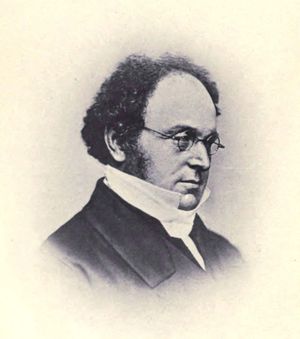
De Morgan's laws are a pair of dually related theorems in logic that allow for the transformation of statements into alternative, often more convenient, forms. While the concepts were known in the 14th century, Augustus De Morgan thoroughly investigated and mathematically expressed them in the 19th century.1
The laws are:
* The negation of a disjunction is equal to the conjunction of the negations of the alternates. Symbolically: (\neg(p \lor q) \equiv \neg p \land \neg q).1
* The negation of a conjunction is equal to the disjunction of the negations of the original conjuncts. Symbolically: (\neg(p \land q) \equiv \neg p \lor \neg q).1
These laws are fundamental to modern symbolic logic and were a significant contribution to its development, alongside the work of George Boole.12
Ask Britannica AI about this topic
Britannica doesn't have a full article on this topic, so we've curated a list of our relevant coverage.
 foundations of mathematicsNonconstructive arguments
…proved with the help of De Morgan’s laws, named after the English mathematician and logician Augustus De Morgan (1806–71). It asserts the equivalence of ∃yϕ(y) with ¬∀y¬ϕ(y), using classical logic, but there is no way one can construct such an x, for example, when ϕ(x) asserts the existence of a…
Read More…proved with the help of De Morgan’s laws, named after the English mathematician and logician Augustus De Morgan (1806–71). It asserts the equivalence of ∃yϕ(y) with ¬∀y¬ϕ(y), using classical logic, but there is no way one can construct such an x, for example, when ϕ(x) asserts the existence of a…
Read More probability theoryMeasure theory
…complements of those sets (DeMorgan’s law), it follows from (ii) and (iii) that, if A1, A2,… ∊ M, then A1 ∩ A2 ∩ ⋯ ∊ M.
Read More…complements of those sets (DeMorgan’s law), it follows from (ii) and (iii) that, if A1, A2,… ∊ M, then A1 ∩ A2 ∩ ⋯ ∊ M.
Read More