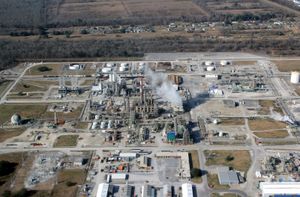
visbreaking
Quick Summary
Visbreaking, also known as viscosity breaking, is a process in petroleum refining used to lower the viscosity of heavy straight-run residues. This is achieved through mild thermal cracking, where heavy hydrocarbon molecules are broken down into smaller, more desirable ones.123
The process involves heating the feedstock to high temperatures (around 450-500 °C) in a furnace, followed by a short residence time in a reaction chamber. This controlled cracking reduces the viscosity of the residual fuel oil and produces lighter products like naphtha and diesel fuels. Visbreaking is a conversion process that increases the yield of valuable hydrocarbon compounds from crude oil, especially important as demand for light products like gasoline and diesel has grown while the need for heavy fuel oils has declined.3
Ask Britannica AI about this topic
Britannica doesn't have a full article on this topic, so we've curated a list of our relevant coverage.