underground cable
Quick Summary
Underground cables are a type of electrical cable installed beneath the ground, often in ducts, and are commonly used in urban areas where overhead lines are impractical or unsafe. Unlike aerial cables, underground cables typically use commercially pure copper or aluminum, which is rolled for compactness and conductivity, as mechanical strength is less of a concern underground.1
These cables are essential components of the electrical circuit, connecting power generators to points of use. Specialized underground cables are designed for various demanding environments, including high temperatures, chemical exposure, and high radiation near nuclear reactors.1
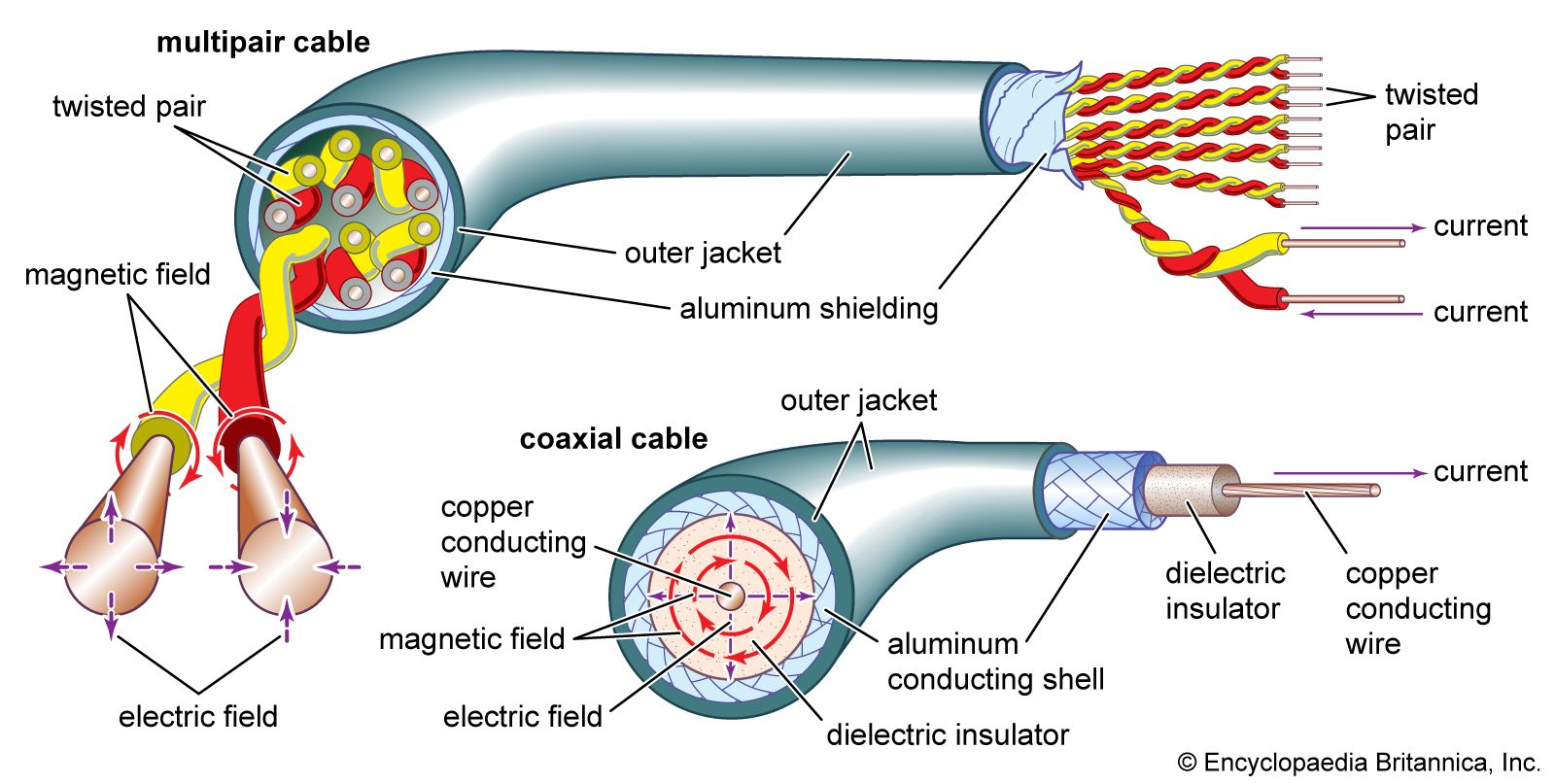
In telecommunications, underground cables, including fiber-optic types, transmit voice, data, and video signals using electrical signals or light pulses. These differ significantly from power cables, operating at lower voltages and currents but often at higher frequencies, and can contain thousands of very thin conductors.1
Ask Britannica AI about this topic
Britannica doesn't have a full article on this topic, so we've curated a list of our relevant coverage.