
- Related Topics:
- bath

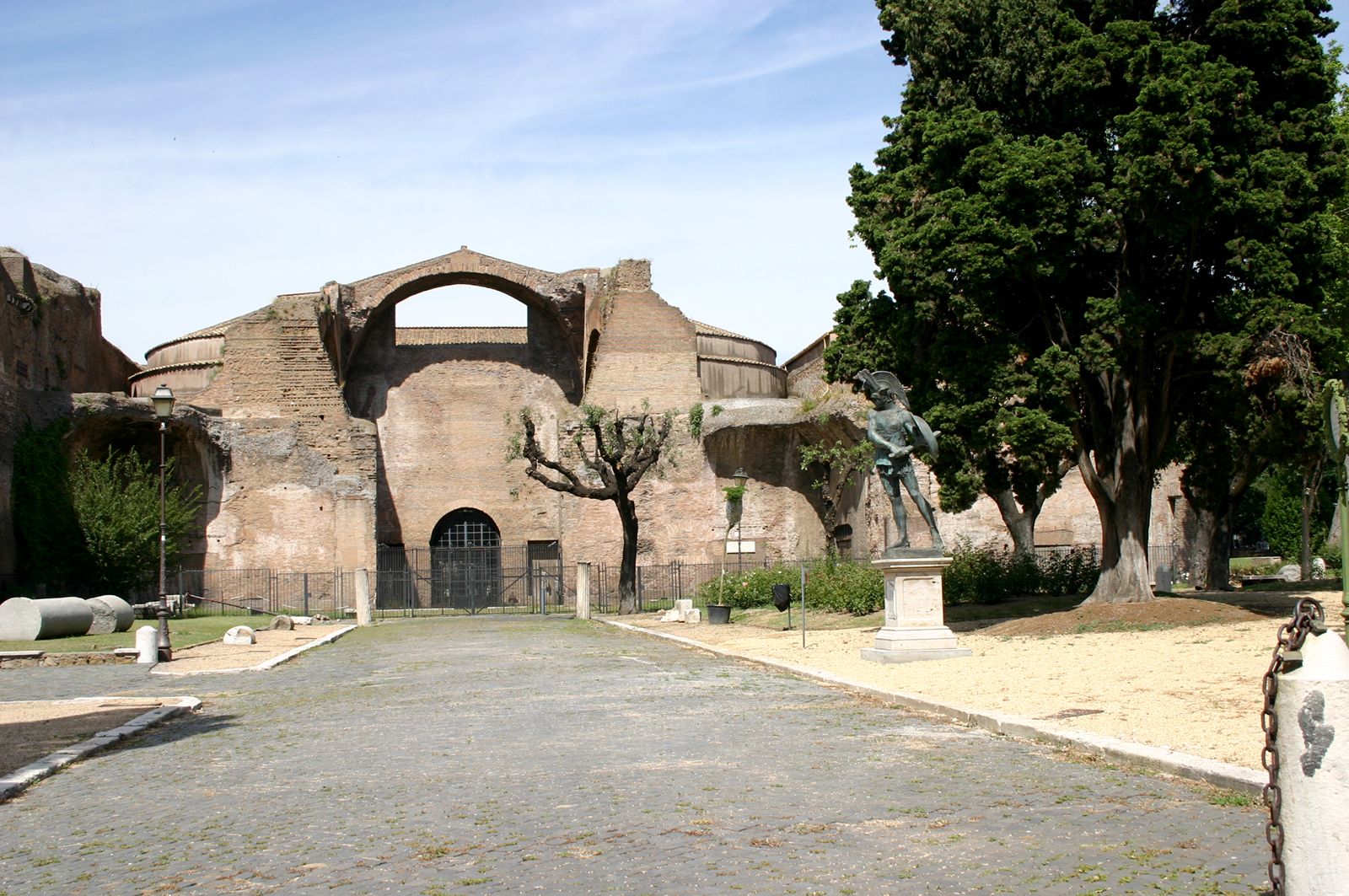
thermae
-
What were Roman thermae?
Roman thermae were sophisticated public bathing complexes designed for relaxation and social interaction. These facilities featured a main building with three large bath chambers: the frigidarium (cold room), calidarium (hot room), and tepidarium (warm room). Additionally, they included smaller bathrooms and courts.
The bathing process involved undressing, anointing with oil, exercise, and scraping off oil and perspiration with a strigil. The bather would move through the caldarium and sudatorium (steam room), then to the tepidarium and frigidarium, often with a swimming pool. The process concluded with another anointing of oil.
These imperial bathing establishments were replicated throughout the Roman Empire on a smaller scale. The Roman Baths in Bath, England, demonstrate the use of hot mineral springs and included a colonnaded temple.
2 Britannica SourcesCreated from Britannica articles using AI. AI can make mistakes, so verify using Britannica articles. -
What kinds of rooms and pools could you find in a Roman bath?
Roman baths, or thermae, featured sophisticated facilities for public bathing, relaxation, and social activities. The main building included three large bath chambers: the frigidarium (cold room, often with a swimming pool), the calidarium (hot room), and the tepidarium (warm room).
The bathing process typically involved undressing in the apodyterium, followed by anointing with oil. Bathers would then proceed to exercise before entering the calidarium and sudatorium (steam room). After scraping off oil and perspiration with a strigil, they moved to the tepidarium and finally to the frigidarium for a cold plunge. The process concluded with another anointing of oil.
2 Britannica SourcesCreated from Britannica articles using AI. AI can make mistakes, so verify using Britannica articles. -
How did Romans heat the water in thermae?
Romans heated water in thermae using a hypocaust, an underfloor heating system. This involved circulating hot air from a furnace through flues beneath the floors and within the walls, which radiated warmth evenly. The same system heated the water for the baths. This provided a comfortable and smoke-free environment. The thermae needed an adequate system for providing hot, tepid, and cold water, as well as basins for warm and cold water in the hot bath.
2 Britannica SourcesCreated from Britannica articles using AI. AI can make mistakes, so verify using Britannica articles. -
Who used Roman baths, and what activities did they do there?
Roman baths, or thermae, were public bathing facilities used by people across the Roman Empire for relaxation and social activity. The bathing process typically involved undressing in the apodyterium, followed by anointing with oil. Bathers would then engage in exercise before moving through a series of rooms with varying temperatures: the calidarium (hot), sudatorium or laconicum (steam), tepidarium (warm), and frigidarium (cold), often including a swimming pool. After scraping off oil and perspiration with a strigil, the process concluded with another anointment of oil.
The Great Bath was also a place for socializing. Though men and women usually bathed separately, mixed bathing was recorded in the 1st century AD, though it was largely restricted to courtesans.
2 Britannica SourcesCreated from Britannica articles using AI. AI can make mistakes, so verify using Britannica articles. -
How did the design of thermae demonstrate Roman engineering skills?
Roman thermae, or bathhouses, showcased the empire's engineering prowess through sophisticated design and construction. The use of concrete allowed for the creation of vast, vaulted spaces, while hypocaust systems efficiently heated floors and water.
Aqueducts supplied water, and innovative clerestory windows provided natural lighting. The Romans also used lead pipes for plumbing. These features demonstrate advanced understanding of materials, heating, and hydraulics, making thermae not only places for hygiene and relaxation, but also statements of Roman engineering skill.
4 Britannica SourcesCreated from Britannica articles using AI. AI can make mistakes, so verify using Britannica articles. -
What influence did Roman thermae have on later architecture and public bathing?
Roman thermae significantly influenced later architecture and public bathing by establishing a sophisticated complex for bathing, relaxation, and social activity. The standardized architectural design of the thermae featured a large open garden, subsidiary club rooms, and bath chambers.
The Romans developed an ingenious system of clerestory windows for lighting and roofing the enormous rooms. They also created a system to furnish hot, tepid, and cold water and to heat the baths using underfloor fires and hollow walls. This model of imperial bathing establishments was replicated throughout the Roman Empire on a smaller scale. Modern Turkish baths resemble these Roman steam baths with rooms heated to different temperatures.
4 Britannica SourcesCreated from Britannica articles using AI. AI can make mistakes, so verify using Britannica articles.
thermae, complex of rooms designed for public bathing, relaxation, and social activity that was developed to a high degree of sophistication by the ancient Romans. Although public baths are known to have existed in early Egyptian palaces, remains are too fragmentary to permit complete analysis of Egyptian types. Bathing occupied an important place in the life of the Greeks, as indicated by the remains of bathing rooms in the palace of Knossos (begun c. 1700 bc). The standardized architectural type of the thermae, however, was not developed until the Romans designed the great imperial thermae—Baths of Titus (ad 81), Baths of Domitian (95), Trajan’s Baths (c. 100), Baths of Caracalla (217), and the Thermae of Diocletian (c. 302).
The general scheme consisted of a large open garden surrounded by subsidiary club rooms and a block of bath chambers either in the centre of the garden, as in the Baths of Caracalla, or at its rear, as in the Baths of Titus. The main block contained three large bath chambers—the frigidarium, calidarium (caldarium), and tepidarium—smaller bathrooms, and courts. Service was furnished by means of underground passageways, through which slaves could move swiftly without being seen. For lighting and for the roofing of the enormous rooms, the Romans developed an ingenious system of clerestory windows (windows in or near the roof or vault).
Modern discoveries of ancient sculpture in the Roman baths, such as the Laocoon group from the Baths of Caracalla in Rome, indicate the richness of the furnishings. Floors were marble or mosaic; walls were apparently sheathed with marble to a considerable height and decorated above with stucco reliefs and mosaic. Gilt bronze was used freely for doors, capitals (the crowning member of a classical column), and window screens. This type of imperial bathing establishment was repeated in its essential form, but on a smaller scale, throughout the Roman Empire.



 " height="20" alt="HEW Logo">
Although there is disagreement among scholars about the exact order of bathing activities, the Roman technique of bathing is thought to have followed a somewhat standardized pattern. The bather probably first entered the apodyterium, where he undressed. He was then anointed with oil in the elaeothesium, or unctuarium, before entering a room or court, where he indulged in rigourous exercise. After this activity, he proceeded to the calidarium (hot room) and to the sudatorium, or laconicum (steam room), where his body was probably scraped of its accumulation of oil and perspiration with a curved metal implement called a strigil. The bather then moved to the tepidarium (warm room) and afterward to the frigidarium (cold room), where there was frequently a swimming pool. The bathing process was completed after the body was once more anointed with oil.
Roman baths varied in size from those in the larger, private houses to the great public thermae. The essential features present in all types of thermae were an adequate system of furnishing hot, tepid, and cold water; the heating of the hot portions of the bath, and sometimes also the tepidarium, by the circulation of smoke and heated air from a fire under the floor through the hollow walls (see also hypocaust); and adequate basins for warm and cold water in the hot bath.
As a rule, men and women bathed separately. Mixed bathing is first recorded in the 1st century ad, by the Roman scholar Pliny the Elder. The practice, which seems to have been largely restricted to courtesans, was condemned by respectable citizens and prohibited by the emperors Hadrian and Marcus Aurelius.