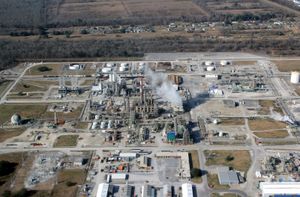
steam cracking
Quick Summary
Steam cracking is a process used in petroleum refining to break down heavy hydrocarbon molecules into lighter, more valuable ones, primarily olefins like ethylene and propylene. This is achieved by heating the hydrocarbon feed, often mixed with steam, to high temperatures (around 840 °C or 1,550 °F) for a very short time.12
The primary goal of steam cracking is to produce ethylene, a crucial building block for plastics like polyethylene. Other olefins such as propylene and butylene are also produced and are valuable feedstocks for various petrochemical applications. While thermal cracking was an earlier method, steam cracking is now widely practiced globally for efficient ethylene production.12
Ask Britannica AI about this topic
Britannica doesn't have a full article on this topic, so we've curated a list of our relevant coverage.