
- Also called:
- reconnaissance satellite
- Related Topics:
- intelligence
- spacecraft

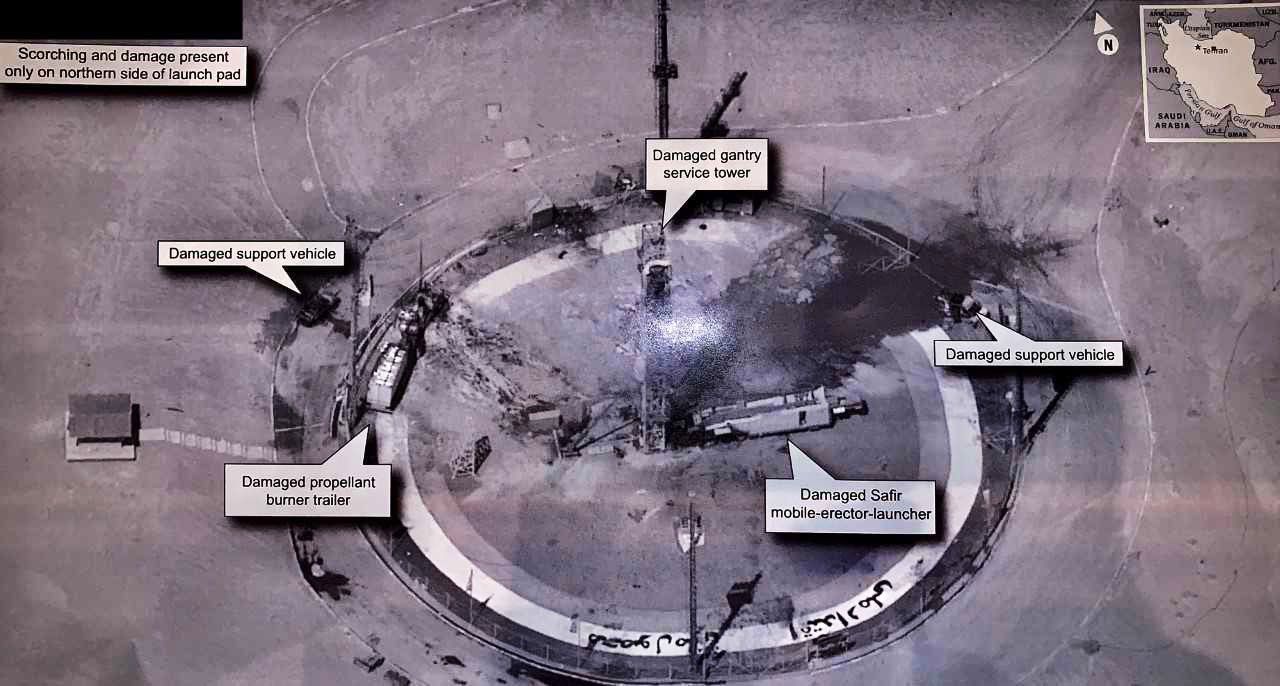
spy satellite
-
What is a spy satellite?
A spy satellite is a spacecraft used by governments to monitor military operations and other phenomena that could impact national security.
The U.S. developed the first reconnaissance satellites, called Corona, in partnership with Lockheed Corporation, the U.S. Air Force, and the CIA. Corona took pictures of the Soviet Union, and the film was returned to Earth in a capsule that would be captured midair.
The Soviet Union launched its own spy satellite program, Zenit, in 1961.
Later spy satellites such as the U.S. KH-11 satellites captured images electronically and transmitted them quickly. Some spy satellites use radar to observe other countries, and still others observe radio waves to study air defense radar or eavesdrop on radio communications.
1 Britannica SourceCreated from Britannica articles using AI. AI can make mistakes, so verify using Britannica articles. -
How do spy satellites work?
Spy satellites are spacecraft used by governments to monitor military operations and other activities that relate to national security. The U.S. developed the first reconnaissance satellites, under the code name Corona. These satellites took pictures, and the film was returned to Earth in a capsule caught midair. The Soviets launched their spy satellite program, Zenit, in 1961.
Modern spy satellites use technology that captures images electronically and transmits them almost instantly. Some use radar to see through clouds and operate in darkness. Others use infrared sensors to detect missiles or space warnings. They can also carry sensors to detect nuclear explosions.
2 Britannica SourcesCreated from Britannica articles using AI. AI can make mistakes, so verify using Britannica articles. -
What kinds of information do spy satellites collect?
Spy satellites gather various types of data for national security. They use photography, including infrared and ultraviolet imagery, to locate, recognize, identify, and describe objects, activities, and terrain. Some spy satellites use radar to see through clouds and operate in darkness. Additionally, they can observe radio waves and detect nuclear weapons tests using X-rays and gamma rays. They also monitor compliance with arms-limitation treaties.
4 Britannica SourcesCreated from Britannica articles using AI. AI can make mistakes, so verify using Britannica articles. -
How do spy satellites help national security?
Spy satellites are spacecraft used by governments to monitor military operations and other activities impacting national security. The U.S. and Soviet Union began using them to gather intelligence on weapons development, troop movements, and more.
Reconnaissance satellites provide high-resolution images of Earth in near real-time, which helps identify threats, plan military operations, and monitor arms-control agreements. Other satellites collect electronic signals, such as phone, radio, and Internet messages, to determine activities in specific locations.
The value of these systems has prompted countries like France, China, India, and Japan to develop similar capabilities.
2 Britannica SourcesCreated from Britannica articles using AI. AI can make mistakes, so verify using Britannica articles. -
What are some technologies used in modern spy satellites?
Modern spy satellites use various technologies to monitor military operations and gather information for national security. These include:
- Radar Technology Radar-imaging satellites can operate at night and see through clouds. Phased-array radars with stationary antennas and electronically steerable multiple beams scan rapidly and track several objects at once.
- Optical Sensors Cameras with telescopic optics capture images on photographic film, infrared images, or television-type signals. KH-11 satellites capture images electronically and transmit them quickly.
- Communications Interception Satellites use large dish antennas to eavesdrop on radio communications.
- Nuclear Detection Satellites use X-rays and gamma rays to detect nuclear weapons tests.
- Dual-frequency Synthetic Aperture Radar (SAR) Technology Satellites utilize L-band and S-band microwave frequencies for radar observation.
4 Britannica SourcesCreated from Britannica articles using AI. AI can make mistakes, so verify using Britannica articles. -
How have spy satellites changed the way countries gather intelligence?
Spy satellites have revolutionized intelligence gathering by providing real-time, high-resolution imagery of Earth's surface, which helps identify potential threats, plan military operations, and monitor arms-control agreements. They can collect electronic signals and detect nuclear explosions, giving countries critical insights into other nations' activities.
These satellites offer a way to observe in darkness, hear from great distances, and take detailed photographs from high altitudes. The use of satellites has also made it possible to monitor compliance with arms-limitation treaties. Countries can now gather intelligence more efficiently, aiding national security planning.
5 Britannica SourcesCreated from Britannica articles using AI. AI can make mistakes, so verify using Britannica articles.
spy satellite, spacecraft used by governments to monitor foreign military operations and other phenomena involving national security.
The earliest reconnaissance satellites were developed in the United States, near the end of Dwight Eisenhower’s presidency. The Soviet Union’s launch of the Sputnik 1 artificial satellite in October 1957—and its launch of an intercontinental ballistic missile (ICBM) two months before that—had caught the U.S. government off guard. Eisenhower approved the plan in February 1958 to develop spy satellites.
The project was given the code name Corona. The Lockheed Corporation developed the Corona technology in partnership with the U.S. Air Force and under the supervision of the Central Intelligence Agency (CIA). A Corona satellite would take pictures of the Soviet Union, and the film would be returned to Earth in a capsule that would be captured in midair. The Corona program was given the cover name Discoverer and was publicly presented as a program to test large satellites.



 " height="20" alt="HEW Logo">
Discoverer I, a test satellite, was launched in February 1959. There were many failures before the first satellite, Discoverer XIII, was successfully recovered in August 1960. Discoverer XIII did not carry any cameras or film, but Discoverer XIV, launched that same month, did. It returned more imagery of the Soviet Union than all previous U-2 spy plane missions combined, showing 64 Soviet airfields and 26 new surface-to-air missile sites. (U-2 spy plane missions had ended after U.S. pilot Francis Gary Powers was captured by the Soviet Union in May 1960.)

Following Discoverer XIV, a new federal agency, the National Reconnaissance Office (NRO), was created to oversee Corona. The NRO’s existence remained classified until 1992; Corona itself was declassified in 1995. For decades, U.S. satellites tracked Soviet weapon and missile developments, nuclear capabilities, and industrial and agricultural production.
The Soviets launched their own spy satellite program, known as Zenit, in 1961. Zenit shared its design with the crewed spacecraft Vostok, which carried the first human, Yuri Gagarin, into space. However, instead of the spherical capsule carrying a cosmonaut, the capsule contained both the film and the cameras.
Beginning in 1976, the U.S. government launched the KH-11 satellites, which had new technology that captured images electronically and transmitted them within moments—one of the earliest uses of the technology that digital cameras now rely on. The KH-11 satellites are much like the Hubble Space Telescope and have a likely resolution of about 15 cm (6 inches). Radar-imaging satellites, which could see through clouds and operate in darkness, were introduced in 1988 with the Onyx satellite program.
The trusted destination for professionals, college students, and lifelong learners.
SUBSCRIBE



Not all spy satellites use cameras or radar to observe other countries. One of the earliest spy satellites, the U.S. Navy’s Galactic Radiation and Background (GRAB) I, or SOLRAD, was launched in June 1960 and actually did observe radio waves from the Sun. However, its main purpose was to study Soviet air defense radar. The American Orion satellites, first launched in 1985, supposedly have a large dish antenna 100 meters (330 feet) in diameter for eavesdropping on radio communications. The Vela satellites were first launched in 1963 and used X-rays and gamma-rays to detect nuclear weapons tests. Their main discovery was gamma-ray bursts, explosions in distant galaxies.