

junction theorem
Quick Summary

The junction theorem, also known as Kirchhoff's first law, is a fundamental principle in electronics that governs electric circuits. It states that the total current flowing into any junction (or node) within a circuit must equal the total current flowing out of that same junction. This law is a direct consequence of the conservation of electric charge, meaning that charge cannot be created or destroyed, nor can it accumulate at a single point in the circuit. This principle is crucial for analyzing and solving complex circuits with multiple loops and branches.12
Ask Britannica AI about this topic
Britannica doesn't have a full article on this topic, so we've curated a list of our relevant coverage.
- Kirchhoff’s rules
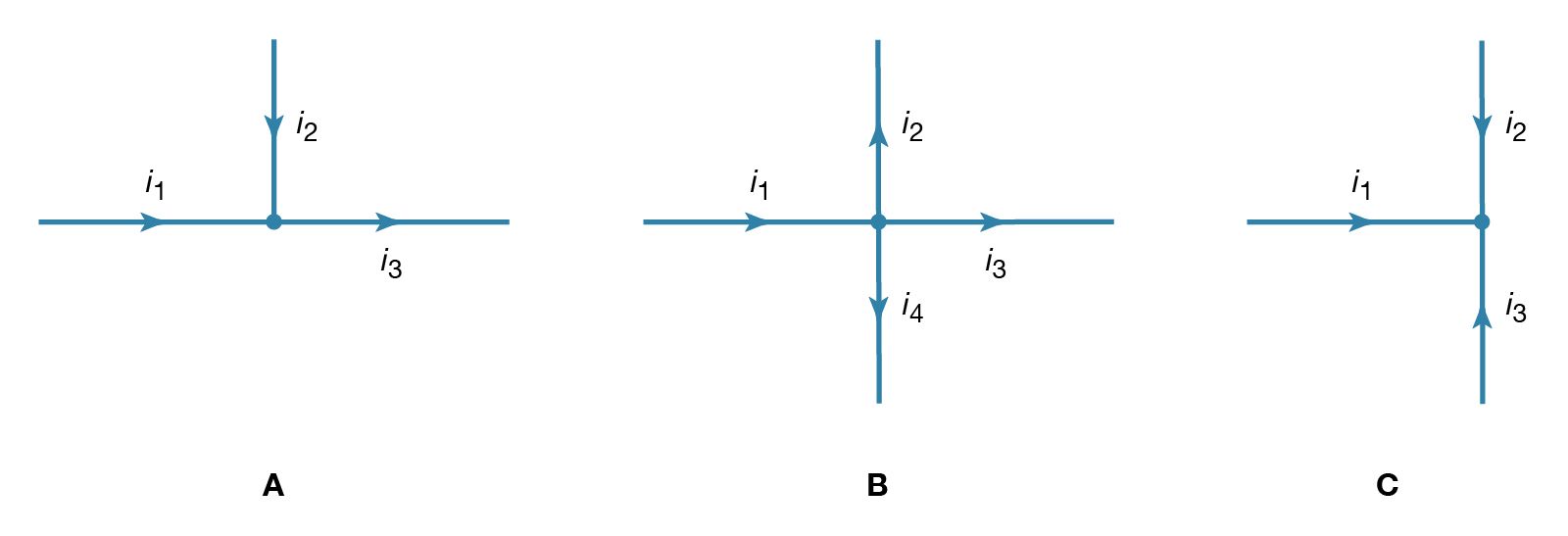
The first rule, the junction theorem, states that the sum of the currents into a specific junction in the circuit equals the sum of the currents out of the same junction. Electric charge is conserved: it does not suddenly appear or disappear; it does not pile up at one…
Read MoreThe first rule, the junction theorem, states that the sum of the currents into a specific junction in the circuit equals the sum of the currents out of the same junction. Electric charge is conserved: it does not suddenly appear or disappear; it does not pile up at one…
Read More - electricityKirchhoff’s laws of electric circuits
Figure 17 shows three such junctions, with the currents assumed to flow in the directions indicated.
Read MoreFigure 17 shows three such junctions, with the currents assumed to flow in the directions indicated.
Read More