hydrotreating
Quick Summary
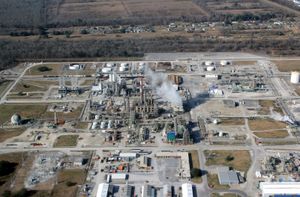
Hydrotreating, also known as hydrogen treatment, is a common process in petroleum refining used to remove impurities like sulfur and nitrogen from oil. In this process, oil is mixed with high-purity hydrogen and passed over a catalyst at high temperatures (260–425 °C) and pressures (14–70 bars).1
The sulfur is converted into hydrogen sulfide, and nitrogen into ammonia. These byproducts are then removed. Hydrogen sulfide can be used to produce elemental sulfur, while ammonia can be processed into fertilizers. This purification is crucial for meeting product quality standards and environmental regulations in refineries.1
Ask Britannica AI about this topic
Britannica doesn't have a full article on this topic, so we've curated a list of our relevant coverage.