

dry-bulk ship
Quick Summary
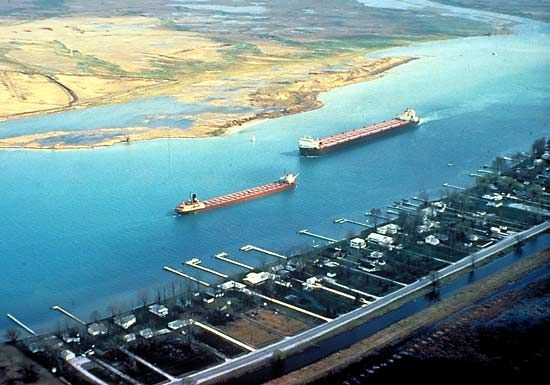
Dry-bulk ships are designed to transport commodities such as ore, coal, and grain. They often resemble container ships in that they may lack their own cargo-handling equipment. A key distinguishing feature is the absence of containers on deck, though some may occasionally carry them. Some dry-bulk ships are equipped with self-unloading gear, typically a large boom. On North America's Great Lakes, this feature is common on ships built since 1960.1
Ask Britannica AI about this topic
Britannica doesn't have a full article on this topic, so we've curated a list of our relevant coverage.
 shipDry-bulk ships
Designed for the carriage of ore, coal, grain, and the like, dry-bulk ships bear a superficial likeness to container ships since they often have no cargo handling gear and, unlike the tanker, have large cargo hatches. The absence of containers on deck is…
Read MoreDesigned for the carriage of ore, coal, grain, and the like, dry-bulk ships bear a superficial likeness to container ships since they often have no cargo handling gear and, unlike the tanker, have large cargo hatches. The absence of containers on deck is…
Read More- shipShip-shore transfer
…example, the loading of “dry bulk” commodities such as coal, ore, and grain is nearly always done from special shore facilities that pour them from a high elevation directly into the cargo holds of the ship. Although the ship may be designed for the commodity, almost any cargo-carrying ship…
Read More…example, the loading of “dry bulk” commodities such as coal, ore, and grain is nearly always done from special shore facilities that pour them from a high elevation directly into the cargo holds of the ship. Although the ship may be designed for the commodity, almost any cargo-carrying ship…
Read More