
- Related Topics:
- military technology
- chaff


decoy
-
What is a decoy in military science?
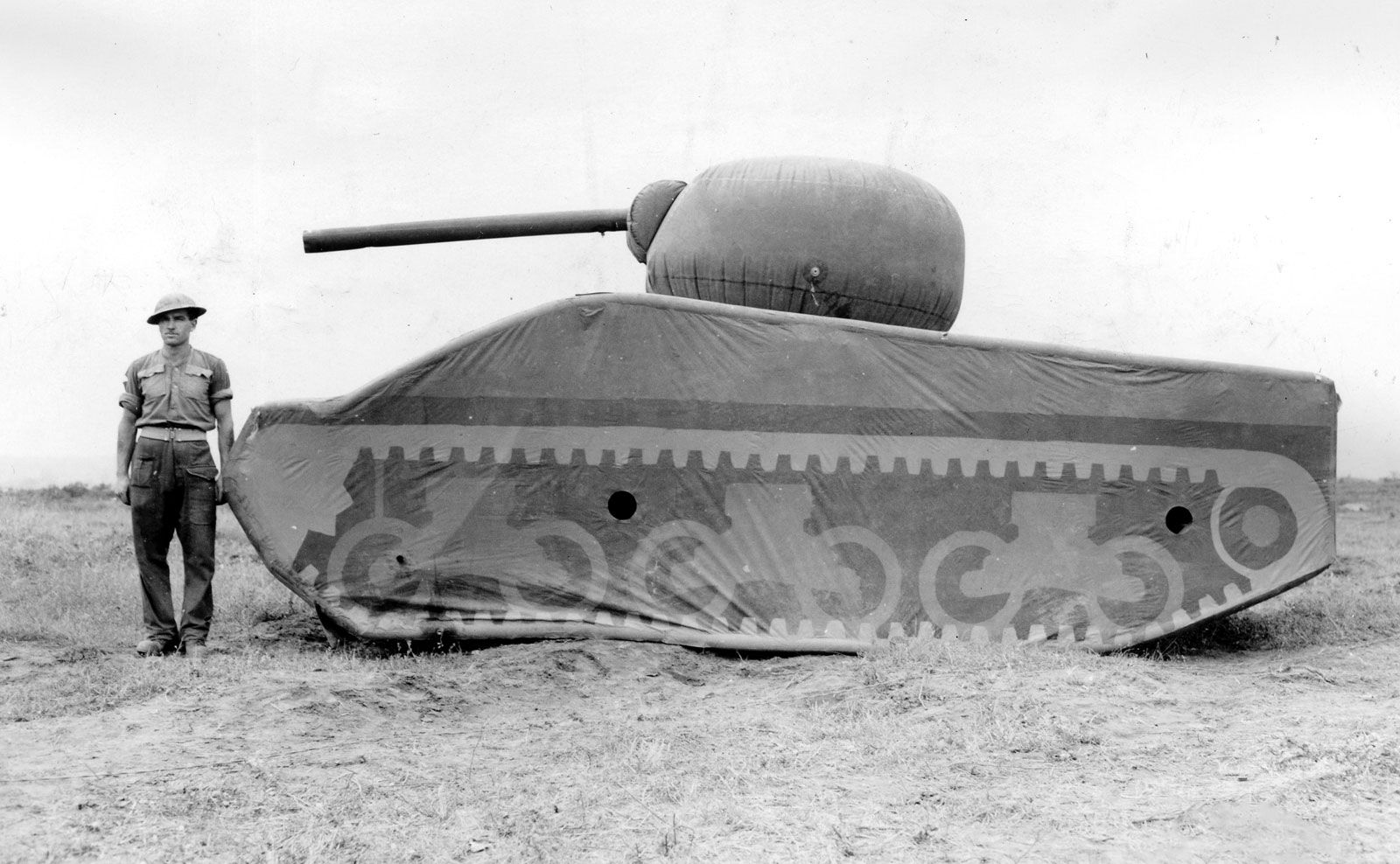
In military science, a decoy is a deceptive tool or strategy used to divert an enemy's attention from a more critical target. Decoys can be active, like flares or chaff released by aircraft to confuse heat-seeking or radar-guided missiles. They can also be passive, such as dummy tanks or planes intended to mislead visual intelligence gathering, like aerial photography. Throughout military history, decoys have been used to protect military assets and confuse the enemy. During World War II, dummies were used to protect airfields and manufacturing plants, and to mislead the enemy about where attacks would take place.
2 Britannica SourcesCreated from Britannica articles using AI. AI can make mistakes, so verify using Britannica articles. -
How are decoys used in military situations?
Decoys in military science are deceptive tools used to divert enemies from vital targets. They can be active, like flares and chaff released by aircraft to confuse heat-seeking or radar-guided missiles, or passive, such as dummy weapons and troop formations intended to mislead visual surveillance.
During World War II, dummies effectively drew enemy fire and concealed real targets, demonstrated by the Allies' creation of a fake army to mislead the Germans before the Normandy invasion. Modern armies continue to use decoys, including inflatable tanks, to deceive the enemy.
2 Britannica SourcesCreated from Britannica articles using AI. AI can make mistakes, so verify using Britannica articles. -
What are some common types of military decoys?
Military decoys deceive enemies by diverting attention from key targets. They come in active and passive forms.
- Active decoys Imitate a target's properties, like heat or radar emissions. Examples include:
- Flares that burn hotter than jet exhaust to draw heat-seeking missiles.
- Chaff, clouds of metallic strips that confuse radar-guided missiles.
- Passive decoys Fool the eye, such as dummy tanks, planes and troop barracks. The Allies used them in Operation Fortitude during the invasion of Normandy to mislead the Germans.
- Dummy warheads are released by intercontinental ballistic missiles (ICBMs) to counter antiballistic missiles (ABMs).
- Small, inexpensive air vehicles can appear on radar as real targets.
2 Britannica SourcesCreated from Britannica articles using AI. AI can make mistakes, so verify using Britannica articles. - Active decoys Imitate a target's properties, like heat or radar emissions. Examples include:
-
How do decoys help protect soldiers or equipment?
Decoys protect soldiers and equipment by deceiving the enemy, drawing them away from important targets. Active decoys, like flares and chaff, are used by military aircraft to evade heat-seeking and radar-guided missiles, respectively. Dummy warheads on ICBMs confuse antiballistic missiles.
Passive decoys, such as dummy tanks and planes, deceive visual intelligence, like aerial reconnaissance. During World War II, the Allies used dummy troops and equipment to mislead the Germans about the location of the Normandy invasion. Even in modern warfare, decoys remain effective, as seen in the Kosovo conflict where the Yugoslav army used decoy tanks to mislead NATO air strikes.
2 Britannica SourcesCreated from Britannica articles using AI. AI can make mistakes, so verify using Britannica articles. -
How can decoys trick enemy surveillance or weapons?
Decoys mislead enemy surveillance or weapons systems through mimicking or imitating real targets. Active decoys, like flares released by aircraft, emit intense heat to confuse heat-seeking missiles by presenting multiple hot targets. Similarly, chaff, consisting of metallic strips, disrupts radar-guided missiles by creating false targets.
For intercontinental ballistic missiles (ICBMs), dummy warheads are deployed to jam and confuse antiballistic missile (ABM) radar systems. Passive decoys, such as dummy tanks and planes, deceive visual intelligence from aerial reconnaissance, as demonstrated in Operation Fortitude during the Allied invasion of Normandy in 1944.
1 Britannica SourceCreated from Britannica articles using AI. AI can make mistakes, so verify using Britannica articles. -
Can you give an example of a famous battle or operation that successfully used military decoys?
During World War II, the Allies employed Operation Fortitude to mislead the German high command about the location of the main Allied invasion of Europe. This operation used a fictitious army, the First U.S. Army Group (FUSAG), consisting of thousands of fake tanks, airplanes, and infrastructure located on the southeast coast of England. The Allies also spread disinformation through radio transmissions and double agents. This deception led the Germans to believe the invasion would occur at Pas-de-Calais, causing them to withhold reinforcements from Normandy after the actual invasion.
3 Britannica SourcesCreated from Britannica articles using AI. AI can make mistakes, so verify using Britannica articles.
decoy, deceptive device used to draw an enemy away from a more important target. Active decoys are the principal method of self-defense for military aircraft and intercontinental ballistic missiles (ICBMs). Passive decoys, or dummies, are used to deceive visual intelligence such as photo reconnaissance.
The main threats to modern military aircraft are antiaircraft missiles, which travel faster and maneuver better than the best jet fighters. Heat-seeking missiles are designed to follow heat sources such as the jet exhaust of a modern aircraft. To elude these missiles, a jet may release active decoys called flares, which are tubes containing magnesium that burn with an intense white heat. Because flares initially burn hotter than jet exhaust, they may confuse the missile by offering it several hot targets, giving the aircraft a chance to escape.
Radar-guided missiles, another form of antiaircraft missiles, use radar to locate their targets. While flares are useless against this technology, radar is vulnerable to a type of active decoy known as chaff, which consists of tiny strips of aluminum or zinc that the aircraft releases in large bunches. These metallic clouds appear as separate targets to the missile’s radar and ideally confuse the missile, thus permitting the aircraft to escape.



 " height="20" alt="HEW Logo">
Antiballistic missiles (ABMs) are designed to target an incoming ICBM and destroy it high in the atmosphere before its warhead is delivered. To counter ABMs, most ICBMs carry multiple fake or dummy warheads as decoys. The dummy warheads separate from the ICBM at the same time as the real warhead and are designed to jam the ABM’s radar and confuse it by offering it several targets.
While active decoys work by imitating the unseen properties of a target, such as its heat or radar emissions, passive decoys work by fooling the eye. Most visual intelligence information gathered today comes from aerial photographs taken by spy satellites and reconnaissance aircraft. Aerial reconnaissance is an efficient way to gather large amounts of data, but aerial photos of dummy tanks, planes, guns, and trucks can deceive even trained analysts.

Dummy troops and equipment played a key role in the Allied invasion of France in 1944. The Germans expected the Allies to invade at Pas-de-Calais, the closest point in France to the English coast. The Allies, however, decided to invade much farther west, in Normandy. To disguise their intentions, the Allies employed Operation Fortitude, which created a fake army in the area of England closest to Pas-de-Calais. The so-called First U.S. Army Group (FUSAG) consisted of thousands of cardboard and rubber dummy tanks and airplanes, fake troop barracks and supply dumps, and enough humans to give the appearance of great activity. Even after the actual invasion had begun, the Germans were convinced that FUSAG was still going to invade at Pas-de-Calais, and they refused to send reinforcements to Normandy. By the time the Germans realized that they had been deceived, the Allied forces were well established in France.
The use of dummies continues, even though aerial photography has become much more detailed and analysts are much better able to spot fakes. Indeed, during the Kosovo conflict in the late 1990s, the Yugoslav army used decoy tanks to mislead the NATO air strikes. In an age of high-technology warfare, low-tech solutions such as dummies remain effective.
The trusted destination for professionals, college students, and lifelong learners.
SUBSCRIBE

