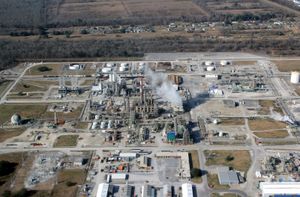
coking
Quick Summary
Coking is the process of heating coal to high temperatures in the absence of air, a method also known as carbonization. This process yields coke, a solid residue primarily composed of carbon, which is essential for metallurgical uses like iron production in blast furnaces and foundry cupolas.1234
Prime coking coals typically contain 20-32 percent volatile matter. When heated, these coals become plastic, decompose, and then resolidify into hard, porous coke. Modern coke ovens are large, automated facilities designed for efficient, large-scale production while minimizing environmental impact and labor.12
The coking process also produces valuable by-products, including crude tar and gases rich in methane, hydrogen, and carbon monoxide. These by-products can be refined for various industrial applications.5
Ask Britannica AI about this topic
Britannica doesn't have a full article on this topic, so we've curated a list of our relevant coverage.