barrier-layer capacitor
Quick Summary
A barrier-layer capacitor is a type of capacitor that utilizes surface or grain-boundary barrier layers to achieve very high apparent dielectric constants, often ranging from 50,000 to 100,000. These capacitors are created by forming conductive cores within the ceramic material through processes like donor doping or reduction firing. Subsequently, thin resistive layers are produced by oxidizing the surface or grain boundaries.12
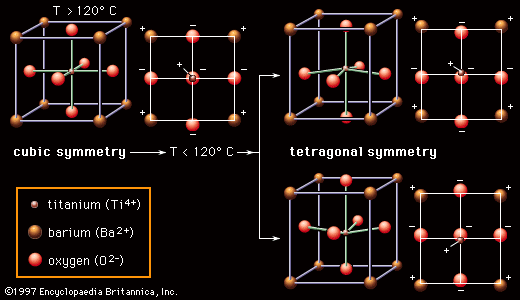
While these capacitors offer high capacitance, they have a low dielectric breakdown strength due to the thinness of the barrier layers, making them susceptible to intense local fields and potential damage. This contrasts with other capacitor dielectrics, such as barium titanate, which are designed for stable performance and higher breakdown strengths.2
Ask Britannica AI about this topic
Britannica doesn't have a full article on this topic, so we've curated a list of our relevant coverage.