
How do piezoelectric pressure gauges detect pressure?
Piezoelectric pressure gauges detect pressure by exploiting the direct piezoelectric effect, a phenomenon where certain nonconducting materials generate an electric charge when subjected to mechanical stress.12
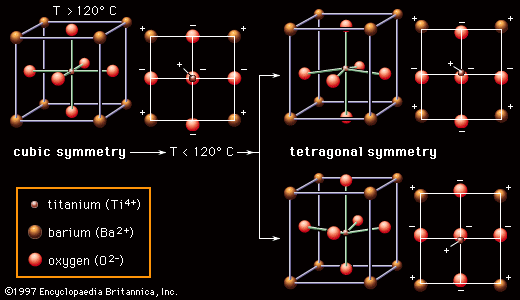
In these devices, a piezoelectric ceramic—such as lead zirconate titanate (PZT)—is positioned between two electrodes. When external pressure is applied to the material, it causes small displacements of ions within the [crystal lattice]. Because these materials lack a centre of symmetry, this structural shift results in the appearance of positive and negative electric charges on opposite sides of the material.321
This displacement creates a measurable potential difference (voltage) across the electrodes that is proportional to the applied stress. By measuring this electrical output, the gauge can accurately determine the magnitude of the mechanical pressure being exerted on the ceramic.24