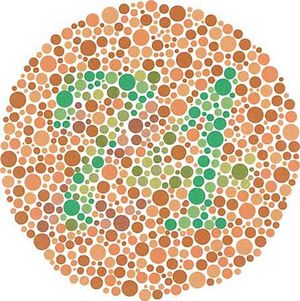
tritanomaly
Quick Summary
Tritanomaly is a type of color blindness where an individual has a reduced sensitivity to blue light. This condition arises from the abnormal function of the blue cones in the retina.
People with tritanomaly can still perceive colors, but their ability to distinguish between blue and green, and between yellow and red, may be affected. This is different from tritanopia, where blue cones are entirely absent, leading to a more significant inability to distinguish blues and yellows. Tritanomaly is an autosomal dominant disorder, meaning it can be inherited from just one parent. It can also be acquired later in life due to certain diseases or medications.12
Ask Britannica AI about this topic
Britannica doesn't have a full article on this topic, so we've curated a list of our relevant coverage.