trichromacy
Quick Summary
Trichromacy, or normal color vision, is based on the physiology of the human eye, specifically the presence of three types of cone cells in the retina. These cones are sensitive to different wavelengths of light: one type responds best to blue-violet light, another to green light, and a third to red light.12
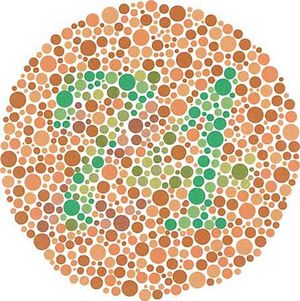
The Young-Helmholtz theory, developed by Thomas Young and Hermann von Helmholtz, explains that our perception of color arises from the combined signals sent to the brain by these three cone types. For example, yellow light stimulates both the red and green cones, but not the blue cones, leading to the perception of yellow. The relative intensity of stimulation across these three cone types determines the specific color we see. Conditions like color blindness can occur when one or more of these cone types are absent or not functioning correctly.321
Ask Britannica AI about this topic
Britannica doesn't have a full article on this topic, so we've curated a list of our relevant coverage.