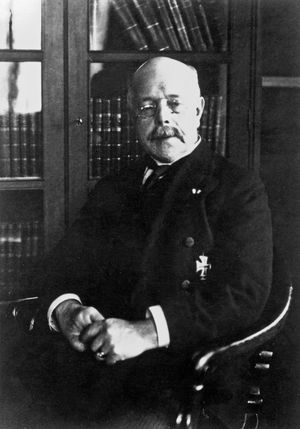
third law of thermodynamics
Quick Summary
The third law of thermodynamics states that the entropy of an isolated system approaches a constant value as its temperature approaches absolute zero (–273.15 °C or –459.67 °F). This implies that absolute zero is unattainable. In simpler terms, as a system gets colder and colder, its disorder (entropy) becomes more stable and less available to do work. This law is a fundamental principle in thermodynamics, which studies heat, work, temperature, and energy.123
Summary created from Britannica articles
using AI.
AI can make mistakes, so verify using Britannica articles.
3 Britannica Sources
Ask Britannica AI about this topic
Britannica doesn't have a full article on this topic, so we've curated a list of our relevant coverage.