
thermal pollution
Quick Summary
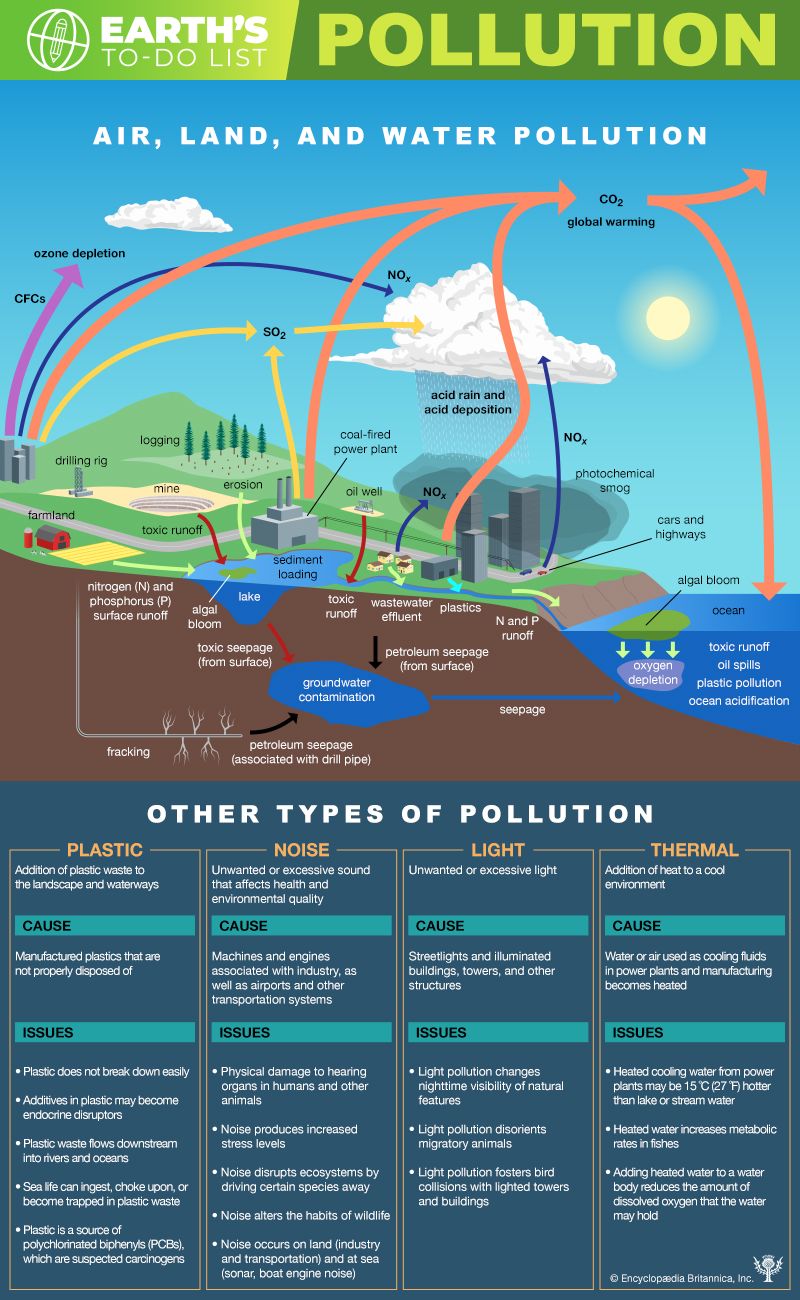
Thermal pollution is the discharge of heated liquid, such as wastewater from a factory, into natural waters at a temperature harmful to the environment. It can also refer to the addition of heat to a cool environment, often caused by water or air used as cooling fluids in power plants and manufacturing.12
This heated cooling water can be significantly hotter than the natural water bodies, leading to increased metabolic rates in fish and reducing the amount of dissolved oxygen available in the water. In severe instances, the temperature can be high enough to cause burns to animal tissues. The term "thermal pollution" was first used in 1966.21
Ask Britannica AI about this topic
Britannica doesn't have a full article on this topic, so we've curated a list of our relevant coverage.