

subaqueous delta plain
Quick Summary
A subaqueous delta plain is the submerged portion of a delta, lying below sea level and forming the submarine platform on which the exposed delta builds. It is entirely shaped by marine processes and is responsible for the bulge seen on the continental shelf seaward of deltas. Sediment deposited from river flow entering the ocean forms this plain, particularly where the continental shelf is shallow and gently sloping, and sediment loads are substantial. Examples of deltas with large subaqueous plains include the Amazon, Orinoco, and Huang He.12
Ask Britannica AI about this topic
Britannica doesn't have a full article on this topic, so we've curated a list of our relevant coverage.
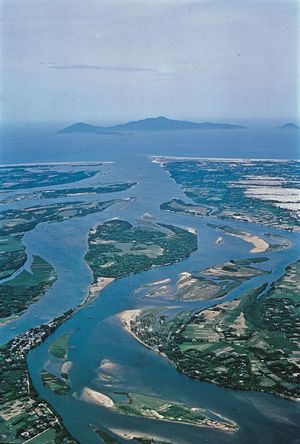 delta
…plain, and the third the subaqueous delta, which lies seaward of the shoreline and forms below sea level.
Read More…plain, and the third the subaqueous delta, which lies seaward of the shoreline and forms below sea level.
Read More riverMorphology of deltas
A subaqueous delta plain is located entirely below sea level, and marine processes dominate the system. This part of the delta is responsible for the topographic bulge seen on the continental shelf seaward of channels that flow across the exposed delta plains. Sediment-laden river flow entering…
Read MoreA subaqueous delta plain is located entirely below sea level, and marine processes dominate the system. This part of the delta is responsible for the topographic bulge seen on the continental shelf seaward of channels that flow across the exposed delta plains. Sediment-laden river flow entering…
Read More